


China, Indonesia launch capture fisheries cooperation program
TUAL, Indonesia, Sept. 25 (Xinhua) -- China and Indonesia on Thursday launched a capture fisheries cooperation program in Tual, a coastal city in Indonesia's Maluku Province.
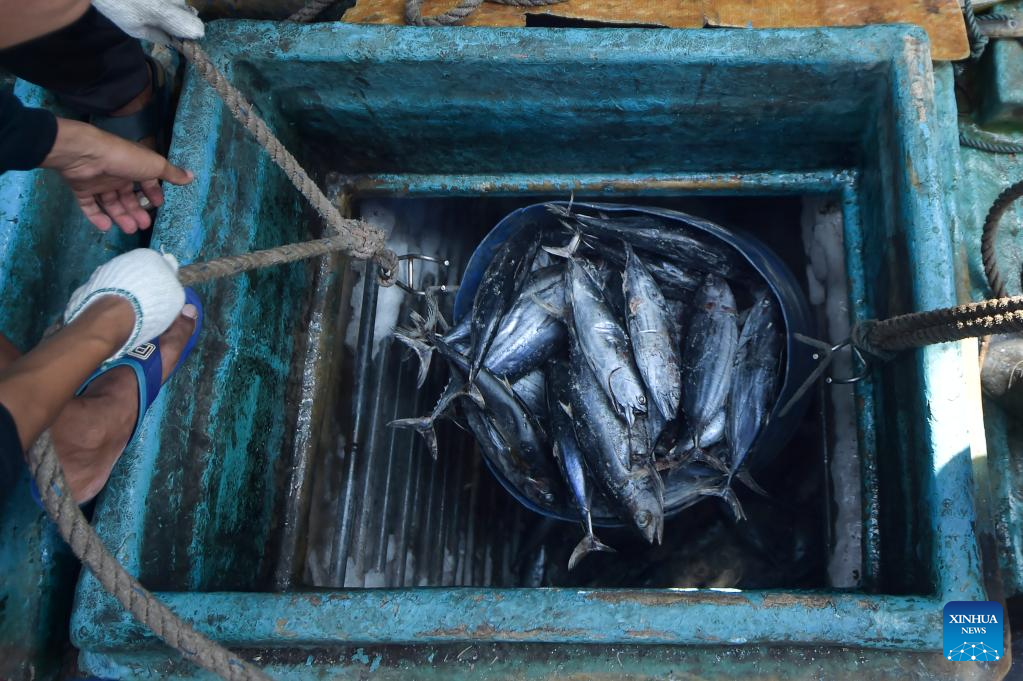
People unload skipjack tuna from a ship at Muara Baru port in Jakarta, Indonesia, July 29, 2022. Indonesia is estimated to face drops in fish supplies as 2.2 million fishers cannot go fishing because of rising fuel prices, an official said Thursday. (File photo: Xinhua)
More than 100 representatives from the two countries' governments, businesses and local fisheries associations attended the launch ceremony at a prime fishing harbor near the junction of the Banda and Arafura seas. After the launch, several modern Chinese fishing vessels sounded their horns and set out for the open sea.
Li Hongwei, minister counselor of the Chinese Embassy in Indonesia, said at the ceremony that the China-proposed 21st Century Maritime Silk Road, a key component of the Belt and Road Initiative, is highly compatible with Indonesia's Global Maritime Fulcrum strategy. The two sides have been advancing the alignment of strategies, plans, industries and projects to build a maritime community with a shared future, he said.
China is ready to use the launch as an opportunity to strengthen technical cooperation, resource conservation and coordination across the fisheries value chain with Indonesia, Li said.
Indonesian Minister of Marine Affairs and Fisheries Sakti Wahyu Trenggono told Xinhua that the ministry's five blue economy initiatives are aligned with China's vision for sustainable global fisheries. He said Indonesia hopes to deepen cooperation with China in capture fisheries, aquaculture and marine conservation.
More than 90 percent of Maluku Province is covered by sea, and local communities depend heavily on marine and fisheries resources.
The project will improve the value chain for fish landing, cold-chain storage, processing and exports. It is expected to create about 1,100 jobs at sea and on land, while also spurring supporting investment in ship repair, cold storage, quality testing and skills training, according to project information.