


UK pilots groundbreaking test that can classify brain tumors in two hours
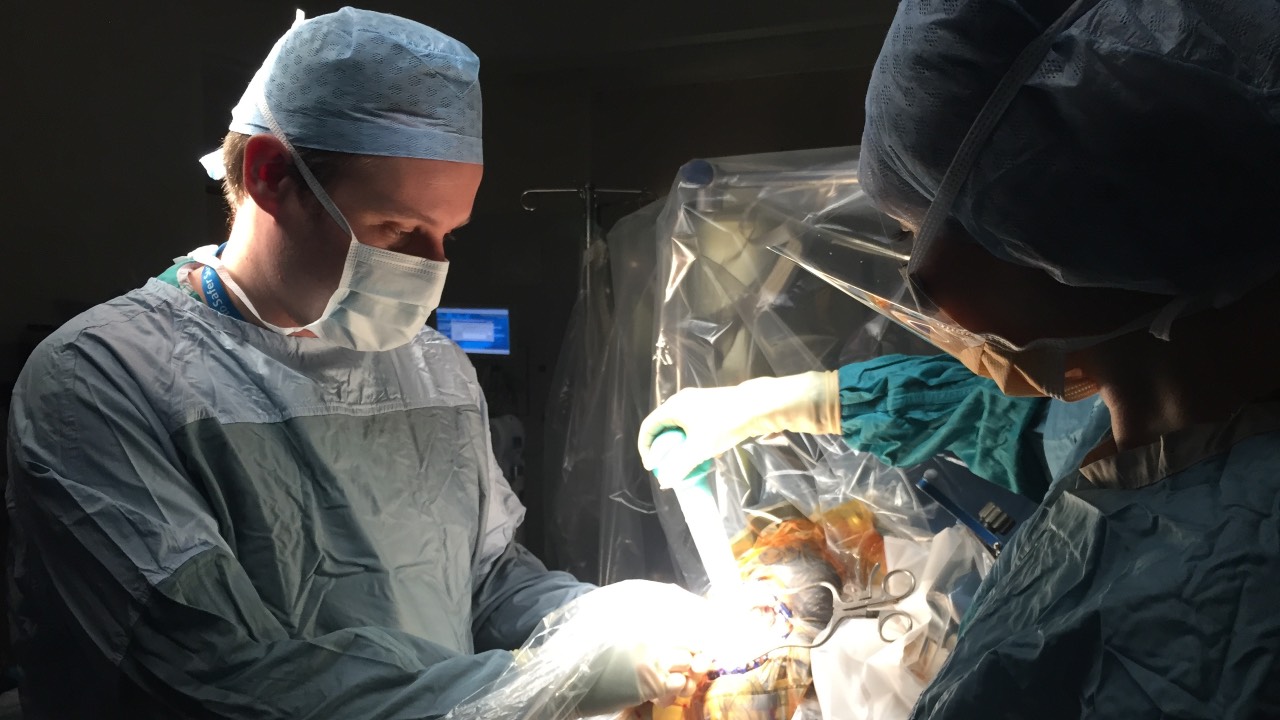
One of the most striking aspects of this technology is that it could eventually be used during a patient's surgery. (File photo: University of Nottingham)
More than 12,000 people in the UK are diagnosed with a primary brain tumor every year. It is the biggest cancer killer of children and adults under the age of 40.
For many of them, the wait to find out exactly what kind of tumor they have, and how it should be treated, can stretch to nearly a month.
During this wait, treatment decisions are effectively on hold, but it may soon be a thing of the past.
There are around 150 different types of brain tumor, from slow-growing to aggressive cancers, each of which can respond differently to different types of treatment.
A groundbreaking genetic testing method developed by researchers at the University of Nottingham and Nottingham University Hospitals National Health Service (NHS) Trust is being rolled out across a network of NHS sites in England, in what could mark one of the most significant advances in brain tumor diagnosis in recent years.
The technology can classify a tumor in as little as two hours, compared to the 26 days currently required under standard laboratory methods.
The two-year pilot program worth £2.1 million ($2.78 million), funded by the NHS Genomics Unit, is called Equitable Access to Rapid Genomic Diagnosis in Brain Tumours: A National Genomic Network of Excellence.
It brings together leading genomic medicine services, universities and NHS organizations from across England to test whether the technology can be embedded into routine clinical care.
How the test works
At the heart of the innovation is a method developed by Matt Loose of the University of Nottingham's School of Life Sciences.
Small tissue samples taken from the tumor are sent to the pathology lab, where they are prepared and loaded into a compact sequencing machine made by Oxford Nanopore. As molecules of DNA pass through a nanopore - a tiny hole in the device - specialist software developed at the University of Nottingham, in partnership with hospital clinicians, reads the tumor's unique genomic fingerprint and produces a classification within hours rather than weeks.
Determining the exact type of brain tumor requires complex genetic testing, hence the significance of the speed this new technology enables cannot be overstated.
Under the current system, samples are typically sent to specialist laboratories and results can take several weeks to come back. It leaves patients and their families to endure agonizing uncertainty and, in many cases, delaying the start of treatment.
"In our study, we showed that 90% of cases can be classified within that two-hour time frame. The test does not stop running at two hours, it carries on for 24 hours and generates more data which can be used to provide the classification for these patients," Matt Loose told CGTN Europe.
"If there was still no classification available at this time, samples would be analyzed by the current conventional standard of care processes," he adds.
'Game-changing' in the operating theatre
One of the most striking aspects of this technology is that it could eventually be used during a patient's surgery.
Stuart Smith, Consultant Neurosurgeon at Nottingham University Hospitals NHS Trust and Clinical Associate Professor at the University of Nottingham, hailed the ability to access detailed genetic information at the point when surgical decisions are being made as "game-changing."
"I am very proud to have been part of this exceptional team creating this rapid genomic testing which will save valuable waiting time for patients who potentially are being told they don't have time on their side," he said.
"The ability to have detailed information about the tumor at the point when decisions are being made in the operating theater is game-changing," he added. "In some cases that can help us judge how far we should safely go while protecting healthy brain tissue.
"This gives us a glimpse of how brain tumor surgery could change in the future, with genomic information available during the operation itself, helping us make more informed decisions for each individual patient."
Where and how the pilot will run
Testing will be available at six NHS trusts: Queen's Medical Centre in Nottingham, King's College hospital, Guy's and St Thomas hospital, Newcastle upon Tyne hospitals, Great Ormond Street Hospital for Children and University Hospitals Birmingham.
"Our goal is to expand to nine by the end of the trial process. By that point we would hope that the trial would have generated sufficient evidence that the test can be added to the Test Directory and implemented for all patients," said Loose.
"A key goal of the work is to help address equity of access for all patients safely and as quickly as possible," he added.
The clinical leadership for the network comes from the University of Birmingham and University Hospitals Birmingham, with scientific leadership provided by the University of Nottingham and Nottingham University Hospitals Trust.
The inclusion of Great Ormond Street is particularly notable as it signals that the pilot is designed to include children diagnosed with brain tumors, one of the most heartbreaking diagnoses a family can receive.
The wider ambition
The two-year pilot will evaluate how successfully the test can be delivered in routine NHS settings.
The long-term ambition, if the results are positive, is to expand the technology to neuropathology centers across England, potentially improving care for thousands of brain tumor patients every year.
The research underpinning the pilot was published in the internationally-recognized journal Neuro-Oncology. The University of Nottingham says the NHS award marks a significant milestone in translating world-leading laboratory research into real-world clinical impact.
Brain tumor diagnosis has long been one of the more technically demanding areas of oncology, precisely because the genetic classification of tumors is so complex and consequential. The type of tumor a patient has determines not only which treatments are likely to work, but also their prognosis. It will be a significant step forward to be able to get that information quickly and accurately.
Frankie Swords, NHS medical director called the pilot scheme a "world first" and said "no other health service" is rolling the technology out across multiple hospitals.
For now, the focus is on the thousands of patients who face one of the most frightening diagnoses imaginable every year - and on giving them, and their doctors, the information they need as fast as science would allow.