


China-US summit opens better communication channels
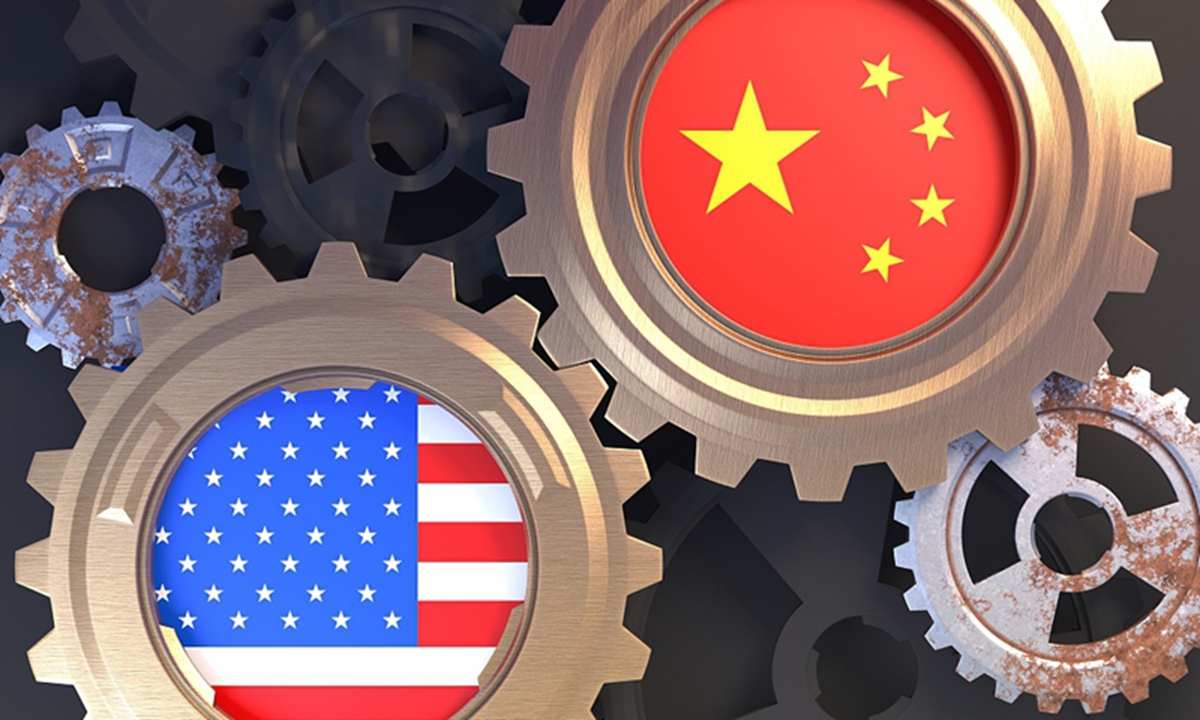
(File photo: China US)
The entire world is witnessing a turbulent and unpredictable period in international relations. The unpredictable events, such as the Russia-Ukraine military conflict and the US-Israel-Iran war, have ramifications for freedom of navigation in the world's oceans and transport of oil, gas and food supplies.
The current wars have also shown that military power alone will not be able to resolve many issues, highlighting the need to engage in diplomatic dialogue to address common issues for the greater good of people in many different parts of the world.
The summit meeting between President Xi Jinping and President Donald Trump held in Washington is critically important and could be seen as important efforts toward building a stabilization mechanism between China and the US.
President Xi received a grand welcome in the US and President Trump was personally there to welcome him. This is an indicator of the value of the Chinese president visiting the US.
The summit is significant because both leaders appear to recognize that unmanaged China-US rivalry carries substantial economic and security risks. They have emphasized dialogue, strategic stability and avoiding a conflict between the two major powers.
During his visit, Xi pointed out that "the Thucydides Trap can be overcome" and "achieving the great rejuvenation of the Chinese nation and making America great again can go hand in hand."
It will be a relief to the entire world that the US does not consider China as a rival but a peer competitor.
Competition between major powers will be there and cannot be completely eliminated. However, the best thing for the sake of the world is that it is managed in such a way that it will not lead to military engagement. Regular leader-level dialogue reduces the danger of miscalculation.
We cannot and should not expect that everything will be good between China and the US after the summit. We should be happy the world's two most powerful leaders are meeting again. Hence, the world can probably expect only a partial and conditional reset of relations. This summit will not resolve the rivalry, but it will stabilize relations, at least up to a certain level where military conflict is not immediate. The summit could open better communication channels between China and the US and minimize tension at a tactical level. Both countries have incentives to preserve economic exchanges and prevent another escalation of tariff confrontation. Cooperation brings mutual benefit.
The world's two major countries must exist in peace and find a way to get along.
Economic interdependence still provides an important stabilizing incentive. Neither side appears to be pursuing complete economic separation. Trade, supply chains, agricultural purchases, critical minerals and technology remain the areas where both Washington and Beijing have something to negotiate.
The real question is whether both leaders can translate the bonhomie they showed to the world into institutionalized mechanisms, follow-through and sustained communication.
This summit may help to establish a more predictable framework in which competition continues while both sides attempt to prevent it from becoming military conflict. It could be labelled as "managed strategic competition."
Beijing and Washington need to institutionalize the dialogue to manage the competition with guardrails and manage the Taiwan question, prevent escalation in technology and trade, develop and manage AI for good, and maintain channels of communication during crises.
There could be good news for American youth as Xi invited 100,000 youth to visit China for exchanges and study over the next 5 years, and two giant pandas arrived at their new home at Zoo Atlanta, embarking on a 10-year protection cooperation program in the US. These are symbolic gestures but both leaders need to work to enhance mutual bonds beyond words and gestures.
World peace depends on these great countries. They have to work to enhance the welfare of people. They have to realize a potential war will bring only destruction and harm to people all over the world. The world needs peace and stability.
The author is former admiral of the Sri Lanka Navy, and nonresident senior research fellow at the Hong Kong Research Center for Asian Studies, China.