


Afghan returnees seek humanitarian aid as winter approaches
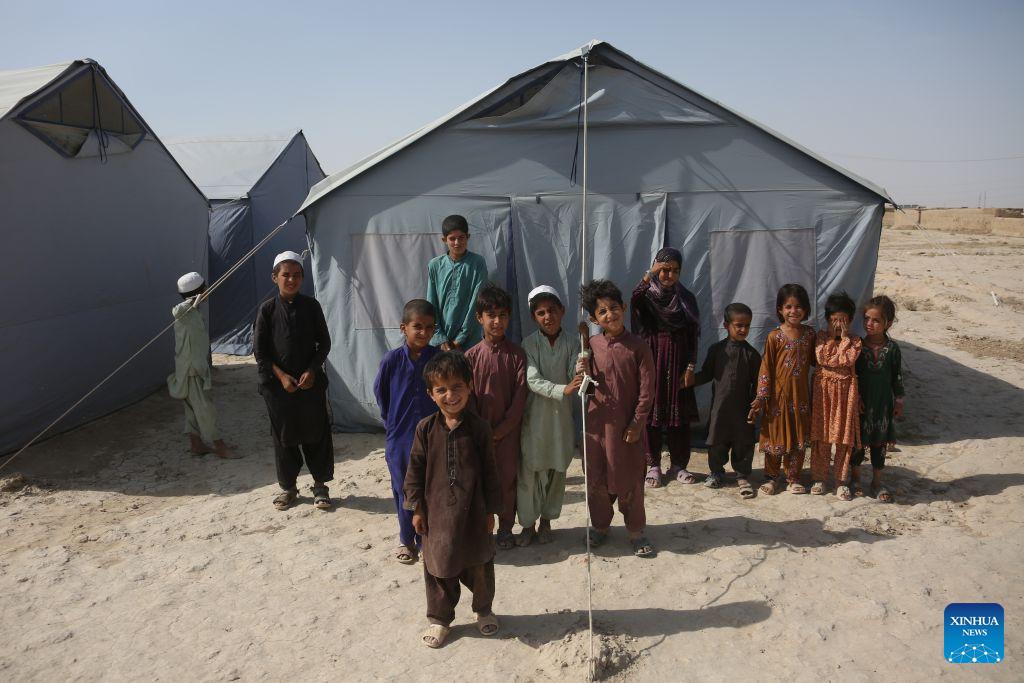
Children of Afghan returnees are seen at a makeshift camp on the outskirts of Mazar-i-Sharif, capital of northern Balkh province, Afghanistan, Sept. 16, 2026. (Photo: Xinhua)
MAZAR-I-SHARIF, Afghanistan, Sept. 29 (Xinhua) -- As winter approaches, Ghous Mohammad, an Afghan returnee living with his 14-member family in a makeshift camp on the outskirts of Mazar-i-Sharif, THE capital of northern Balkh province, worries about how they will survive the cold season.
"Winter is approaching, but we have nothing -- no coal, no stove and no blankets to keep ourselves warm. We don't even have enough food," said the elderly Mohammad.
After spending nearly 30 years as a refugee in neighboring Pakistan, Mohammad returned to Afghanistan last year in hopes of rebuilding his life in his homeland. He said around 800 families now live in the makeshift camp, located in a desert area with limited access to water and other necessities.
"We have many problems, including poverty and unemployment. We don't have cash or enough food, flour or wheat. No one has helped us," said Mohammad, who lives in a four-room mud house with his wife, children and grandchildren.
The returnees spent about a year living under tents before some began building mud houses to protect themselves from the scorching summer heat and harsh winter cold, Mohammad said.
However, some families still live under tents because they cannot afford to build houses, while some young people have left the area again in search of work to support their families, he added.
"We face many problems, including a lack of clean water. We don't have a school, clinic or mosque, and there are no jobs or sources of income," said Mohammad, who returned to Afghanistan about a year ago.
A few medical workers visit the camp weekly to provide basic health services, he said.
Another returnee, Ghulam Mohammad, echoed the concerns, saying his family has almost no facilities to cope with the approaching winter.
"Winter is getting closer, but we have nothing to cope with the cold weather. We don't have blankets, coal or a stove," said Ghulam Mohammad, the breadwinner of a four-member family who currently lives in a tent.
"We need shelter. We need a school and a health clinic," he said.
Born in a refugee camp in Pakistan 25 years ago, Ghulam Mohammad returned to Afghanistan for the first time last year. Despite the economic difficulties, he said he was happy to be back in his homeland.
According to the United Nations High Commissioner for Refugees (UNHCR), around 6 million Afghans have returned to Afghanistan from neighboring countries over the past three years, with Pakistan and Iran accounting for the majority of returnees.
The large-scale returns have placed additional pressure on communities and humanitarian agencies, as many returnees need shelter, employment, education, health care and other basic services.
Mawlawi Asadullah Wafa, head of the Refugees and Repatriation Directorate in Balkh province, said the government has planned to establish townships for returnees and has distributed land plots for them to build houses.
However, many returnees are unable to construct houses because of a lack of financial resources, Wafa said.
About 25,000 refugee families returned to Balkh province in 2025, while around 1,500 families have returned so far this year, he said, adding that land distribution for returnees is continuing.
"They (the returnees) need shelter, but they cannot build houses because of financial difficulties, while winter is approaching," Wafa said.
"We want national and international aid agencies, as well as donor countries, to help build shelters for returnees who have already received land plots for this purpose," he added. ■
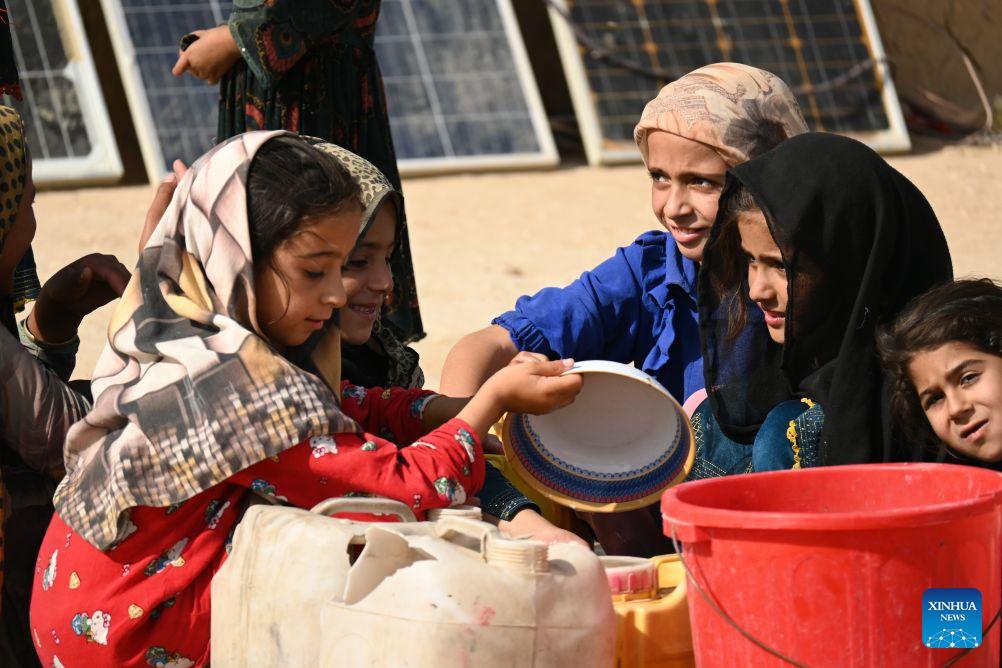
Children of Afghan returnees are seen outside a makeshift mud house on the outskirts of Mazar-i-Sharif, capital of northern Balkh province, Afghanistan, Sept. 16, 2026. According to the United Nations High Commissioner for Refugees (UNHCR), around 6 million Afghans have returned to Afghanistan from neighboring countries over the past three years, with Pakistan and Iran accounting for the majority of returnees.
The large-scale returns have placed additional pressure on communities and humanitarian agencies, as many returnees need shelter, employment, education, health care and other basic services.(Xinhua/Zhang Yibin)
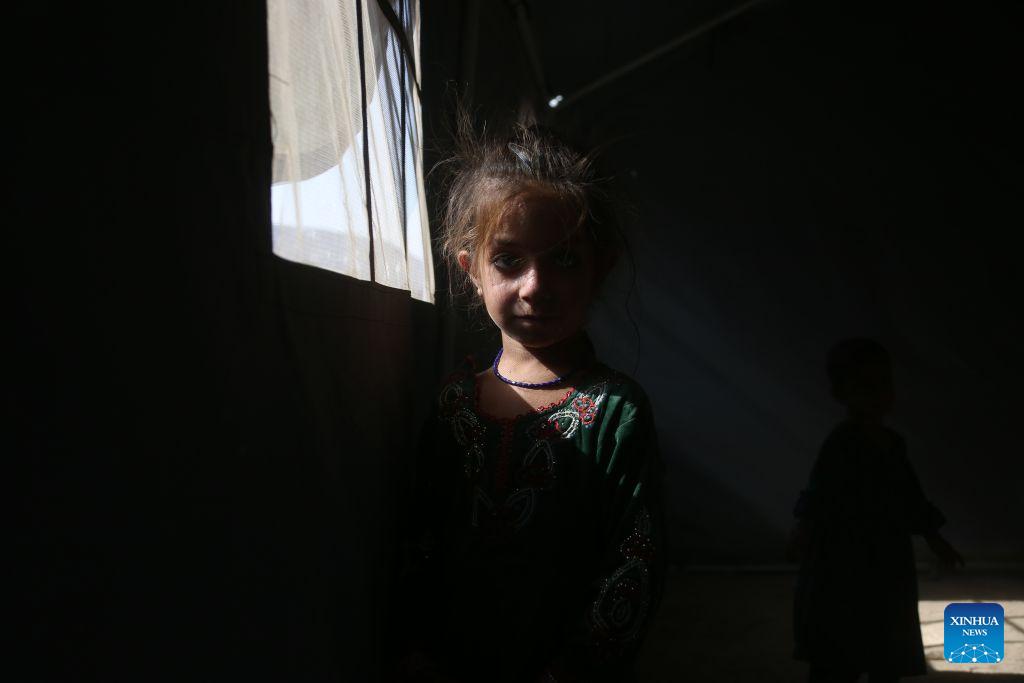
A child of Afghan returnees is seen at a makeshift camp on the outskirts of Mazar-i-Sharif, capital of northern Balkh province, Afghanistan, Sept. 16, 2026. According to the United Nations High Commissioner for Refugees (UNHCR), around 6 million Afghans have returned to Afghanistan from neighboring countries over the past three years, with Pakistan and Iran accounting for the majority of returnees.
The large-scale returns have placed additional pressure on communities and humanitarian agencies, as many returnees need shelter, employment, education, health care and other basic services.(Photo by Saifurahman Safi/Xinhua)
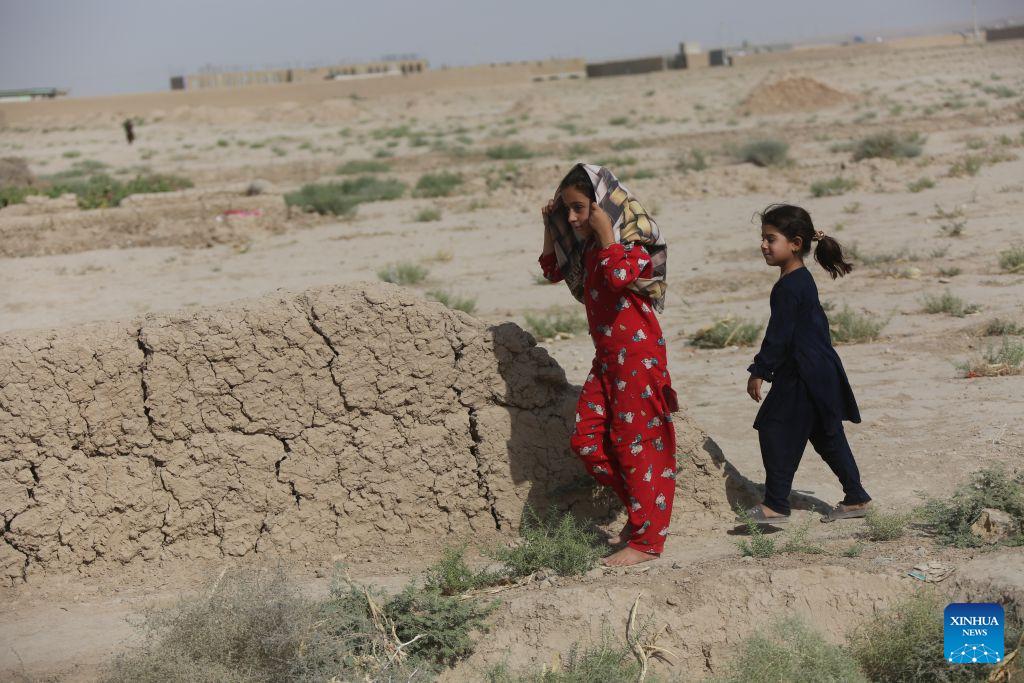
Children of an Afghan returnee family are seen on the outskirts of Mazar-i-Sharif, capital of northern Balkh province, Afghanistan, Sept. 16, 2026. According to the United Nations High Commissioner for Refugees (UNHCR), around 6 million Afghans have returned to Afghanistan from neighboring countries over the past three years, with Pakistan and Iran accounting for the majority of returnees.
The large-scale returns have placed additional pressure on communities and humanitarian agencies, as many returnees need shelter, employment, education, health care and other basic services.(Photo by Saifurahman Safi/Xinhua)
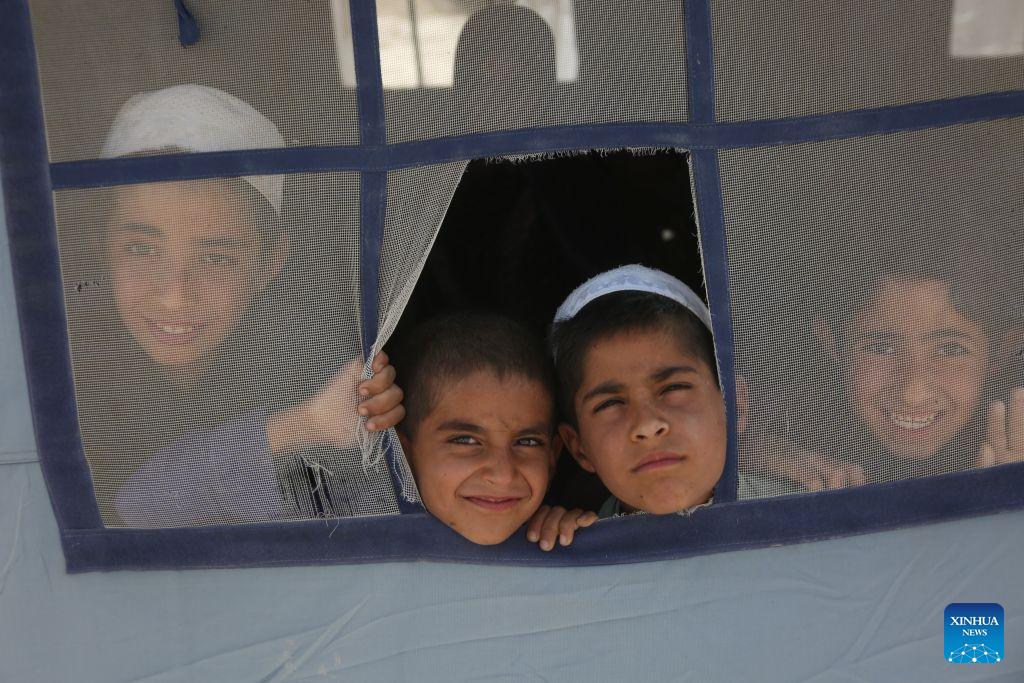
Children of Afghan returnees are seen at a makeshift camp on the outskirts of Mazar-i-Sharif, capital of northern Balkh province, Afghanistan, Sept. 16, 2026. According to the United Nations High Commissioner for Refugees (UNHCR), around 6 million Afghans have returned to Afghanistan from neighboring countries over the past three years, with Pakistan and Iran accounting for the majority of returnees.
The large-scale returns have placed additional pressure on communities and humanitarian agencies, as many returnees need shelter, employment, education, health care and other basic services.(Photo by Saifurahman Safi/Xinhua)
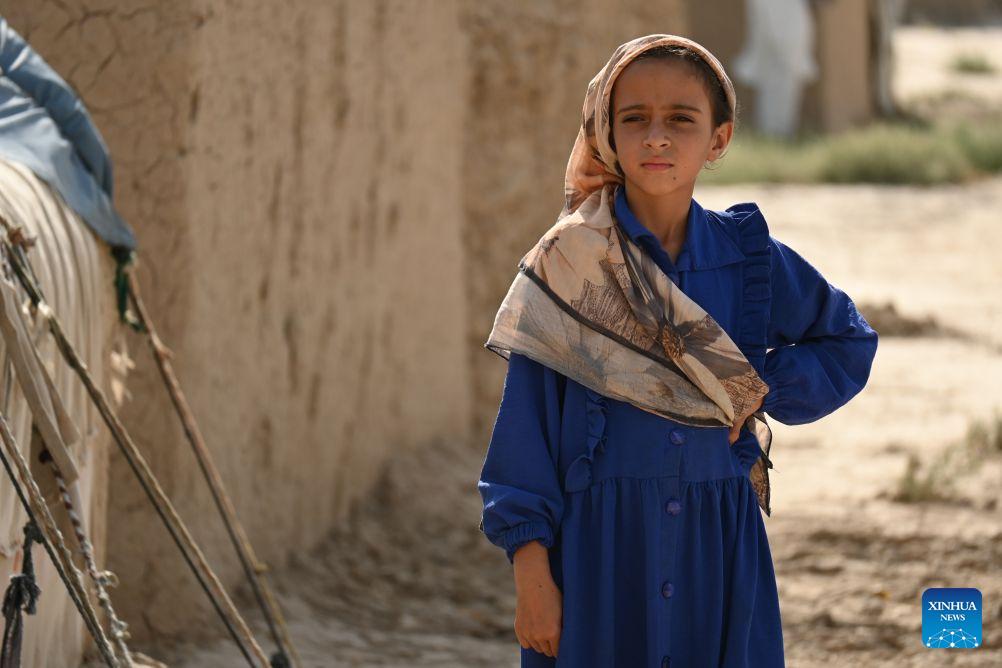
A child of Afghan returnees is seen outside a makeshift mud house on the outskirts of Mazar-i-Sharif, capital of northern Balkh province, Afghanistan, Sept. 16, 2026. According to the United Nations High Commissioner for Refugees (UNHCR), around 6 million Afghans have returned to Afghanistan from neighboring countries over the past three years, with Pakistan and Iran accounting for the majority of returnees.
The large-scale returns have placed additional pressure on communities and humanitarian agencies, as many returnees need shelter, employment, education, health care and other basic services.(Xinhua/Zhang Yibin)
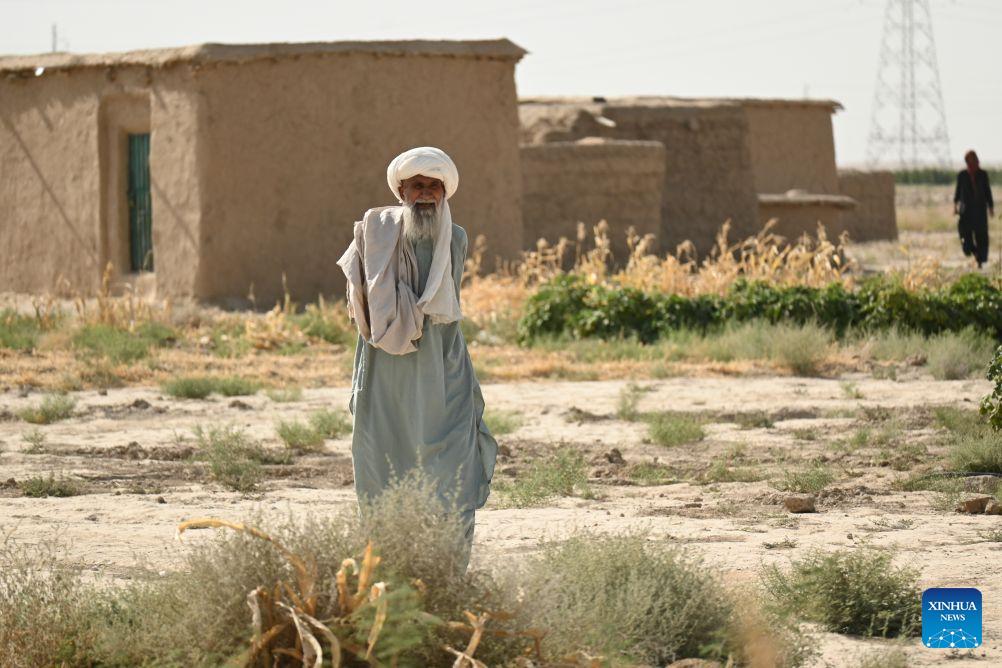
An elderly Afghan returnee is seen outside a makeshift mud house at a camp on the outskirts of Mazar-i-Sharif, capital of northern Balkh province, Afghanistan, Sept. 16, 2026. According to the United Nations High Commissioner for Refugees (UNHCR), around 6 million Afghans have returned to Afghanistan from neighboring countries over the past three years, with Pakistan and Iran accounting for the majority of returnees.
The large-scale returns have placed additional pressure on communities and humanitarian agencies, as many returnees need shelter, employment, education, health care and other basic services.(Xinhua/Zhang Yibin)
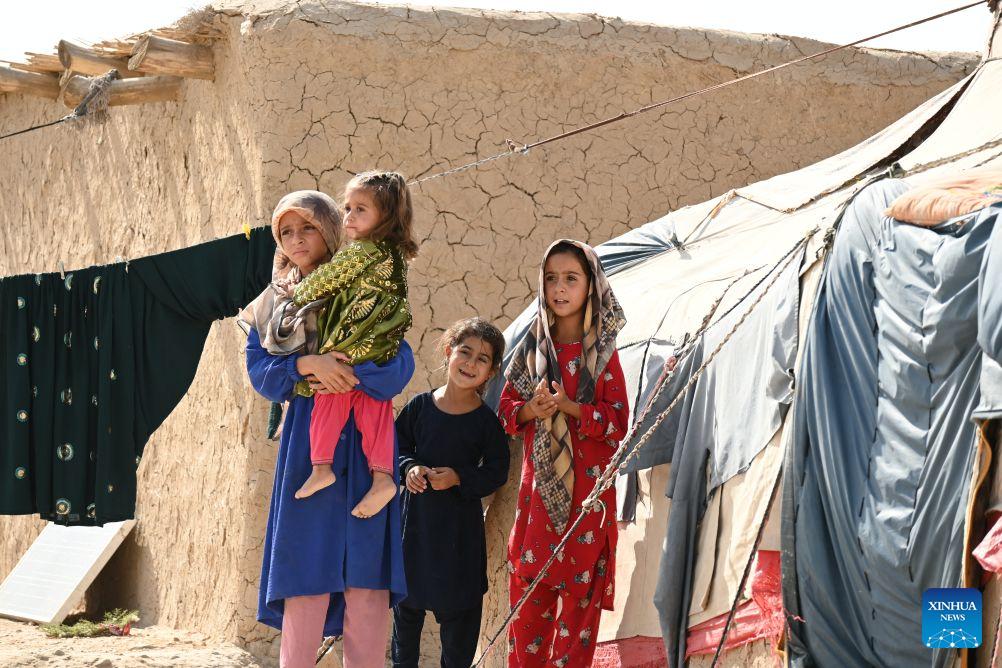
Children of Afghan returnees are seen outside a makeshift mud house on the outskirts of Mazar-i-Sharif, capital of northern Balkh province, Afghanistan, Sept. 16, 2026. According to the United Nations High Commissioner for Refugees (UNHCR), around 6 million Afghans have returned to Afghanistan from neighboring countries over the past three years, with Pakistan and Iran accounting for the majority of returnees.
The large-scale returns have placed additional pressure on communities and humanitarian agencies, as many returnees need shelter, employment, education, health care and other basic services.(Xinhua/Zhang Yibin)