


German town bans Holocaust memorial stones in shock AfD-CDU alliance
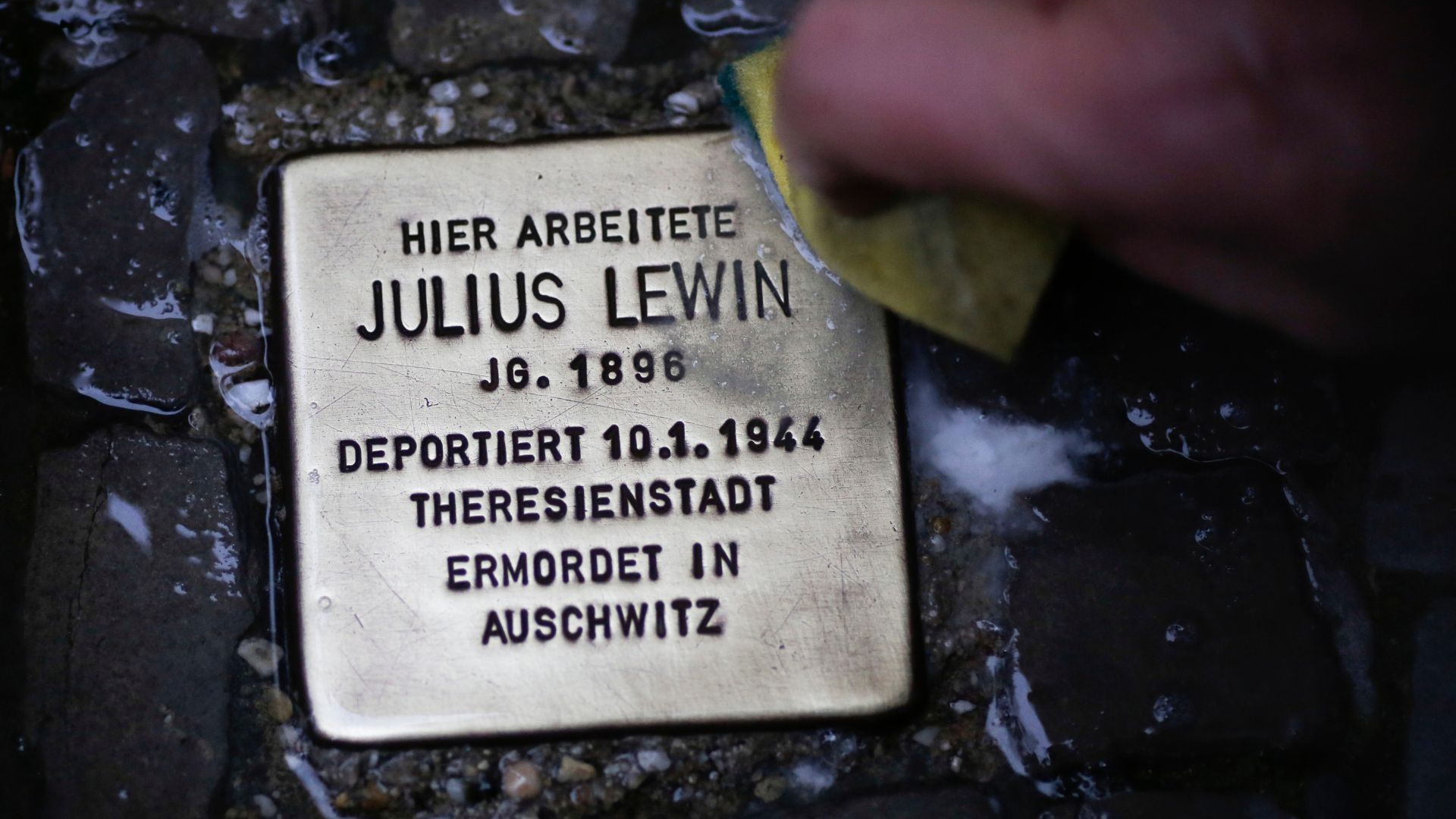
A polished 'stumbling stone' catches the light on a dark pavement. This stone commemorates the life of Julius Lewin, who died in Auschwitz. (Photo: AP)
A town in Germany's eastern Saxony state has approved a controversial motion to prohibit the installation of brass plaques commemorating victims of Nazi persecution.
The motion was brought to Heidenau city council, near Dresden, by the far-right Alternative for Germany (AfD), who recently achieved historic successes in the Saxony-Anhalt regional elections, as well as the ruling center-right Christian Democratic Union (CDU) party.
While architects of the ban say they are looking to find a new way to honor victims, activists, politicians and representatives of Holocaust victims have been quick to slam the decision as scandalous.
The International Auschwitz Committee has said the move was a "transparent and despicable attempt to drive Nazi victims in Heidenau out of the city once again."
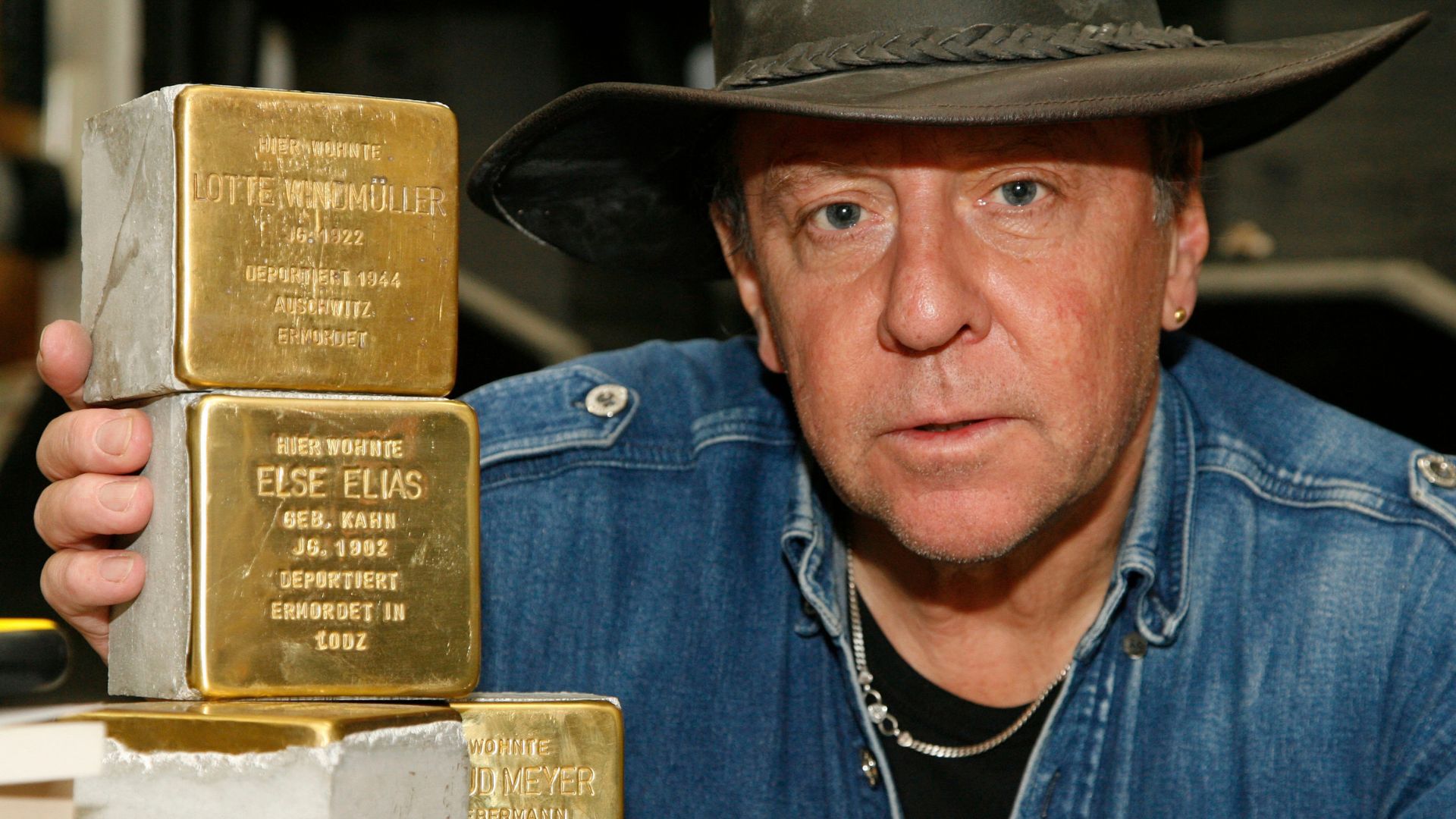
Gunter Demnig, now 78, has been making his Stolpersteine or 'stumbling stones' for three decades. (Photo: AP)
The stumbling stones
The stones, known as Stolpersteine or 'stumbling stones' in German, are 10x10cm concrete cubes topped with brass, inscribed with the name and brief information of a person who died at the hands of the Nazis, and laid into the ground as cobblestones in towns and cities across Europe that were affected by the Nazi regime.
Initially created in the 1990s by German artist Gunter Demnig, the stones are usually set in front of houses that were the last residence of victims. Demnig says each stone serves as a reminder of all the lives interrupted, and can bring families together as they remember loved ones.
The stones' wide-ranging installation makes each cube part of the world's largest decentralized monument, spreading out over 30 other European countries, including Germany, Belgium, Italy, Spain and Switzerland.
Despite totalling over 126,000, each stone remains handmade in a workshop of the Stiftung Spuren, a non-profit foundation founded by Demnig.
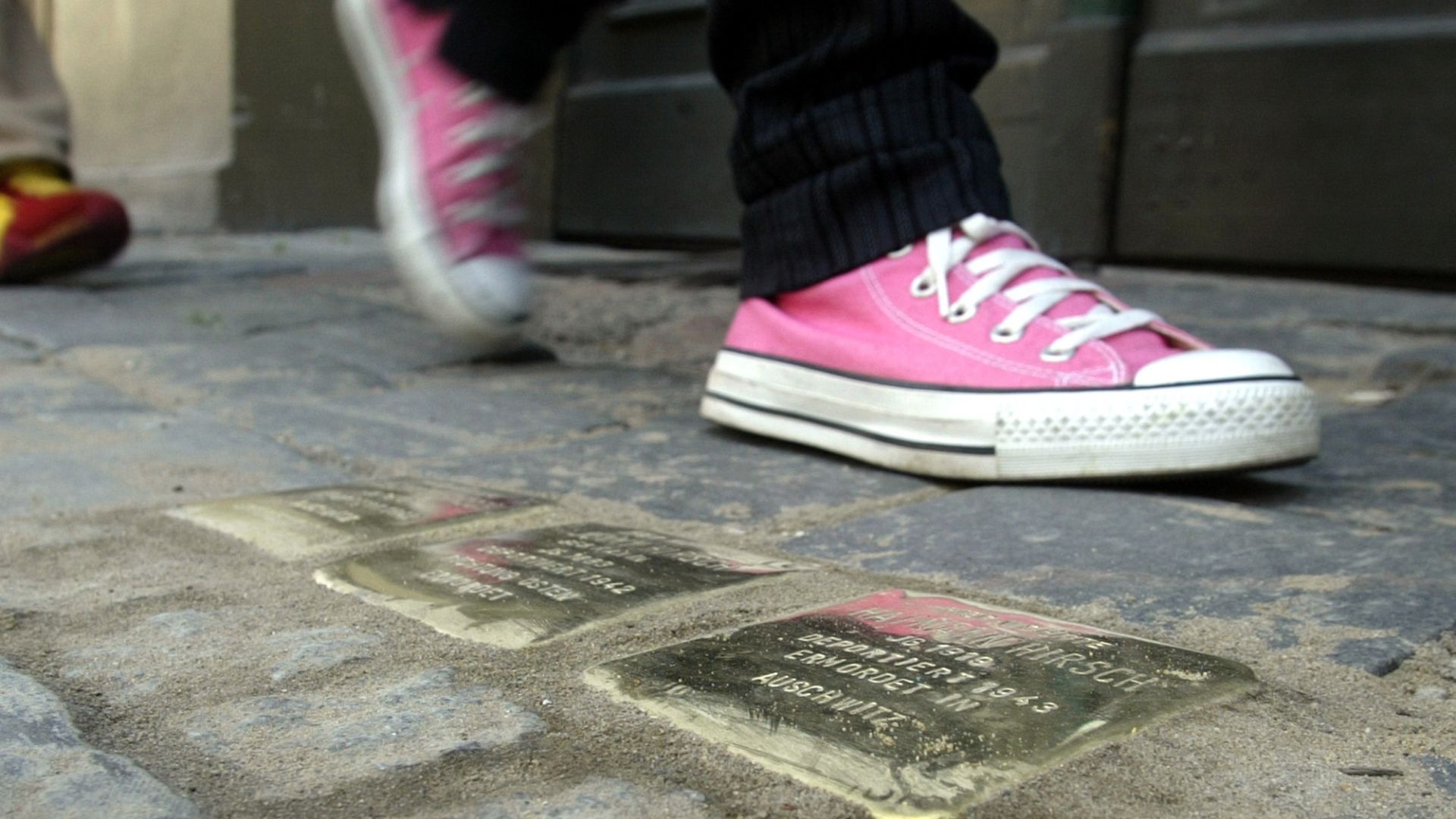
Heidenau isn't the first town to disallow the stones on the basis of honoring victims in a different way. (Photo: AP)
The move by Heidenau city council is not the first of its kind. Munich in Germany's southeast does not allow Stolpersteine to be laid on city-owned land, as some Jewish leaders there objected to the idea of victims' names being trampled on.
Though the ban's initiators have followed this argument, insisting that they wish to honor Holocaust victims in a way that prevents passersby "walking over or even stepping onto the names," Demnig has said remembrance must be visible and tangible, especially so the past is not lost on today's youth. He has also pledged to work more than ever on his Stolpersteine.
Strong reactions have arisen from further afield. Karin Prien, Germany's Federal Minister of Education, hit out at the suggestion by the council to remember victims at cemeteries instead, saying "whoever banishes Stolpersteine and memorials to Jewish life from public spaces to the cemetery places death above life."
From the northern state of Schleswig-Holstein, state commissioner for political education Christian Meyer-Heidemann has slammed the decision, telling German news agencies that the move was "a deliberate attack on our culture of remembrance.”
Israel’s ambassador to Germany, Ron Prosor, has also weighed in on the ban. With some of his own relatives commemorated in the stones, Prosor took to social media to say he was "ashamed" by the city council.
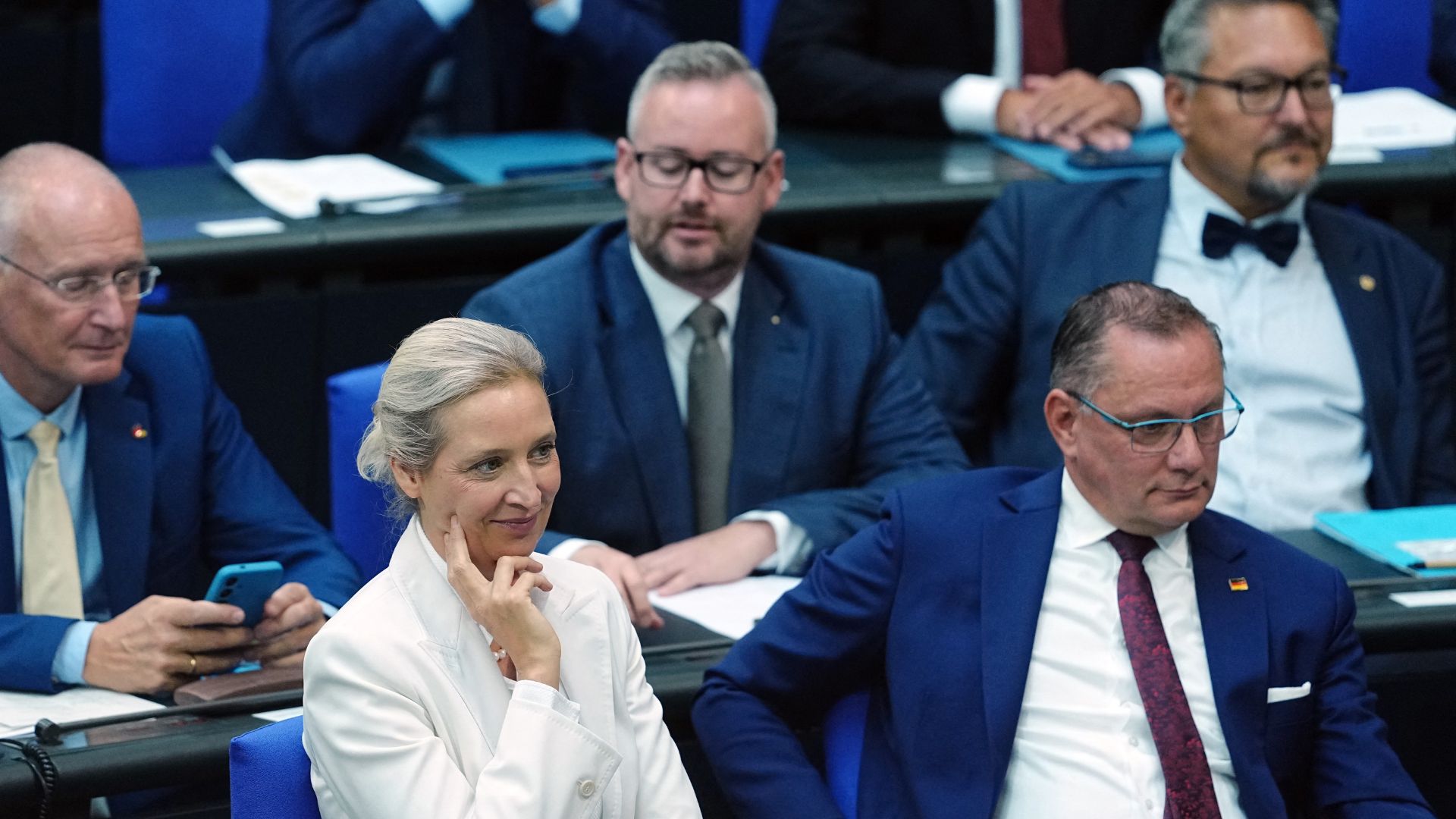
Germany's AfD has now entered mainstream politics after regional electioin successes in Saxony-Anhalt and Mecklenburg-Western Pomerania. (Photo: AP)
The chipping away of the firewall
The AfD has made no secret about its ambitions to draw back Holocaust memorial in Germany. The party has consistently challenged Germany's post-war culture of remembrance, advocating for what prominent party members describe as a necessary shift in how the nation views its history.
Yet while many may find this move from the AfD unsurprising, the fact that the motion was made jointly with the ruling CDU will raise different concerns.
Most parties across Germany have adhered to the Brandmauer, an informal firewall against working with the AfD, who were classified as extreme-right by German intelligence earlier this year.
Just weeks ago, following the shock of the regional elections in Saxony-Anhalt, German Chancellor Friedrich Merz reiterated his position not to work with the AfD toward the formation of a state government.
While official CDU party lines remain unchanged, the overt and formal cooperation between AfD and CDU city councillors in Heidenau indicates shifts at the municipal level in attitudes towards the once-fringe party.
With the AfD securing well over 40% of the regional vote in Saxony-Anhalt, the CDU has been cornered into a position where boycotting the far-right leaves them facing highly fragile, unnatural alliances with left-wing parties instead.
Though the Brandmauer remains largely in place for now, with the AfD struggling to form a coalition in Saxony-Anhalt, the Stolpersteine ban may prove the first loose stones of an avalanche gathering over eastern Germany.