


Canada lists Pacific Link oil pipeline project of national interest
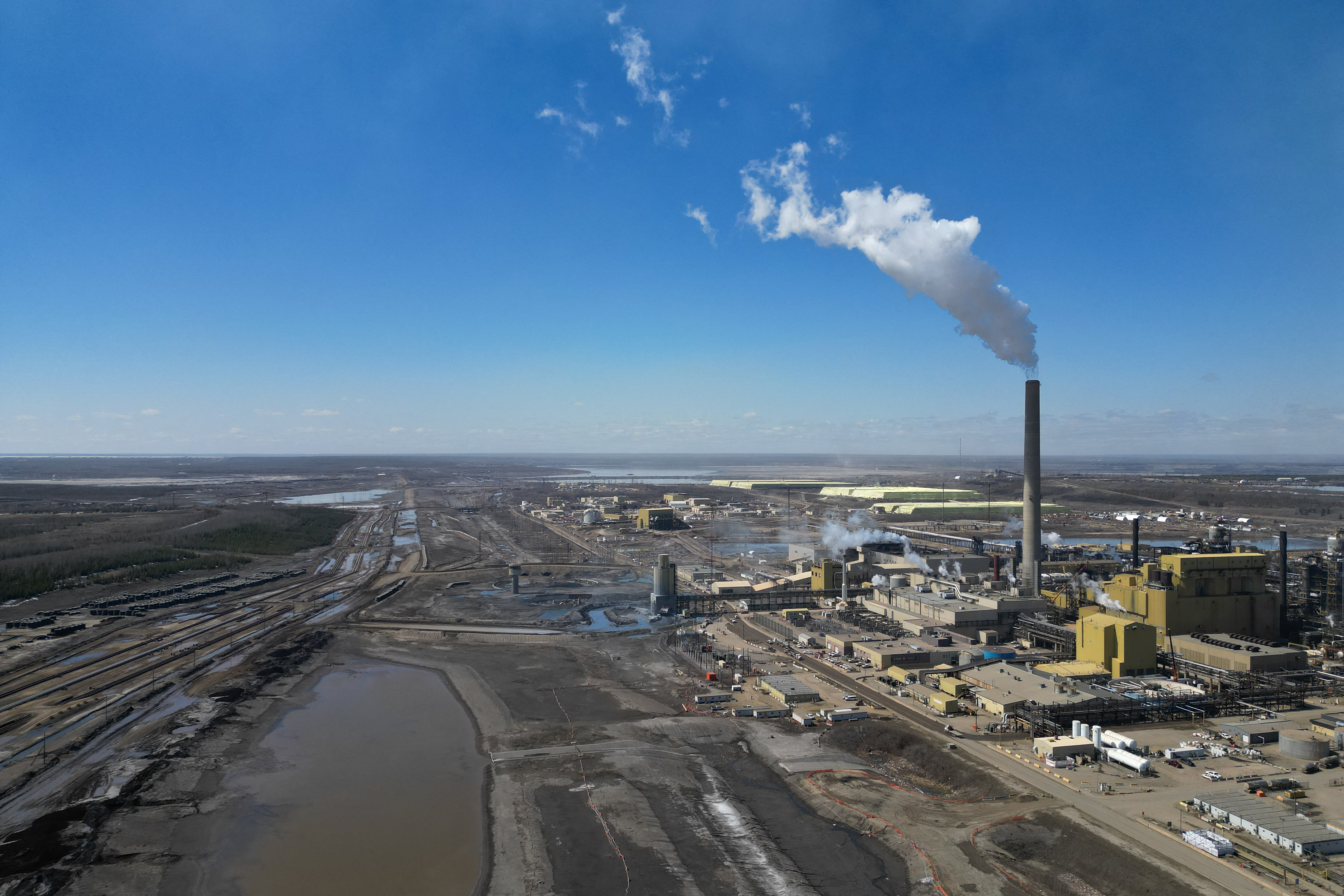
A view of the Syncrude refinery at its Mildred Lake facility, which has a capacity of bitumen conversion to synthetic crude oil of 350,000 barrels per day, in the Wood Buffalo municipality of Alberta, Canada, on May 5, 2026. (Photo: AFP)
The Canadian government on Thursday designated a proposed West Coast oil pipeline, now named Pacific Link, as a project of national interest, a move aimed at reducing reliance on the United States and expanding energy exports to other markets.
The roughly 1,250-km pipeline would run from Bruderheim, Alberta, to a deepwater port near Delta, British Columbia, adding up to 1 million barrels per day of oil export capacity.
The project is the first to receive a national interest designation under the Building Canada Act. The designation allows it to undergo a streamlined federal regulatory review.
The pipeline would follow a southern route designed to avoid sensitive marine ecosystems along British Columbia's North Coast. The project is estimated to cost between 35.2 billion and 43.7 billion Canadian dollars (about 25.8 billion to 32 billion U.S. dollars).
Canada has the world's fourth largest proven oil reserves, but remains heavily dependent on the U.S. market. More than 90 percent of Canadian crude oil exports went to the United States in 2025.
The government said Pacific Link, together with improvements to the existing Trans Mountain pipeline system, could reduce Canada's dependence on U.S.-bound pipeline capacity from about 82-83 percent in 2025 to 65-70 percent.
The project is also expected to narrow the price differential between Western Canadian Select and West Texas Intermediate crude by 3 to 5 U.S. dollars per barrel, according to a government explanatory note.