


US-China tariff cuts may ease costs for American consumers
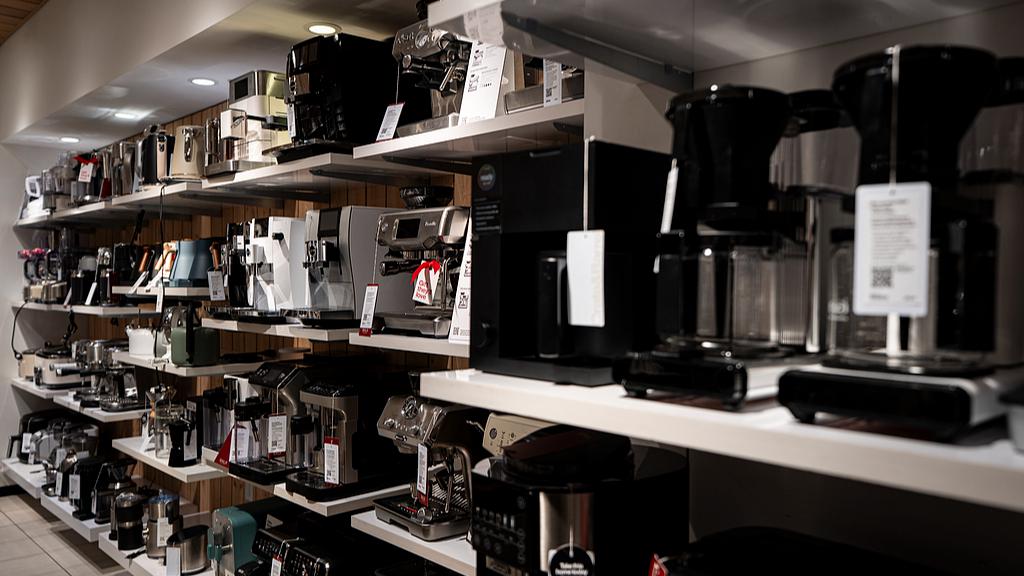
Electronic appliances are set on a shelf at a furniture store in Durham, North Carolina, December 22, 2025. (Photo: VCG)
Many Americans start their mornings by popping a slice of bread into the toaster and switching on the coffee maker. But in the last couple of years, these appliances have come with a higher price tag.
The price increases have come amid a series of additional US tariffs on Chinese imports, covering products ranging from high-tech goods such as electric vehicles, solar panels and semiconductors to everyday consumer goods including household appliances, toys and handbags.
But the fluctuations in consumer prices linked to China-US trade disputes could soon begin to stabilize.
Following recent trade negotiations, China and the United States agreed to reciprocal tariff cuts covering $30 billion worth of products from each side. For American consumers, the move could translate into lower prices for everyday goods such as coffee makers, toasters, blankets, and bed linens among others.
When tariffs against China were at their height, raising a newborn came at a much higher cost. According to a report released by the US Joint Economic Committee in 2025, new parents in the United States were paying 24% higher prices on key products for babies, and the total cost increase for new parents in the United States in 2025 was estimated at $875 million.
Much of the increase was associated with tariffs the United States imposed on trading partners, including China. An analysis by Goldman Sachs published last year estimated that US consumers bore 55% of the additional import costs, adding to the financial pressure from inflation driven by a range of factors.
Toys, a major source of joy for children, were also among the products affected. The 2025 holiday season proved particularly challenging for many families as the prices of some toys climbed sharply.
A Jingle Bell Express train set that sold online for $160 in 2024 rose to $200 in 2025, while $20 Barbie dolls sold at grocery stores climbed to $30, according to media reports.