


New aircraft carrier, 10,000 troops: What's behind the US' latest move in Middle East
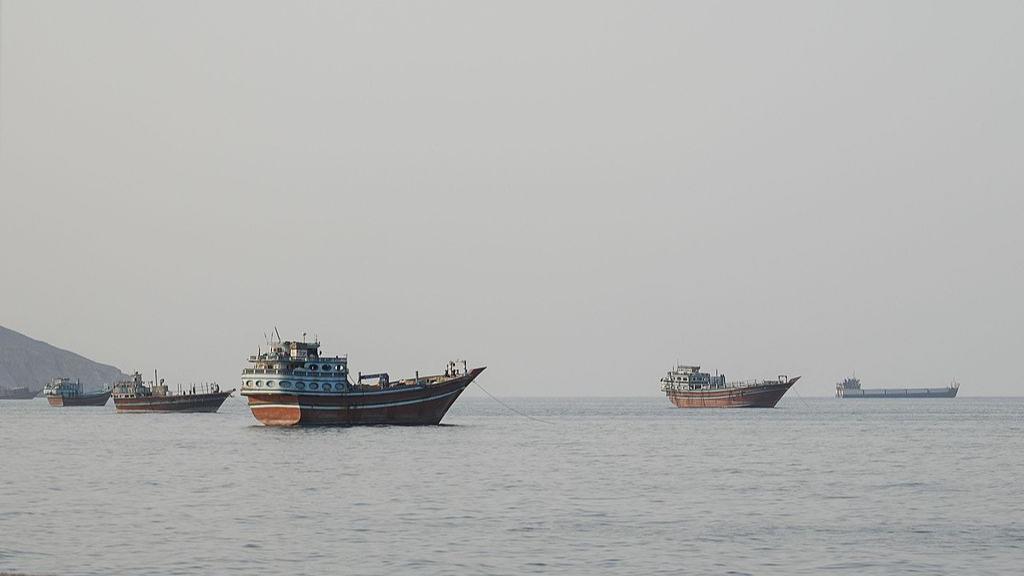
Ships are seen anchored off the coast near the Strait of Hormuz, October 2, 2026. (Photo: VCG)
The Pentagon is sending a third aircraft carrier strike group and additional Marine Corps ships to the Middle East, adding 9,000 to 10,000 more US troops to the region, The Wall Street Journal reported on Thursday.
The ships, jet fighters, Marines and sailors will arrive in the region by the end of November, the report cited US officials as saying.
Two carriers – the USS George H.W. Bush and USS George Washington – are already in the Middle East. The aircraft carrier USS Theodore Roosevelt left its home port of San Diego on Sunday for a scheduled deployment.
If the Washington stays after the Roosevelt arrives, it will bring the number of carrier strike groups in the region to three for the first time since April, the report noted.
Also on Thursday, US President Donald Trump said at the White House that Iran "won't exist any longer" unless it signs "a very fair deal," renewing his threats amid stalled negotiations.
In a Time magazine interview published on the same day, Trump said that it's "possible" that he will ramp up bombing against Iran after the midterm elections. He dismissed a report on munition shortages as "fake news."
The United States is seeking to pressure Iran into making concessions ahead of the US midterm elections in November by stepping up its military deployment in the Middle East, said Niu Xinchun, director of the China-Arab Research Institute at Ningxia University.
Niu said the most favorable outcome for the US administration would be for Iran to return to the negotiating table under US pressure and reach an agreement before the midterm elections.
Such an agreement could include reopening the Strait of Hormuz, which would help ease international oil prices, Niu noted.
Niu identified three possible paths for the ongoing US-Iran standoff: negotiations, a prolonged stalemate or military confrontation.
At present, Iran does not appear willing to let the situation drag on, Niu said. Tehran has recently proposed negotiations and submitted its own plan to Washington. However, the US has yet to accept Iran's terms, leaving the talks stalled.
On the military front, Niu said the US deployment could be linked to an aircraft carrier rotation, with the USS Theodore Roosevelt potentially replacing the two carriers already deployed in the region. Another possibility is that Washington could maintain a three-carrier presence in the Middle East for a short period, he said.
Regardless of the specific purpose of the deployment, the arrival of a third US aircraft carrier in the region would increase the risk of another large-scale US-Iran conflict, Niu said.