


As new school year begins, Chinese-built schools ease overcrowding in Iraq
Baghdad (People's Daily) - As school bells rang on Sunday morning, more than 12 million students in Baghdad and other Iraqi governorates began the 2026–2027 academic year, with hundreds of newly built schools entering service and bringing visible changes to the country's educational landscape.
Highlighting the growing cooperation between Iraq and China, Haider Majeed, spokesperson for the General Secretariat of the Iraqi Council of Ministers, told the People's Daily in an exclusive interview that schools constructed by Chinese companies, including PowerChina, have significantly eased the overcrowding that had burdened students for years, while helping reduce the widespread use of double- and triple-shift school days.
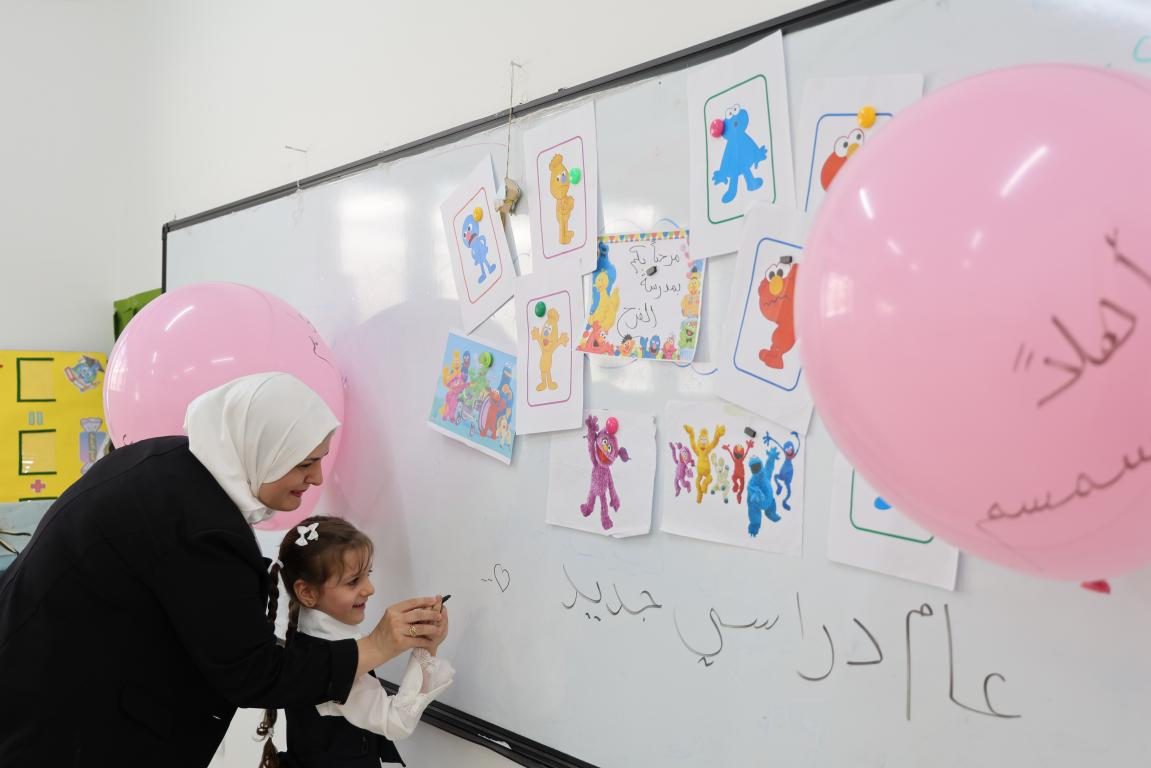
A local teacher helps her student write on a whiteboard. (Photo: Inas Ibrahim/People's Daily)
Majeed said students are now studying in modern school buildings that provide a stable and supportive environment conducive to learning. He described the school construction project as one of the most successful examples of practical Iraq-China cooperation in infrastructure and essential public services that directly affect people's daily lives.
Iraq has completed the first-phase project to build 1,000 model schools in cooperation with Chinese companies. The new facilities have been handed over to Iraqi authorities and put into service as part of broader efforts to address the country's longstanding shortage of school buildings and improve educational conditions in governorates across the country.
In western Baghdad, the start of the new school year feels markedly different.
At Al-Farah School, the 1,000-school project is no longer merely a figure in government plans or official documents. It has become part of students' everyday lives, with children arriving on Sunday morning to begin the new academic year in spacious classrooms and modern facilities.
"The school was constructed according to high engineering and educational standards, with vibrant colors and a spacious design that provide students with greater opportunities to take part in a wide range of activities," Amira Al-Jubouri, principal of Al-Farah School, told the People's Daily.
"Our pupils began their new academic year by raising the national flag and singing the Iraqi national anthem and patriotic songs in the school's modern courtyard, filled with joy and pride," she said.
Al-Jubouri said the expanded facilities and modern amenities have brought a significant improvement to the learning environment for both students and teachers.
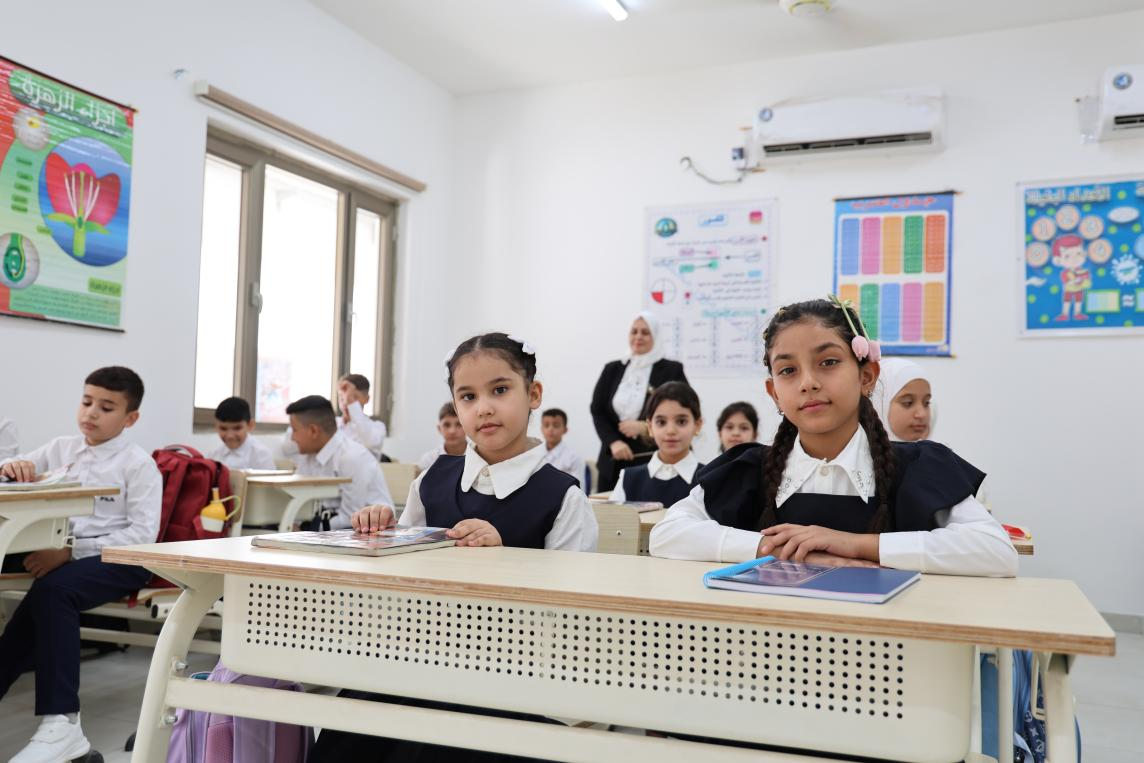
Local students sit in a classroom. (Photo: Inas Ibrahim/People's Daily)
"We no longer need to shorten class times or combine overcrowded classrooms," she said. "We now have ample space for extracurricular, educational and sports activities."
Describing the project as a major turning point, Al-Jubouri expressed gratitude to China, the Chinese companies involved in the project, and the Iraqi government for their support for education.
"These buildings are not merely walls and furniture," she said. "They represent a genuine investment in our children's future and provide them with an environment worthy of their ambitions."
For students, the Iraq-China partnership can be felt in the details of everyday school life.
Reema Ali, a student at Al-Farah School, said she was delighted to begin the new academic year in the new building.
"At my old school, there was severe overcrowding and very little space," she said. "I always dreamed of studying in a spacious and beautiful school with modern classrooms and clean playgrounds like this one."
"I feel comfortable and happy coming here every morning," Reema added with a smile, holding her new backpack. "This school gives me more motivation to study. I hope to work hard, get good grades, and achieve my dreams."
Iraq has long faced a shortage of educational infrastructure as its student population continues to grow. More than 12 million students are participating in the current school year, including approximately 1.2 million first-grade pupils entering elementary school for the first time.
Against this backdrop, the 1,000-school project, carried out in cooperation with Chinese companies, has added thousands of modern classrooms and other facilities to Iraq's education system, helping the country address shortages of school buildings and reduce its reliance on overcrowded and temporary facilities.
At Al-Farah School in western Baghdad, the voices and laughter of children filling the new classrooms offer a vivid illustration of how a major Iraq-China infrastructure project is translating into tangible changes in everyday life.
From blueprints and construction plans to classrooms filled with students, the project has become a concrete example of cooperation between the two countries, delivering practical benefits to local communities.