


Hearing tests shed light on marine mammals' exposure to human-made noise
SYDNEY, Oct. 9 (Xinhua) -- Researchers in Australia have conducted the first hearing tests on Australian sea lions and long-nosed fur seals, providing a baseline for assessing how human-made noise could affect the marine mammals.
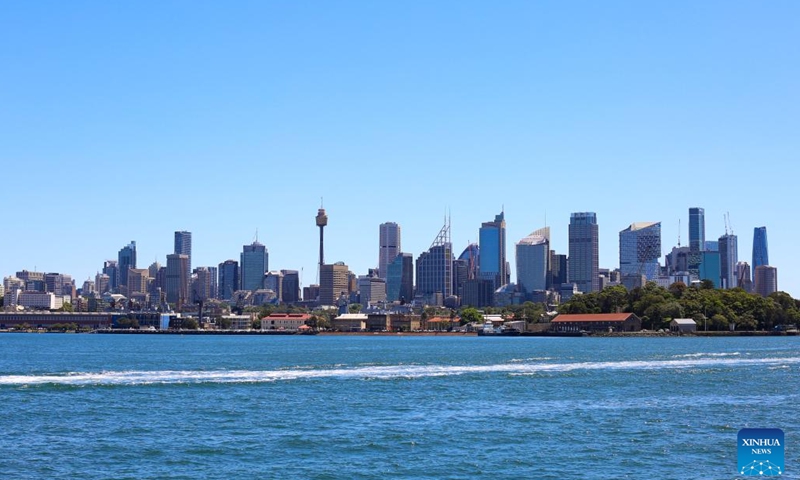
This photo taken on Nov. 5, 2025 shows a view of the skyline in Sydney, Australia. (File photo: Xinhua)
The researchers from Curtin University and Taronga Conservation Society Australia trained two sea lions and two long-nosed fur seals at Taronga Zoo Sydney to respond to sounds by pressing a paddle when they heard a tone, receiving fish as a reward for correct responses, according to a university statement released on Thursday.
Both species were most sensitive to sounds around 3.2 kilohertz, providing the first detailed baseline of hearing sensitivity for the two species, the statement said.
Understanding what the animals could hear was an important first step in assessing the potential impacts of noise from human activities, said lead researcher Christine Erbe, a professor at Curtin University's Center for Marine Science and Technology.
The researchers also assessed whether long-nosed fur seals could hear noise from boats, ships, aircraft, trains and construction, finding that many of these sounds were audible to the animals when hauled out on land.
The research was particularly important for the endangered Australian sea lion, whose population is estimated at about 12,000 and which relies on hearing to communicate, find food, navigate and detect threats, Erbe said.
The findings, published in the journals Conservation and Animals, could help inform environmental impact assessments and noise management as shipping, coastal development and offshore industries expand, the researchers said, adding the next step is to investigate how noise affects the animals underwater and when it begins to interfere with their behavior or hearing.