


Saudi-Houthi strikes continue as Yemen's humanitarian crisis deepens

Passengers take cover as flames and smoke fill part of King Khalid International Airport, during what authorities described as a strike at the airport, in Riyadh, Saudi Arabia, October 10, 2026. (Photos: VCG)
Yemen's Houthi group said on Monday evening that it had launched a new ballistic missile strike on King Khalid International Airport in the Saudi capital Riyadh, while Tehran reiterated its readiness to facilitate dialogue between Saudi Arabia and the Houthis.
Houthi military spokesman Yahya Sarea said in a statement that the group targeted the Riyadh airport with a ballistic missile, claiming the missile "accurately hit" the target.
He said the group also launched a drone attack on King Khalid Air Base in Khamis Mushait, southwestern Saudi Arabia, claiming a direct hit.
Meanwhile, the Saudi-led coalition said in a statement that its forces had intercepted and destroyed a Houthi ballistic missile fired toward Riyadh on Monday evening.
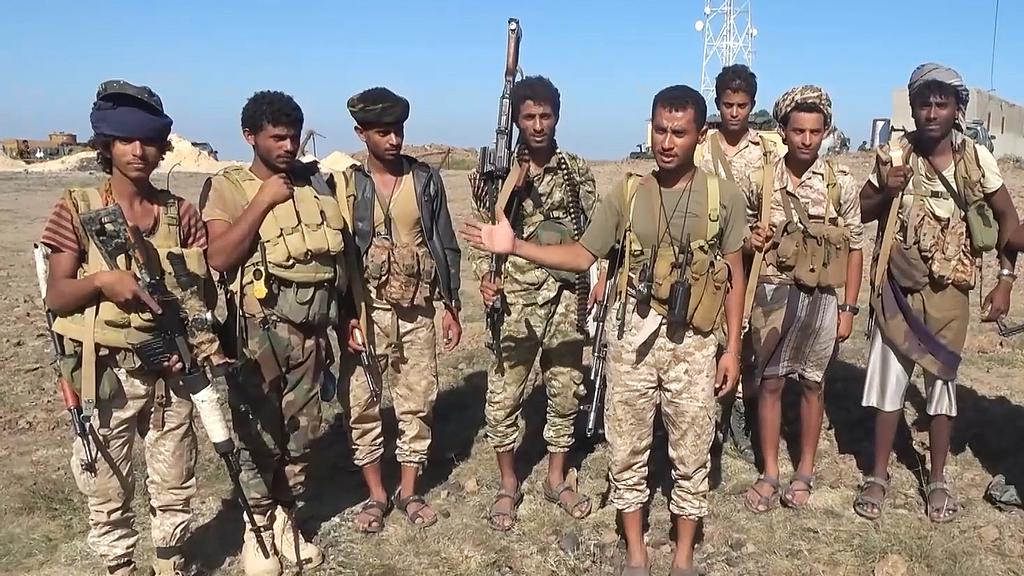
Houthi fighters in Taiz province, Yemen.
Tit-for-tat strikes
The latest attacks came amid escalating military exchanges. Yemeni military spokesperson Majid al-Nuzaili said on Monday that government forces had carried out 1,879 attacks on Houthi military targets, claiming that about 950 Houthi fighters had been "neutralized."
The Houthis, meanwhile, said Saudi Arabia had carried out 119 strikes on several Houthi-held areas over the past 24 hours. The group reported that at least nine people had been killed and seven others injured in strikes on Al-Jawf, a province near the Saudi border.
The Houthis have intensified strikes on the Riyadh airport in recent days. In response, Saudi Arabia's civil aviation authority has extended the closure of Riyadh's international airport until Saturday and airlines scrapped flights after continuing attacks by Houthis emptied the skies over Saudi Arabia's capital.
Li Zixin, a Middle East expert at the China Institute of International Studies, said the Houthis' objectives operate on several levels, with their core aim being to pressure Saudi Arabia to halt airstrikes against Houthi forces in Yemen and lift the blockade.
Li further explained that militarily, the Houthis seek to respond to escalation with escalation by targeting airports and oil facilities to increase economic and psychological pressure on Riyadh, and politically, they aim to consolidate their control in Yemen and enhance their negotiating leverage, while strategically seeking to demonstrate their value to Iran amid US-Iran tensions.
Li noted that the Houthis' decision to refrain from targeting the Islamic holy cities of Mecca and Medina suggests that their targets have been selectively chosen and carefully calculated. This, he said, reflects both a willingness to escalate and a desire to leave room for maneuver.
Given the likelihood of large-scale US intervention remains relatively low in the short term, Li said the situation in Yemen is likely to remain characterized by what is known as "low-intensity confrontation," with little prospect of a substantive breakthrough in the near future.
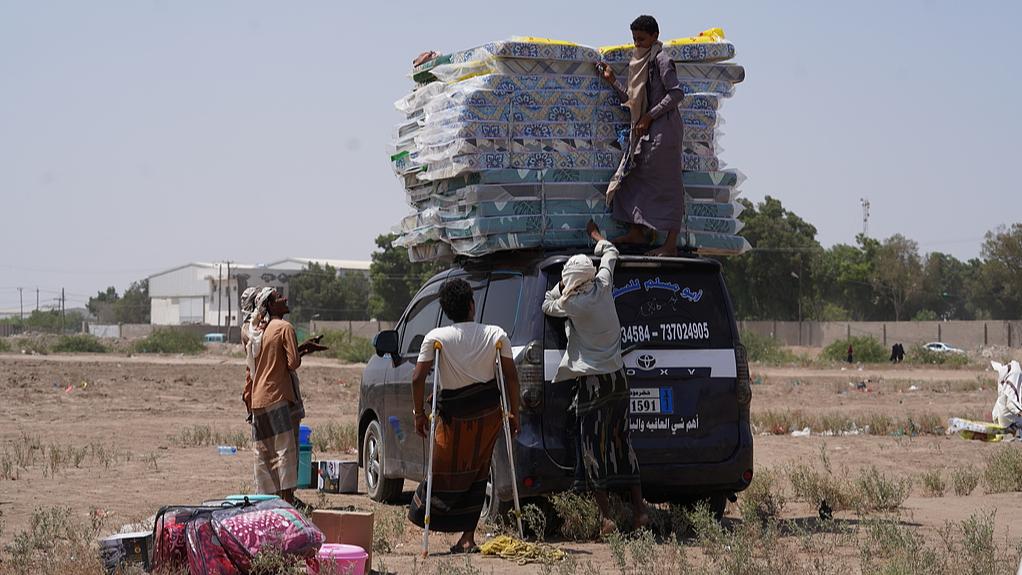
Displaced Yemeni families, who fled Houthi attacks on their villages in Taiz and the western coast region, receive food and shelter supplies provided by aid organizations in Aden, Yemen, October 12, 2026.
Humanitarian crisis deepens as calls for dialogue grow
The continued hostilities have sparked mounting regional and international concern.
At a weekly press conference on Monday, Iran's Foreign Ministry spokesman Esmaeil Baghaei said Tehran has "repeatedly expressed readiness to use our good offices to facilitate dialogue between the (warring) parties."
The UN Office for the Coordination of Humanitarian Affairs (OCHA) warned on Monday that continued hostilities and large-scale displacement are deepening the humanitarian crisis in Yemen, particularly in Taiz governorate.
The OCHA said that 216,000 people have been displaced nationwide since the start of August, including more than 172,000 people from Taiz alone, citing the International Organization for Migration.
The UN is particularly concerned about Taiz, where restrictions on key roads are reportedly disrupting civilian movement, commercial supplies and humanitarian access, said the OCHA.
"Authorities have warned that continued road closures, including along the Taiz-Aden road, are affecting the availability of food, fuel, water and medical supplies," the office said. "They also reported sharp increases in commodity prices and growing fuel shortages, threatening the continuity of essential health and water services."
Civilian casualties continue to rise. Since the start of August, at least 54 civilians have been killed, half of them children, said the OCHA. A further 171 civilians have been injured, including 107 women and children, it added.
The United Nations reiterated its call on all parties to respect international humanitarian law, protect civilians and civilian infrastructure, facilitate the safe movement of civilians, and allow safe, rapid and unimpeded humanitarian access to people.
(With input from agencies)