


Takaichi may revise wording on Japan's three non-nuclear principles: media
TOKYO, Oct. 15 (Xinhua) -- Japanese Prime Minister Sanae Takaichi suggested in parliament on Wednesday that the wording concerning the Three Non-Nuclear Principles could be revised in the country's three key security documents, which the government plans to update by the end of this year, the Nikkei newspaper reported Thursday.
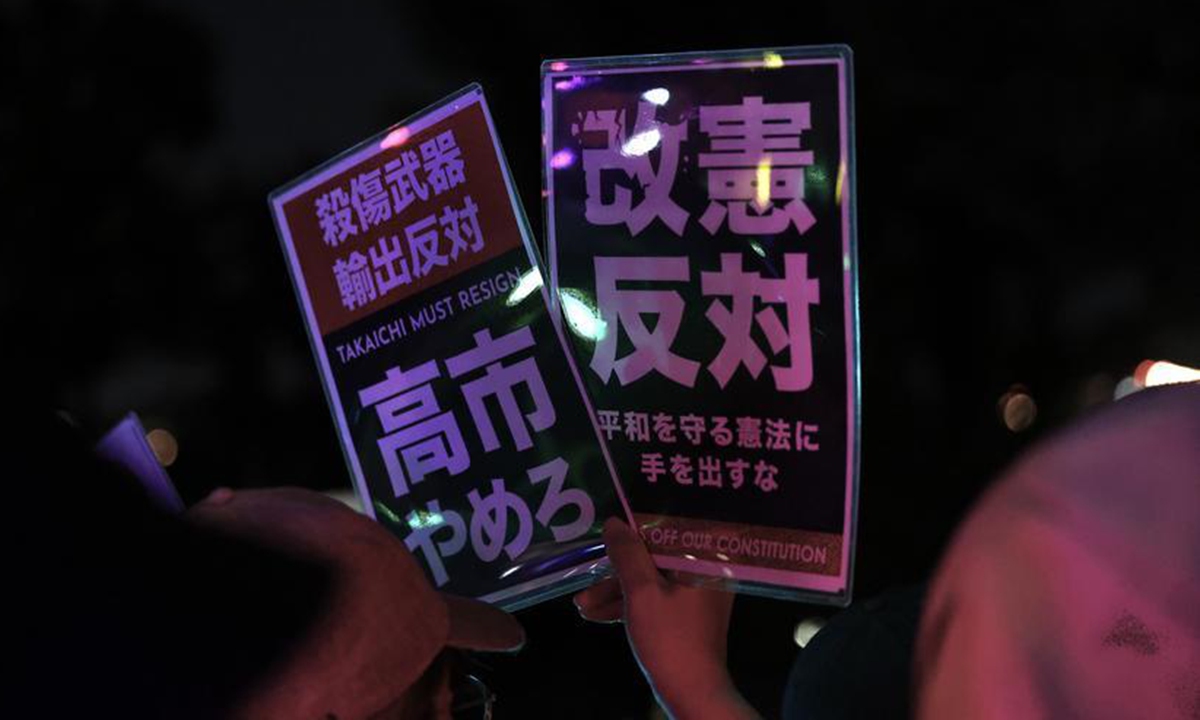
People holding signs attend a protest rally in front of the National Diet Building in Tokyo, Japan, on July 10, 2026. (Photo: Xinhua)
Responding to a question from Komeito party lawmaker Shinichi Isa at a House of Representatives Budget Committee session, Takaichi said the Japanese government is still upholding the Three Non-Nuclear Principles, but added that, as work on revising the three security documents is under way, there is "still room for discussion" regarding the specific wording on the principles.
The Nikkei newspaper interpreted the remarks as suggesting that while Takaichi may not change the principles themselves, she could revise the wording related to them in the three key security documents.
Japan's Three Non-Nuclear Principles refer to not possessing, not producing, and not permitting the introduction of nuclear weapons into the country.
The National Security Strategy, one of the three security documents, states clearly that "Japan will adhere to the basic policy of observing the Three Non-Nuclear Principles."
According to the report, Takaichi had long advocated revising the principle of not permitting the introduction of nuclear weapons before becoming prime minister.
In June this year, the Japan Innovation Party, the junior coalition partner of the ruling Liberal Democratic Party, also called for making a "realistic review" of the principle in its proposal on revising the three key security documents.
Meanwhile, Japanese Defense Minister Shinjiro Koizumi has repeatedly said in public since July that nuclear weapons-related policies should be discussed "without taboo." This series of developments has fueled growing concerns in Japan over a possible shift in the Takaichi government's nuclear policy.