


How the Global Governance Initiative tackles global challenges
In a world rife with violence and conflict, respect for international law, a rules-based order and peace matter more than ever.
Yet the existing international order has struggled to keep pace. Geopolitical rivalries, unilateral actions and the unequal distribution of influence have raised questions about whether it can address global crises or reflect the interests of countries large and small.
It is in response to these challenges that China has put forward its own solutions.
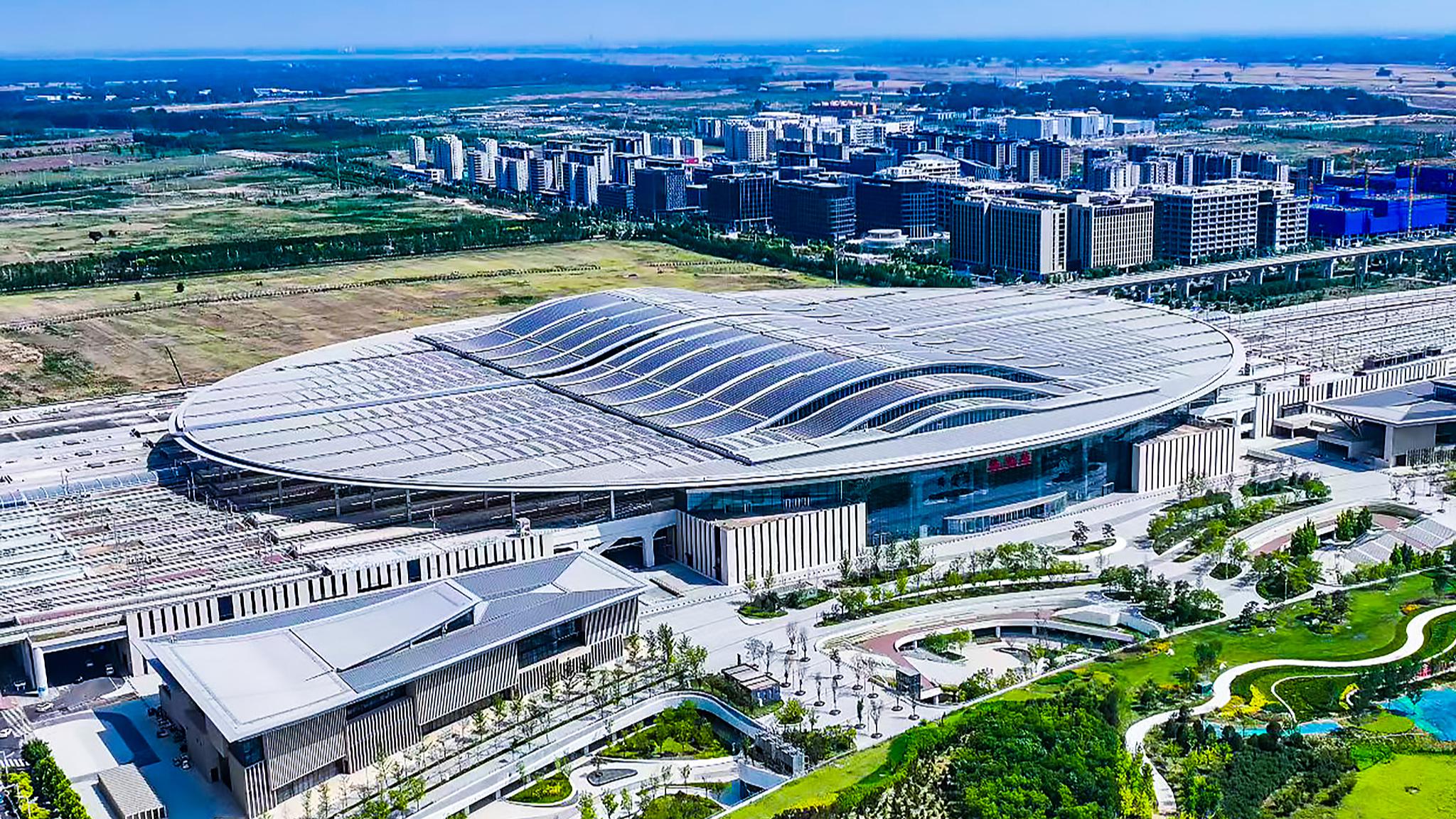
A view of Xiongan New Area, Hebei Province, north China, September 29, 2026. (Photo: VCG)
Last year, China proposed the Global Governance Initiative (GGI) during the Shanghai Cooperation Organization (SCO) Plus meeting, offering the world a framework to steer global action toward peaceful development.
Aligned with the UN Charter and grounded in multilateralism, the GGI rests on five tenets: sovereign equality, international rule of law, multilateralism, a people-centered approach and concrete action.
These principles will be in focus at the 2026 Global Governance Forum (Xiongan), which China will host in Xiongan New Area from October 23 to 25. Participants will explore practical ways to translate the GGI's vision into action.
A world order that champions peace
When it comes to addressing geopolitical challenges, China has presented the GGI as an invitation to peace.
On conflicts in the Middle East, China has put forward a four-point proposal, urging countries to pursue peaceful coexistence, respect each other's national sovereignty, abide by international law and coordinate development and security.
On the Palestinian question specifically, China has consistently called for a lasting ceasefire in Gaza. Last year, China pledged $100 million in aid to alleviate the humanitarian crisis and support reconstruction in the Gaza Strip.
On the Ukraine crisis, China continues to emphasize dialogue as the only viable path to resolving the dispute and supports all efforts that promote peace.
Unlike a world order shaped by power politics, where influence comes down to relative strength and those with military prowess abuse their power, the GGI advocates a more equitable and peaceful system – one that gives every country a seat at the table and an equal voice in global affairs.
Making AI a shared opportunity
How to harness the power of technology is another question countries are facing in this age.
Many see AI as a defining force in shaping the global landscape, and China is no exception. But rather than treating this technological shift as a zero-sum game, China views it as a shared opportunity.
The Global AI Governance Initiative reflects that view.
With its focus on openness, collaboration and sharing, China's vision for AI aims to close rather than widen the North-South divide in AI skills. It promotes connections rather than silos and shares the fruits of AI development rather than guarding them.
By providing open-source, open-weight AI models, China aims to equip more countries with AI systems they can localize and adapt to their own needs. That way, AI becomes a tool for development, not a tether for rent-seeking that traps developing countries in cycles of technological dependency.
Openness, though, must respect national rights. In its Position Paper on Global Cyber Governance in the Digital Intelligence Age, China sets out the principle of digital sovereignty: no country's development should come at the cost of another's integrity.
Since the GGI was proposed, nearly 60 members have joined the Group of Friends of Global Governance and nearly 160 countries have expressed support.
With international guests from nearly 100 countries gathering in Xiongan next week, the world will be watching how China mobilizes international support to promote new approaches to governance that transform the world for the better.