


From infrastructure to tech cooperation: How China is advancing South-South cooperation
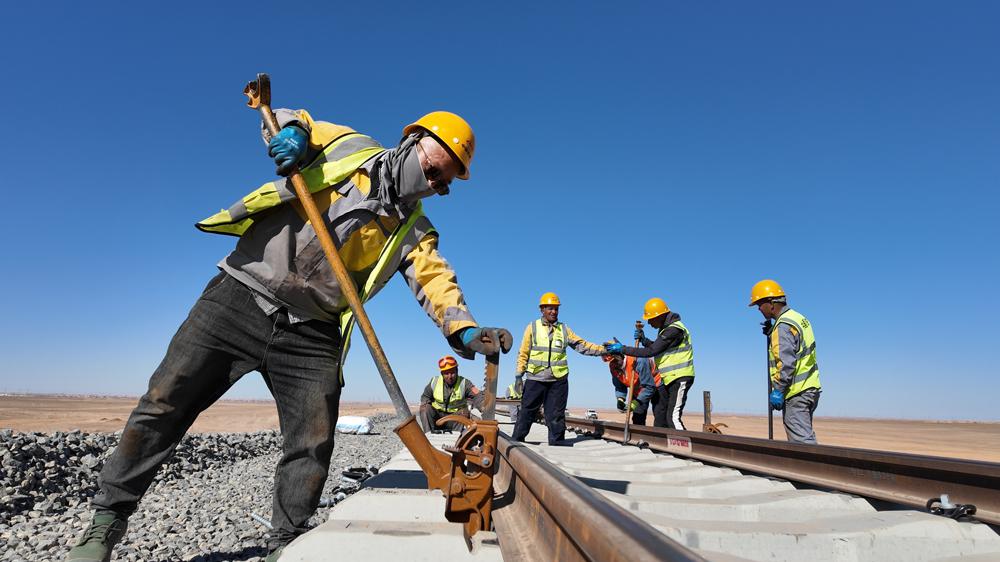
Workers build a 950-kilometer desert heavy-haul railway in Algeria, which entered full operation in February, 2026. A 575-kilometer section was built by China Railway Construction Corporation and an Algerian state-owned company. (Photo: China Railway Construction Corporation)
When Malaysia's largest single river-crossing bridge – the Batang Lupar 1 Bridge – opened to traffic on July 9, many residents gathered on site to celebrate the moment. The project has ended local communities' long-standing reliance on ferries, making travel and the transport of agricultural and fishery products much easier.
Previously, residents took ferries to cross the river, with cars, motorcycles and trucks often queuing to board. Services could also be suspended during the rainy season or in bad weather.
Built by China Railway Group, the 4.84-kilometer bridge, which stands more than 110 meters tall, was constructed despite challenging marine conditions.
On the other side of the world, in Algeria, a 950-kilometer desert heavy-haul railway started operations in February, linking the country's Gara Djebilet iron ore mine in the southwest to the national rail network and making it easier to transport iron ore and develop the local mining industry.
China Railway Construction Corporation built a 575-kilometer section of the railway in cooperation with a local state-owned company.
Such projects are typical examples of infrastructure cooperation between China and other Global South countries. From infrastructure and livelihood projects to scientific and technological innovation, China is advancing South-South cooperation to promote shared development and build a more prosperous future.
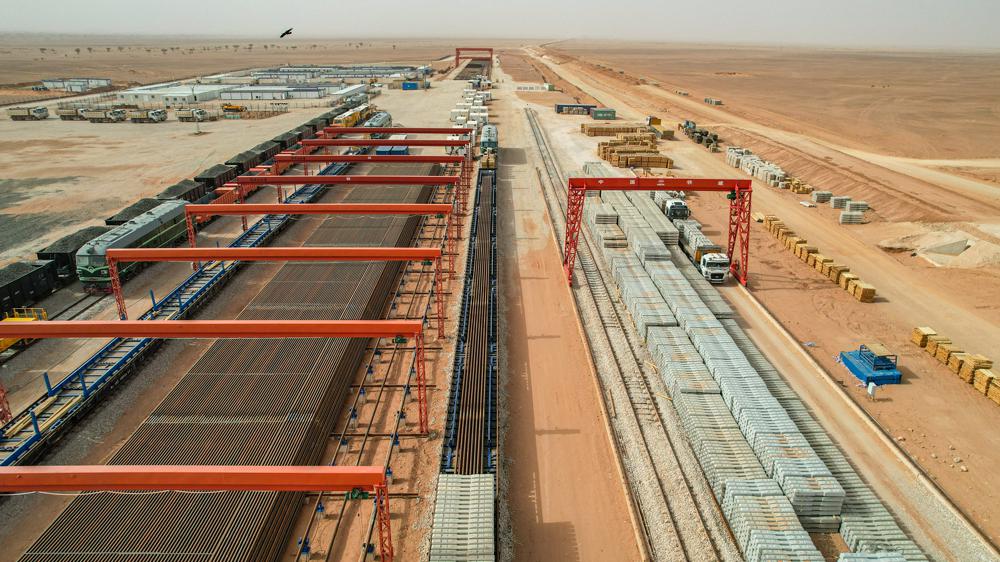
The track-laying base for the desert heavy-haul railway project in western Algeria. (Photo: China Railway Construction Corporation)
Livelihood projects: Driving sustainable growth
Water scarcity remains a major obstacle to development in many countries across the Global South.
In Togo's Plateaux Region, residents have long struggled with water shortages and access to safe drinking water. A rural water supply project built by a Chinese company was completed in September, providing 305 wells that draw groundwater from depths of around 70 meters. The project serves more than 300 villages and approximately 170,000 people, improving access to water for daily use and agricultural production.
Beyond water supply, China is working with other Global South countries to strengthen food security through agricultural cooperation.
China's Green Super Rice program has promoted high-yield, stress-resistant rice varieties across Asian and African countries. According to the Chinese Academy of Agricultural Sciences, the program has helped 1.6 million farming households in 18 countries increase their incomes.
Apart from introducing new varieties, it has trained 58 postgraduate students and provided more than 3,051 training opportunities in rice breeding, helping strengthen local agricultural research capabilities.
Through cooperation in agriculture and rural water supply, China is deepening cooperation among Global South countries to address basic needs and lay the groundwork for sustainable development.
Technology cooperation: Building local capabilities
A key focus of South-South cooperation is strengthening local scientific and technological capabilities and helping countries seize new opportunities arising from advances in fields such as artificial intelligence.
In 2023, China helped Egypt send a remote-sensing satellite into orbit from the Jiuquan Satellite Launch Center in northwest China. The satellite is designed for land surveys, crop monitoring, water management and urban planning.
The satellite was jointly developed by China and Egypt, with Egyptian technicians involved in its design, assembly and testing. The cooperation helped Egypt become the first African country capable of complete satellite assembly, integration and testing.
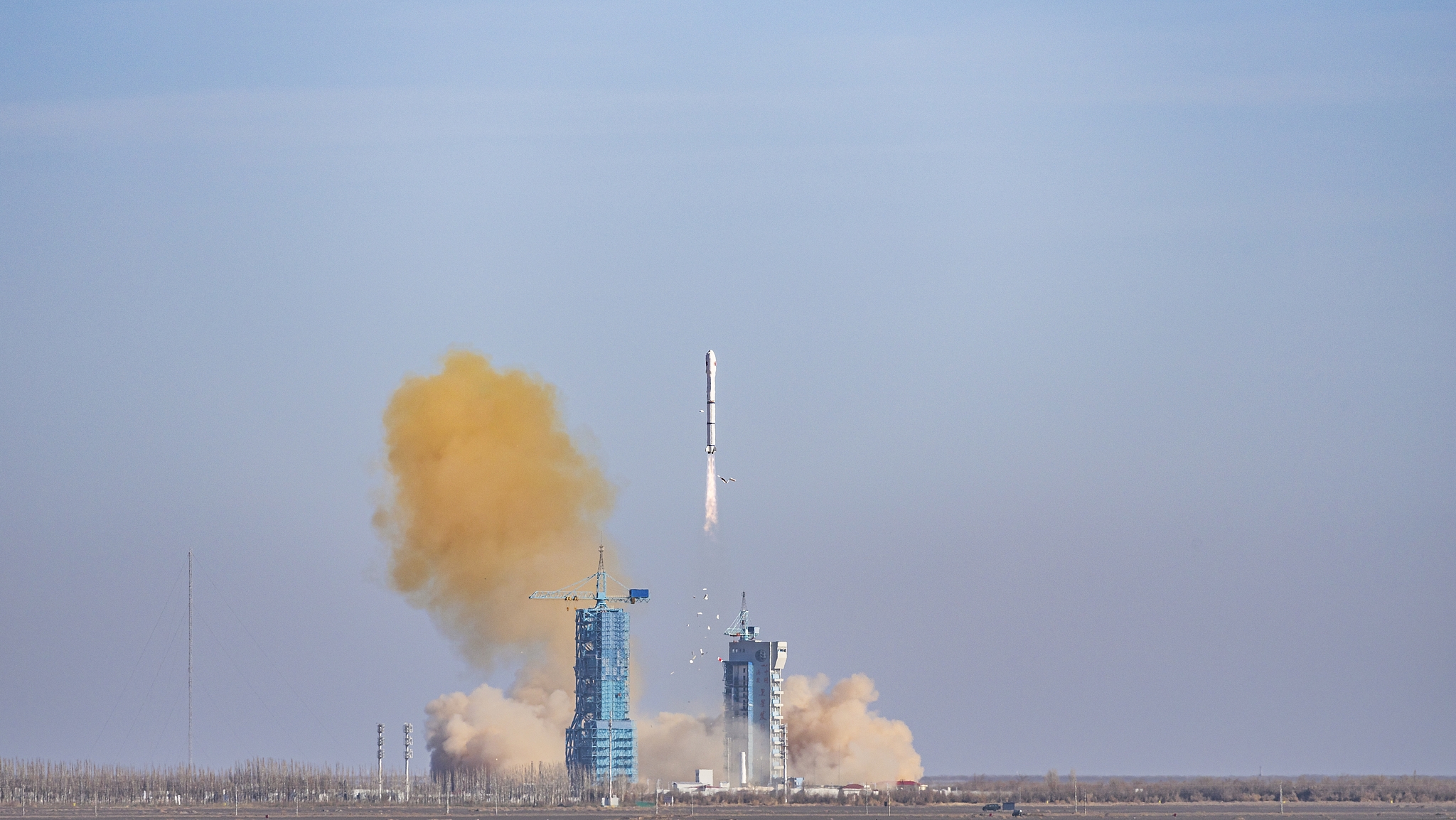
Egypt's MISRSAT-2 satellite and two other satellites are carried into orbit by a Long March-2C rocket, which lifts off from the Jiuquan Satellite Launch Center in Gansu Province, northwest China, December 4, 2023. (File photo: VCG)
As technological cooperation expands into cutting-edge fields, South-South cooperation is helping Global South countries share the benefits of rapid advances in AI and apply them to practical challenges.
In July 2025, the China Meteorological Administration introduced Mazu, an AI-powered early warning solution for developing countries. It has been deployed in seven countries and made available through cloud-based services in more than 40.
The system can be tailored to local needs. In Sri Lanka, a customized version focuses on maritime and aviation services. In Djibouti, China and local partners have developed an AI weather warning agent to help ports schedule operations and prepare for strong winds and dust storms.
Pan Jinjun, chief engineer of the China Meteorological Administration, said Mazu is emerging as a shared, customizable and sustainable international public service for developing countries.