


Harvest under siege: How Palestine's olive groves became a front line
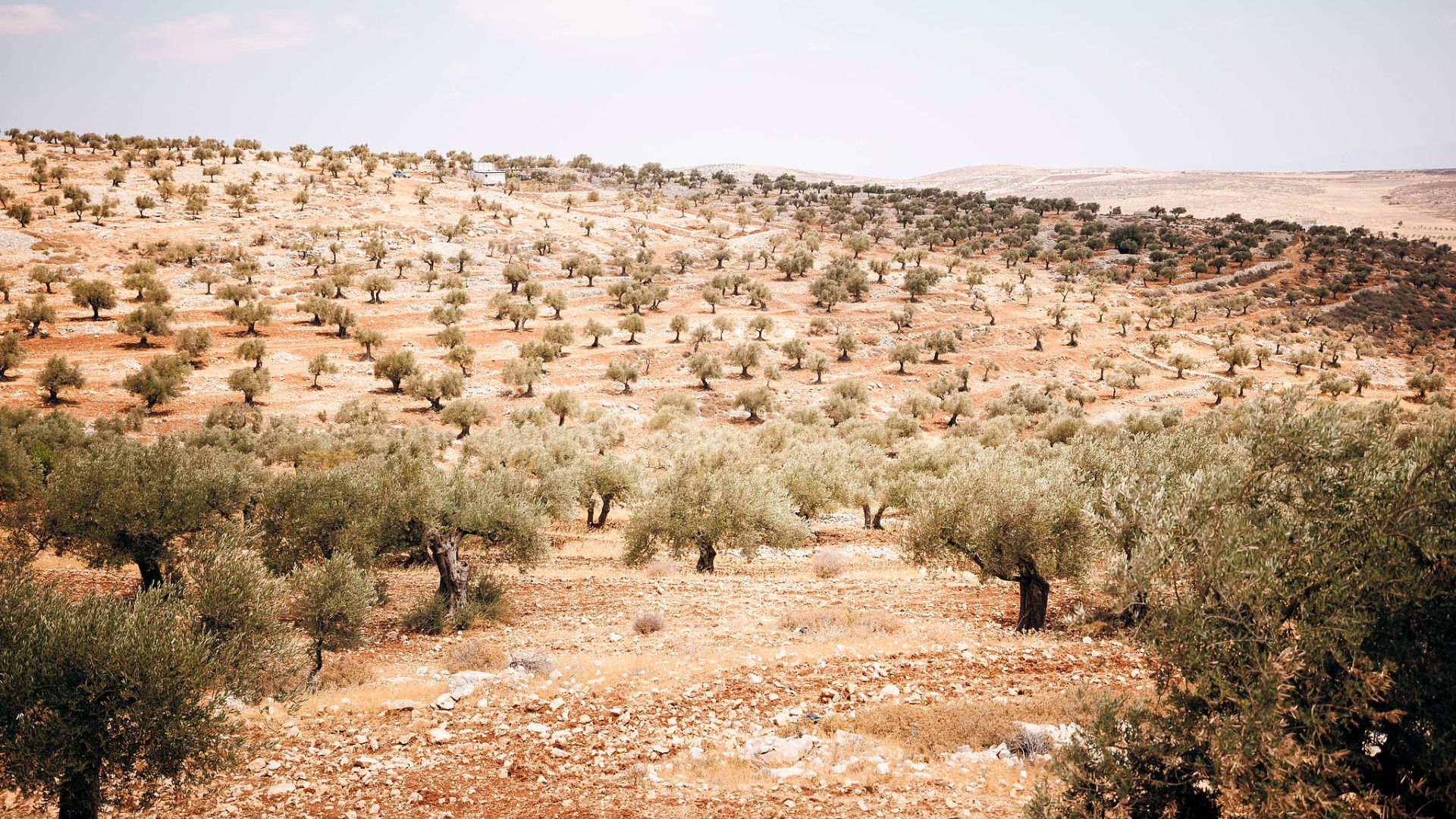
The West Bank is home to more than 10 million olive trees, forming a key part of the rolling landscape and supporting up to 100,000 Palestinian families. (Photo: CFP)
The olive is a fruit long synonymous with Palestine.
Emblematic of the region's heritage, culture and landscape, some of the ancient trees that pockmark valleys and hilltops date back up to 4,000 years, their gnarled trunks and silver-green leaves bearing witness to generations of history.
Today, the tangy fruit remains as central to Palestinian life as ever. Each October, an estimated 100,000 families return to their groves for the annual harvest, gathering a crop that is both a source of income and cultural identity.
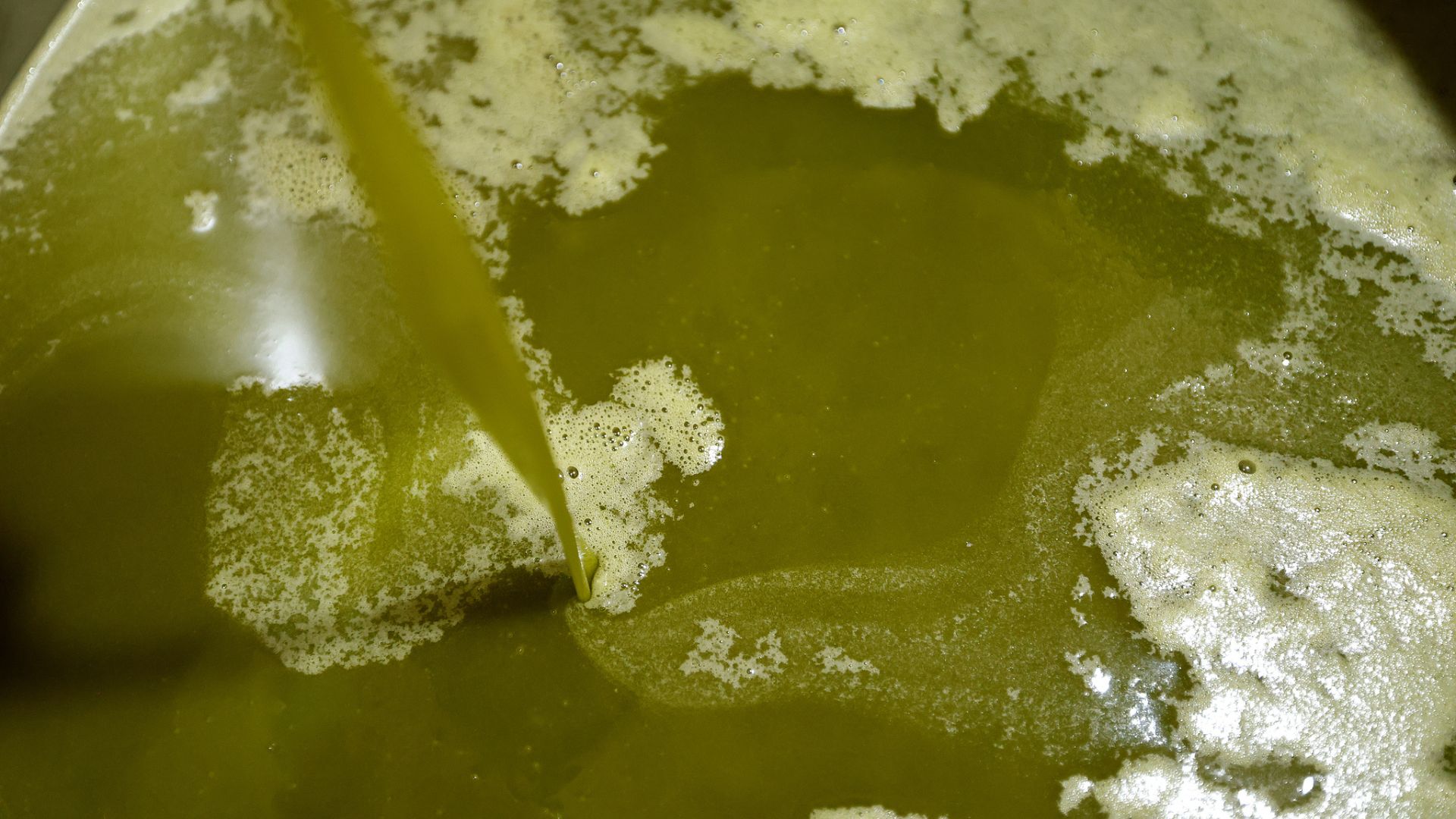
Fresh pressed olive oil runs into a container at a traditional stone press in the Palestinian village of Burqa, near the West Bank city of Nablus. (Photo: CFP)
Much of the harvest is pressed in traditional stone mills and modern olive presses, producing a rich and shimmering golden-green oil; the remainder is widely used to make sabun, a traditional olive-oil soap, or kept aside for the tawila (table), as a staple of Palestinian cuisine.
In total, the olive harvest adds a hefty $170 million to the West Bank's economy, amounting to 15% of the region's GDP. But over the years, the Palestinian connection to the olive has become increasingly fraught.
Decades of Israeli occupation, settlement expansion and restrictions on access to agricultural land have placed mounting pressure on farmers and their livelihoods.
What was once a way of life has been transformed into an epicenter of geopolitical struggle.
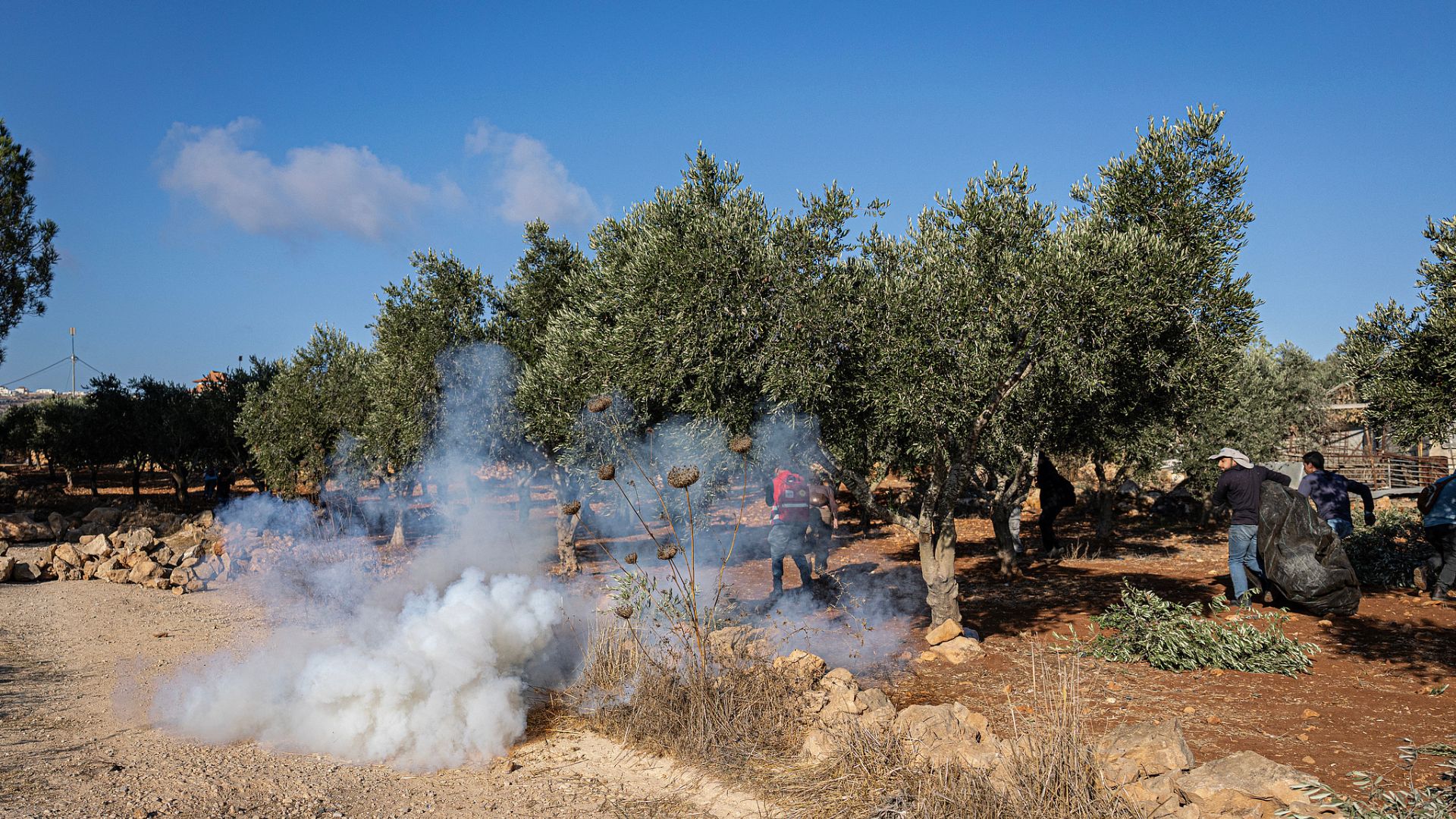
The harvest has become a new front line of Israel's illegal settlements and occupation of the West Bank. Here, tear gas fires from the Israeli military onto Palestinian farmers. (Photo: CFP)
Farmers on the front lines
Since the Hamas-led attacks of October 7, 2023, which sparked the deadly war in Gaza, tensions between Israeli settlers and Palestinian farmers have grown exponentially.
In 2025, humanitarian monitors recorded over 185 violent settler and military incidents linked directly to the yearly picking of olives, across roughly 80 Palestinian villages.
Yet according to the UN, last year's figures have already been surpassed, with the Office for the Coordination of Humanitarian Affairs (OCHA) reporting nearly 200 attacks, resulting in the deaths of at least four Palestinians.
One of the many victims is farmer Abdellatif Bazzari. Sporting a black eye and a bandage covering his face, Bazzari was injured in a raid on his fields by Israeli settlers on in early October.
His trees, half of them harvested before the olives reach full ripeness in a bid to save crops, bore witness to a series of violent beatings by an estimated 20 settlers. Yet Abdellatif was one of the lucky ones: the attack turned deadly when the army intervened, shooting dead his cousin Ali.
"My cousin bled to death right under this olive tree, irrigating the soil of Palestine with his blood," Bazzari said, pointing to a tree in the field. Now, he is afraid to return to harvest the other half without some sort of protection, fearing a new attack.
It's not just the farmers who face wanton violence. The trees themselves become targets: stripped of their fruit, uprooted or set on fire; more than 2,500 trees and saplings have reportedly been damaged.
UN experts warn that a damaged tree has far-reaching consequences, as olive trees "can take years to mature and can sustain families for generations. Their destruction deprives families of far more than a single harvest: it undermines local food systems, cultural practices and ways of life, as well as the right to food and the food sovereignty of Palestinian communities."
The magnitude of such calculated destruction is poignantly identified by executive director of the Palestinian Farmers' Union, Abbas Milhem, who describes to the Institute for Palestine Studies how "an olive tree for a Palestinian farmer is exactly like the son or the daughter of any family... Seeing trees uprooted or destroyed by settlers means witnessing the destruction of Palestinian heritage and identity."
The economic impact here is also hard to ignore. In the Palestinian Ministry's report for the week of 8-15 October 2026, the vandalism of olive trees in the West Bank resulted in up to $2 million in agricultural losses over just seven days.
With last year's harvest restrictions estimated to have cost Palestinian olive farmers $42 million in lost income, the mounting wave of this season's attacks threatens to deepen those losses further.
Israeli soldiers and settlers prevent Palestinians and activists from harvesting olives in the village of Idhna on October 13, 2026, culminating in Israeli forces ordering the harvesters and activists to leave the area. (Photo: CFP)
Harvest under siege
At the heart of the violence is the encroachment of illegal Israeli settlements and outposts across the occupied West Bank.
Headed by ultra-nationalist figureheads and promoted by far-right politicians, Israeli communities are being established deeper and deeper into Palestinian territory, bringing settlers into close proximity with olive groves and setting the scene for ideologically motivated attacks.
While encroachment has been continuing for decades, settlements today are being fast-tracked through expansionist and explicitly anti-Palestinian government policies; in the past three years, Israeli control of the occupied territories has soared by over 150 per cent.
Tensions over such encroachment recently came to a head over Israel's controversial E1 settlement plan. A project set to add more than 3,400 housing units near the existing settlement of Ma’ale Adumim, it looks to sever the north and south of the West Bank from one another, in what prime minister Benjamin Netanyahu labeled evidence of his dedication to ensuring there would never be a Palestinian state.
While the plan has been heavily criticised by human rights bodies, and has sparked a downturn in diplomatic relations across countries including the UK, France and Canada, the plan remains set to go ahead, with the bidding deadline for an initial tender of 1,234 housing units closing on Monday, October 19.
Yet this aggressive expansionism is double-edged, serving as not just a flashpoint for clashes, but a means of strategically hemming Palestinians in.
In the town of As-Sawiya, 30 kilometers south of Nablus, around 70% of olives are inaccessible without risking a potentially fatal clash with Israeli settlers; and around the nearby Israeli settlements of Shilo and Eli, access had been barred to at least 26.5 square kilometers of Palestinian land, including groves close to the settlements.
The reality is crystallized through the UN's own data, revealing how no requests for access to Palestinian land inside or within 200 meters of settlement boundaries in the northern West Bank have been approved through 'prior coordination' with Israeli authorities.
This combination of enclosure, denied access to olive groves, and surging settler clashes only further exacerbates the challenges faced by Palestinians as the yearly harvest comes around.
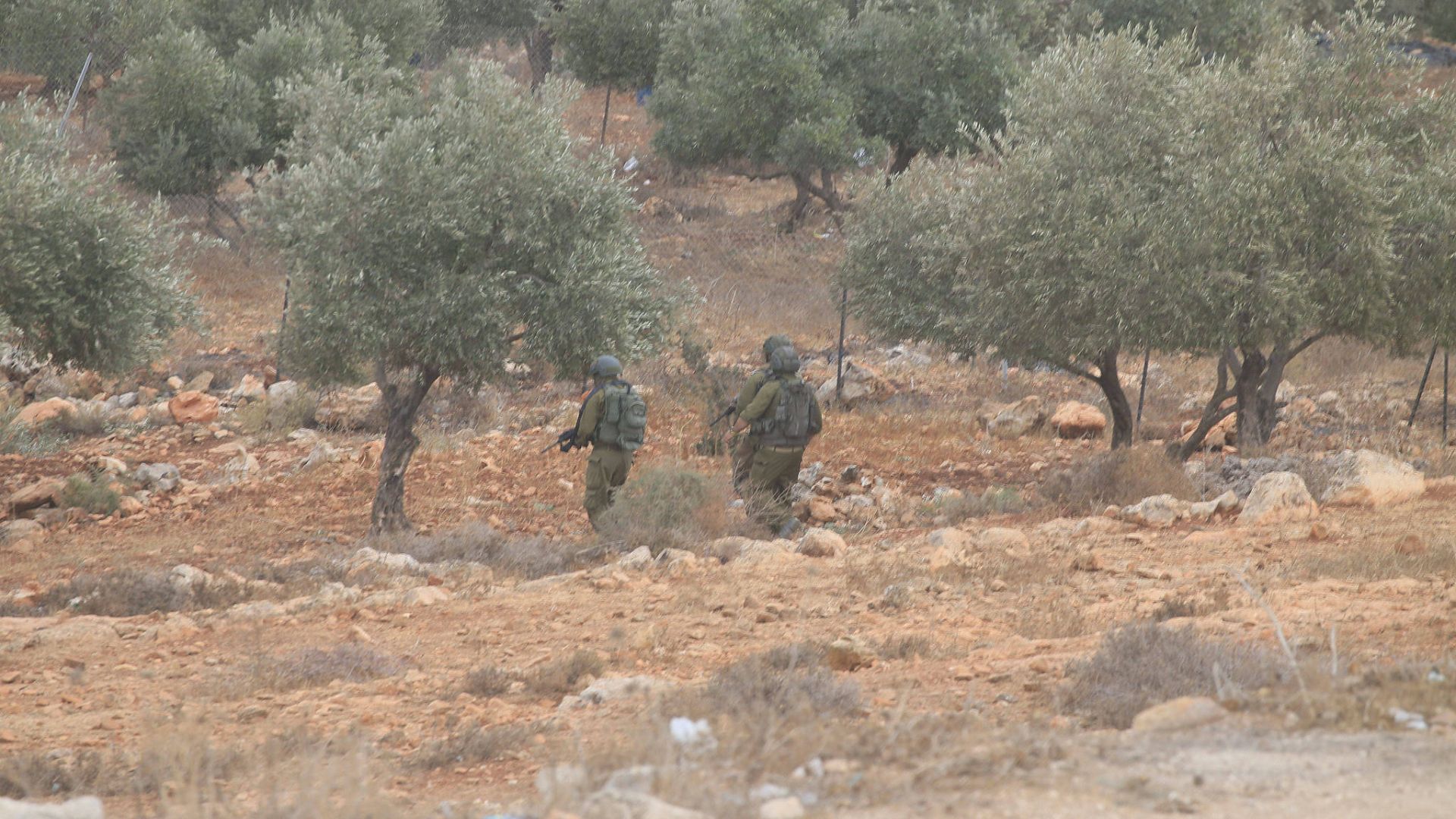
Israeli soldiers chase Palestinian farmers through olive groves in the village of Salem, on October 18, 2026. According to local sources, Israeli forces also confiscated olives collected by the farmers. (Photo: CFP)
Aided and abetted
Human rights organizations have repeatedly raised concerns about the failure of Israeli authorities to prevent settler attacks and bring those responsible to justice.
The Israeli organization Yesh Din's monitoring of law enforcement provides a stark illustration: its January 2026 assessment of cases involving ideologically motivated offences by Israeli civilians against Palestinians in the West Bank found that just 3% of police investigations it monitored since 2005 had resulted in full or partial convictions.
OCHA has also long-documented incidents in which Israeli forces were present during attacks, restricting farmers' access to their land or providing protection towards settlers.
In their weekly Humanitarian Situation Updates, the UN office revealed how last October, groups of armed settlers were accompanied by Israeli forces as they prevented farmers from reaching their lands, stealing the harvested olives from those who were able to reach their groves.
During the same time period, OCHA reported that when Palestinians tried to reach groves close to the Israeli settlements of Alon Moreh and Itamar, settlers gathered at the main road and blocked the passage of farmers.
Despite the farmers having been granted permission to access their lands, Israeli forces instead redirected them on a gruelling 15-kilometer detour. In the end, only five families managed to reach their groves and harvest olives.
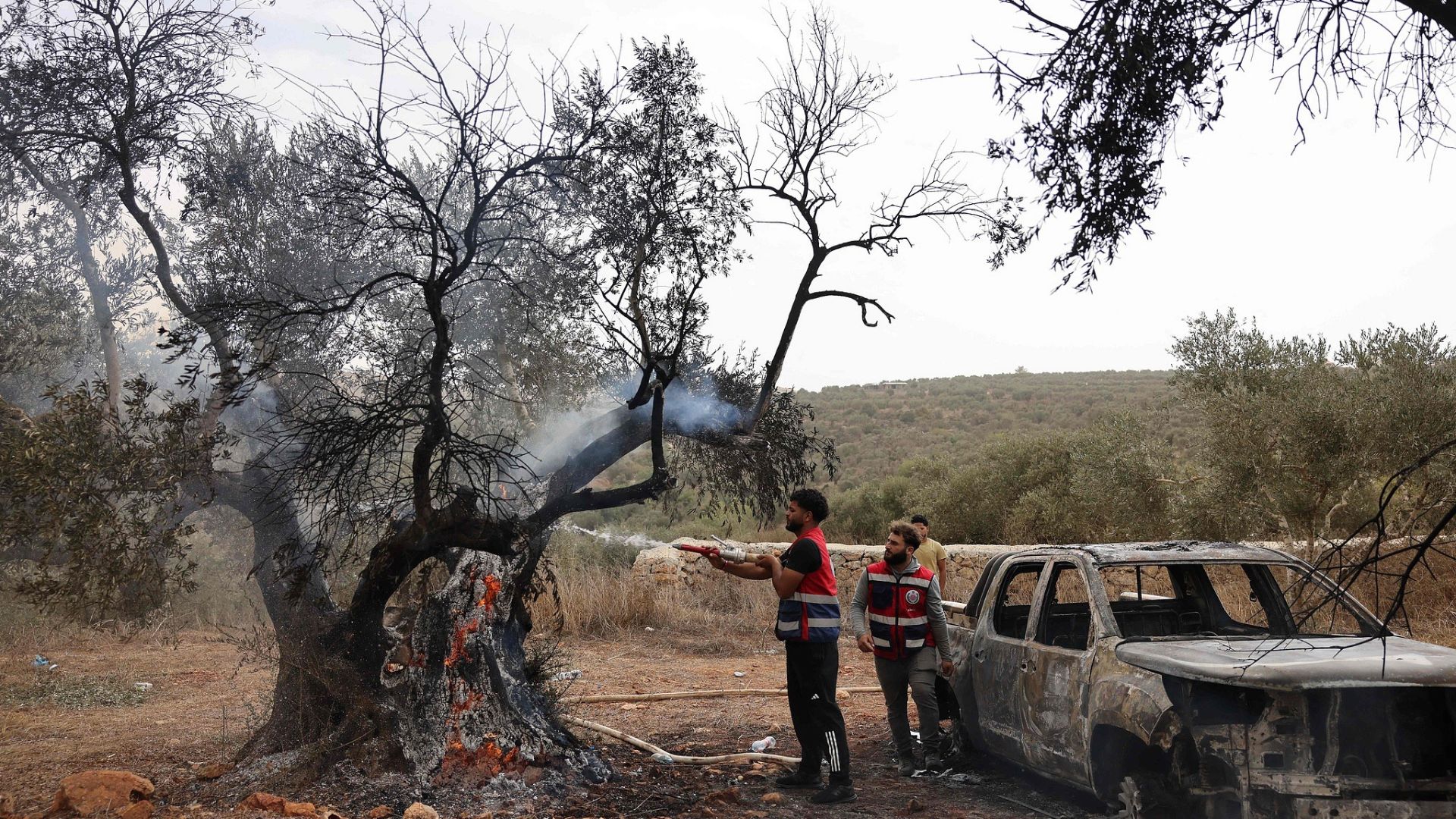
Activists put out a fire on an olive tree near the village of Tulmusaya, north of Ramallah in the West Bank, that was allegedly set on fire by Israeli settlers. (Photo: CFP)
Furthermore, the role of the military doesn't stop at providing assistance to the settlers: The Elimination Project, a report by Israeli human rights organisation B'Tselem and the land-monitoring group Kerem Navot, highlights the ways in which Israeli forces are actively complicit in the denial of access to olive groves.
Published last month, the NGOs' document explains how the military uproots olive trees as a form of collective punishment for Israeli-Palestinian clashes: in August 2025, some 3,000 olive trees in the village of al-Mughayir were uprooted by the military, with private bulldozers operated by settlers hired for the job.
In the months that followed, uprooting was systemically enacted across Palestinian groves, with thousands of trees destroyed, resulting in tens of millions of dollars of damage.
Just last month in a Palestinian village near the West Bank city of Ramallah, villagers watched on in horror as army bulldozers smashed through branches, ripping up olive trees at their roots.
"All our olive trees, including the newly planted ones, were uprooted. Also our neighbors', they uprooted them all," said Abd Alfattah Tamimi, adding that he and his neighbors own nearly 36,000 square meters of land filled with olive trees.
"They left us with nothing."
In the past, the military has cited the need to clear land of olive trees to prevent security threats or ambushes on troops, a claim rejected by Palestinian human rights groups reject.
Though the Israeli military continues to deny accusations of deliberate wrongdoing, documented cases continue to raise serious questions about their obligation to protect Palestinian civilians and their livelihoods.
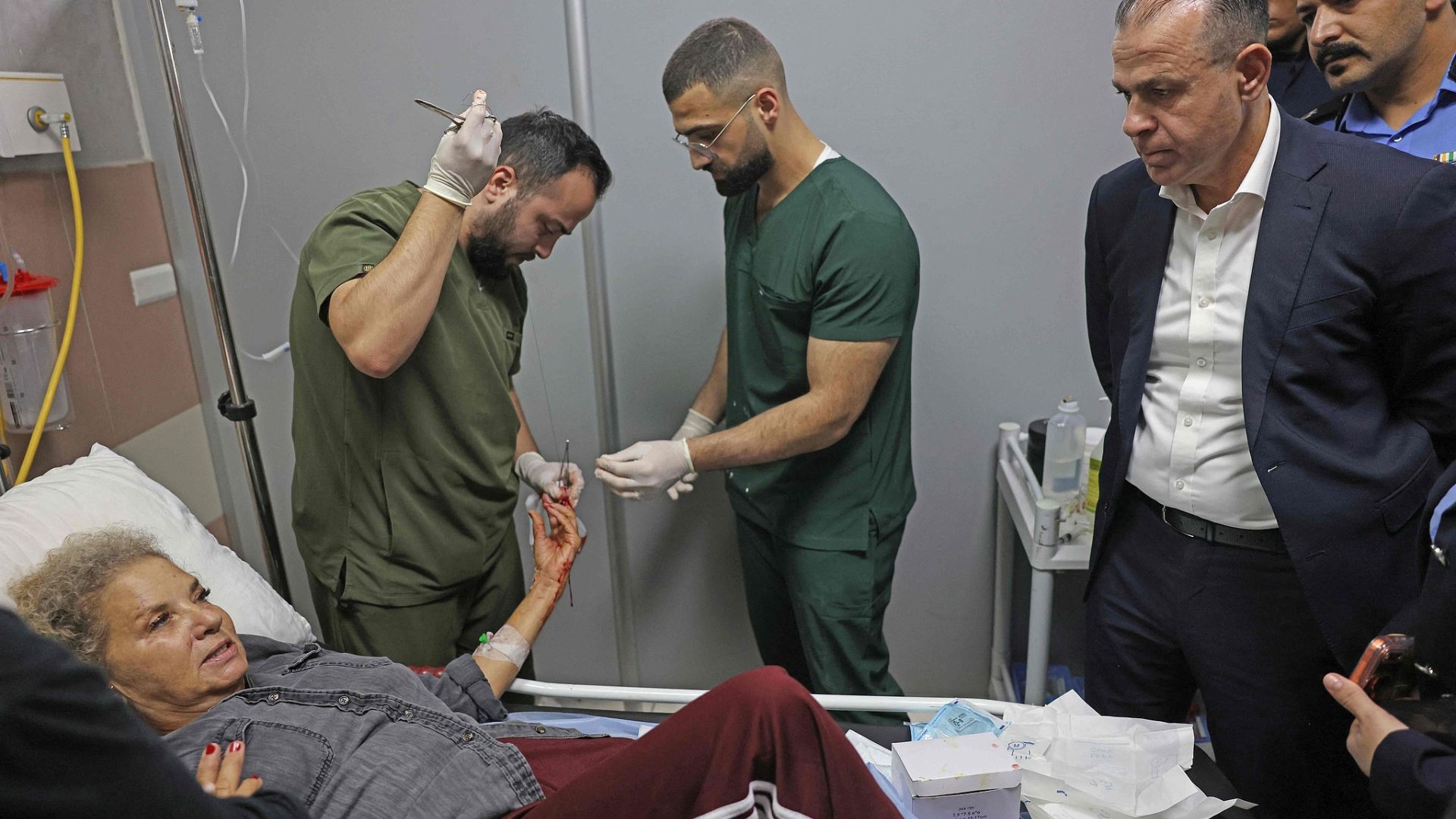
Washington Post photojournalist Heidi Levine recovers in hospital after being attacked and beaten by masked Israeli settlers whilst documenting Palestinians harvesting olives. (Photo: CFP)
Growing international outcry
While Palestinian farmers regularly face the brunt of settler attacks, the recent spate of international actors caught up in such violence has led to an outpouring of condemnation from abroad.
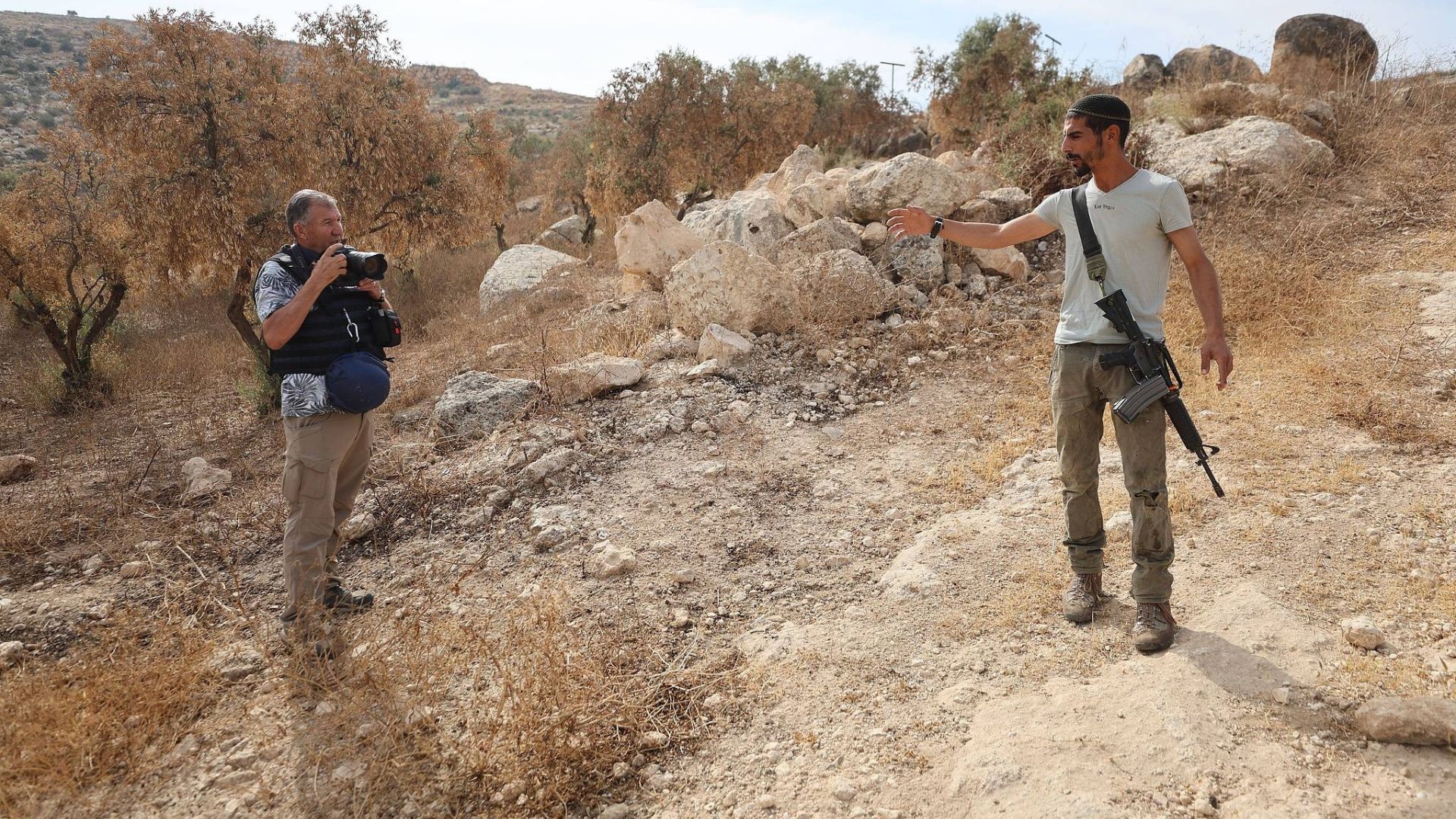
On Friday October 16, in the village of Abu Falah, journalists and peace activists were violently attacked by masked settlers as they accompanied Palestinians who had set out to harvest their olive trees.
One of the victims was Washington Post photographer Heidi Levine, who can be heard saying in footage filmed during the assault: "Let me die." She was later hospitalized with several broken vertebrae.
Speaking to the Associated Press, Levine blamed "Jewish terrorists" for Thursday’s attack, adding: "I’ve been covering this region for over 40 years, and I have never seen this country in such a state as it is today."
While Israel’s military condemned the violence, Levine said that soldiers watched the attack, but did not try to intervene to protect her.
She also sharply criticized Benjamin Netanyahu's description of the series of events as "alleged", adding that the prime minister "had all the evidence on the table".
Just a day later, another international incident unfolded as a delegation of European diplomats, including a French mayor, were again attacked by masked settlers in the occupied West Bank.
The diplomats, who were there to assess how Palestinians were coping under near-daily harassment by settlers as they brought in their olive harvests, recalled being beaten to the ground and having car windows smashed in by rocks.
Footage of the French mayor Bernard Baudoux, wearing a tricolor sash, collapsed against a vehicle has drawn swift global condemnation for the attacks, with Belgium and France calling for Israel to bring those responsible to justice.
Despite the backlash, Israeli politicians are still urging caution, with Benjamin Netanyahu's office making a statement to X that said the reports "come amid concerns about a coordinated campaign to smear Israel and the Jewish residents of Judea and Samaria during the annual olive harvest".
While foreign minister Gideon Sa'ar said police had opened an investigation, he also insisted that foreign diplomats risked attacks from Israeli civilians if they travelled in the occupied West Bank without prior coordination with the military.
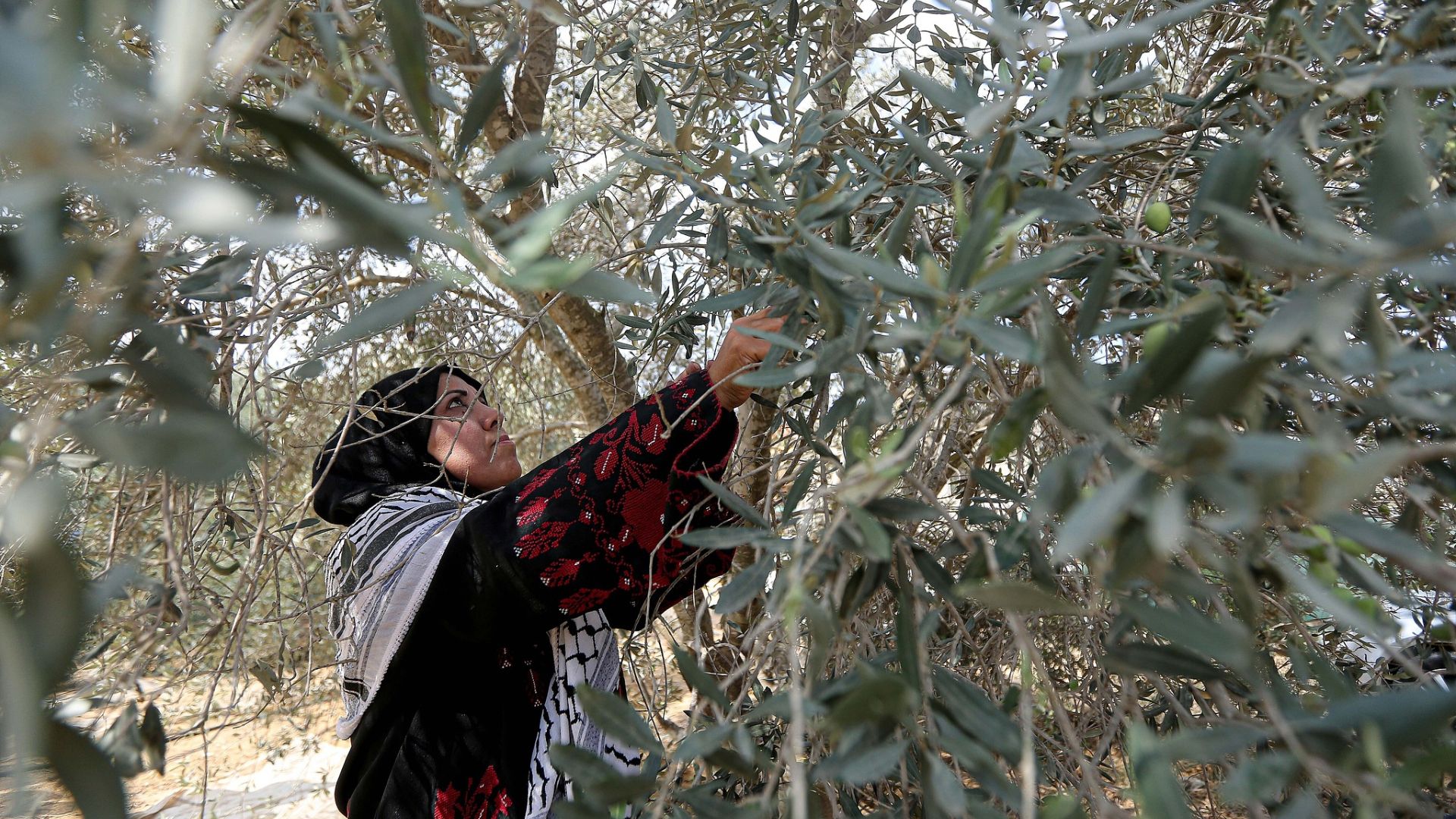
OCHA reports that olive and olive oil production employs more than 15 per cent of working Palestinian women. (Photo: CFP)
For West Bank farmers, the olive harvest that long represented a bond between land, livelihood and deep ancestry has ultimately become a battle ground; the groves of twisted trees making up a heart-wrenching front line, between settlers determined to expel Palestinians, and families who won't leave without a fight.
Yet a September survey of 29 Palestinian and international humanitarian organizations paints a bleak picture of the season ahead, as 93% expect conditions to deteriorate further over the following six months, and none see an improvement on the cards.
With the 2026 harvest already marked by surging violence and loss, the future of Palestine’s olive farmers has rarely seemed more precarious than it does today.