


One year on, Sanae Takaichi's 'approval rating bubble' is about to burst
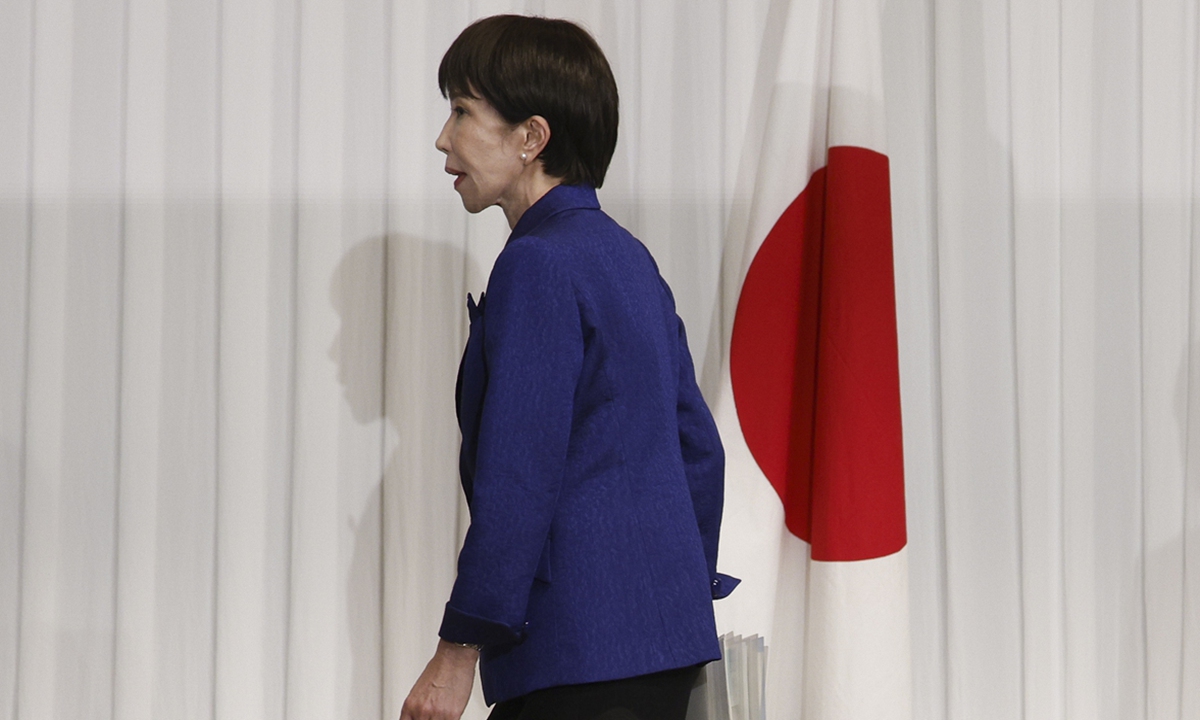
Japan's Prime Minister Sanae Takaichi, leader of the ruling Liberal Democratic Party (LDP), leaves after speaking during a press conference at the LDP headquarters in Tokyo, Japan, on February 9, 2026. (Photo: VCG)
Since having taken office as Japan's prime minister on October 21, 2025, Sanae Takaichi has now been in power for one full year.
Looking back at her record, from economy and people's livelihoods to domestic politics, diplomacy, and security, few of her campaign promises have been fulfilled. Ordinary Japanese citizens have seen little tangible improvement in their daily lives. Instead, the country has faced mounting difficulties at home and abroad.
First, on economy and people's livelihoods, Takaichi has failed to deliver on her campaign promises and has struggled to present effective economic solutions. During the election, she pledged to pursue "responsible proactive fiscal spending," expand employment, raise incomes, and safeguard people's well-being, painting an optimistic picture of Japan's future. Yet soaring prices have remained unchecked, while her promise to reduce the consumption tax has yet to be fulfilled, fueling public dissatisfaction.
Second, in domestic politics, the Takaichi administration has been criticized for disregarding public opinion and becoming embroiled in repeated controversies. A prominent case would be the scandal over Japan's former agriculture, forestry and fisheries minister Kazuo Yana.
During an election campaign, Yana suggested that local funding could be reduced if voters failed to support him, according to media reports. This has triggered criticism that the remarks might violate Japan's Public Offices Election Act. Takaichi, who kept defending Yana, had also faced criticism for appointing him despite concerns from the public. Eventually, Takaichi was forced, under pressure, to dismiss Yana after just 28 days in office.
Another controversial issue is the revision of the Imperial House Law. Japan faces a dearth of male heirs, while Princess Aiko enjoys strong public popularity. The Takaichi administration's revision permits the adoption of males from former imperial branch families, allowing them to join the line of succession. Critics argue that this approach disregards public sentiment and effectively blocks the possibility of Princess Aiko ascending the throne. The issue has further damaged Japanese people's confidence in the cabinet.
Third, in foreign policy, Takaichi has alienated multiple countries and found herself increasingly entangled in strained relations with Japan's neighbors. Soon after taking office, she made erroneous remarks on the Taiwan question, claiming that "a Taiwan contingency is a Japan contingency," seriously damaging China-Japan relations.
The Takaichi administration has also faced turbulence in its relations with the US. The US president's joke about Pearl Harbor and remarks about the US-China alliance during World War II dealt a heavy blow to many in Japan. Washington's sanctions against Tomoko Akane, president of the International Criminal Court, also raised concerns. Meanwhile, earlier this month, a US Marine was involved in a serious violent crime in Okinawa. Takaichi's response, describing the incident as "extremely regrettable," drew widespread criticism at home, with many accusing her of being too weak in dealing with Washington.
Japan-Russia relations have also deteriorated during Takaichi's tenure. Russia erected a monument in September in the far eastern city of Khabarovsk commemorating the victory over militarist Japan, prompting protests from Tokyo. Bilateral tensions deepened further after Russia recently arrested a journalist from the Hokkaido Shimbun on allegations of espionage.
Fourth, Takaichi's security and defense policy has come under heavy criticism. She moved to relax Japan's arms export restrictions, allowing the export of lethal weapons and overturning a long-standing postwar policy. Her administration has also established a National Intelligence Bureau, laying the groundwork for possible future participation in intelligence cooperation with the "Five Eyes" network. The Japanese cabinet further plans to revise Japan's three security documents before the end of this year, continue increasing defense spending, and consider introducing a nuclear-powered submarine. Japanese voters are questioning whether higher defense spending will come at the expense of social welfare, while neighboring countries remain wary of Japan's military expansion.
In short, Takaichi has no effective economic policies, lacks political principles and is incapable of conducting diplomacy. Instead, she resorts to manipulating public opinion, fueling populism and pushing for military expansion. Yet during her tenure, Japan's global GDP ranking is set to fall to sixth place. Meanwhile, the country's declining birthrate and aging population are becoming increasingly severe. Against this backdrop, the right-wing approach to strengthening the country advocated by Takaichi has drawn criticism from various quarters.
The Takaichi administration's approval rating has now fallen to 42 percent, the lowest since taking office, signaling that the "approval rating bubble" is on the verge of bursting. As dissatisfaction grows over her handling of economic and domestic affairs, as well as her policy choices, Takaichi is facing mounting pressure to reconsider her political course.
At a time of profound global change, military expansion does not offer Japan the right path forward. If militarism were to re-emerge, it could once again undermine regional peace and bring suffering to the peoples of Asia. The decline in public support for the current cabinet could prompt Japanese voters to reassess Takaichi's political course and reconsider Japan's future direction.