


Africa CDC urges greater global solidarity to contain Ebola as Nigeria confirms 1st case
ADDIS ABABA, Oct. 21 (Xinhua) -- The Africa Centers for Disease Control and Prevention (Africa CDC) has called for greater global solidarity and international support to contain the rapidly expanding Bundibugyo Ebola outbreak.
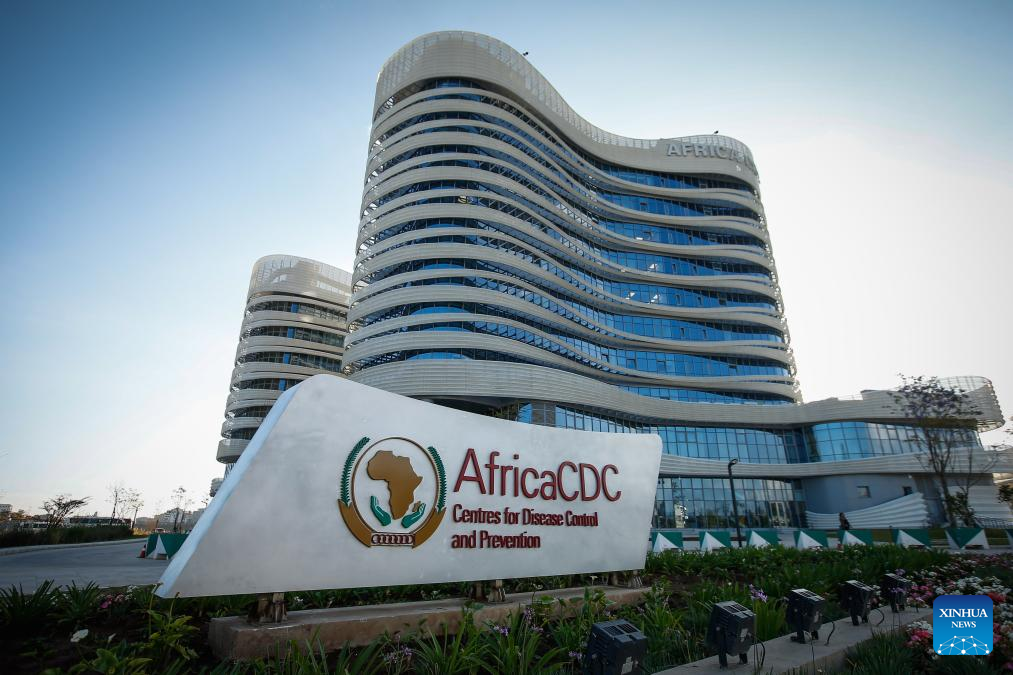
This photo taken on Jan. 31, 2024 shows the headquarters of the Africa Centers for Disease Control and Prevention (Africa CDC) in Addis Ababa, Ethiopia. (File photo: Xinhua)
The urgent call came as the Nigerian government on Tuesday confirmed the first Ebola case in the country's capital, Abuja, following laboratory tests. According to Ali Pate, coordinating minister of health and social welfare, a woman who recently arrived in Nigeria on an international flight from Uganda is now in isolation and receiving medical care, amid efforts to prevent community transmission of the hemorrhagic fever.
The West African nation became the fourth on the continent to record a confirmed case, as the deadly virus has now affected three African countries, including the Democratic Republic of the Congo in Central Africa, and Uganda and Kenya.
"We cannot allow this outbreak to spread to more countries or continue for another year," warned Africa CDC Director-General Jean Kaseya in a statement issued late Tuesday. He noted that the outbreak has become the most geographically widespread Ebola outbreak in history.
He said that the African Union's specialized continental public health agency has already begun mobilizing support for Nigeria, while intensifying its response in the DRC and Kenya, and maintaining heightened vigilance in Uganda.
"Every day of delay costs lives. Africa's health security is global health security. Stopping Ebola in Africa today means protecting the world. Nigeria has our full solidarity. Together, we must defeat this outbreak," Kaseya added.
Noting that the Africa CDC warned of the outbreak's regional dimension and implications when it was declared a public health emergency of continental security in May this year, he stressed that "with mortality approaching 50 percent in DRC, we face an extremely serious threat."
"My appeal to the international community is urgent: act now. We need immediate, flexible financing, medical supplies, diagnostics, trained responders and stronger community-based surveillance," Kaseya said.