


Iran reports tanker explosions in Hormuz as Trump hints at renewed strikes
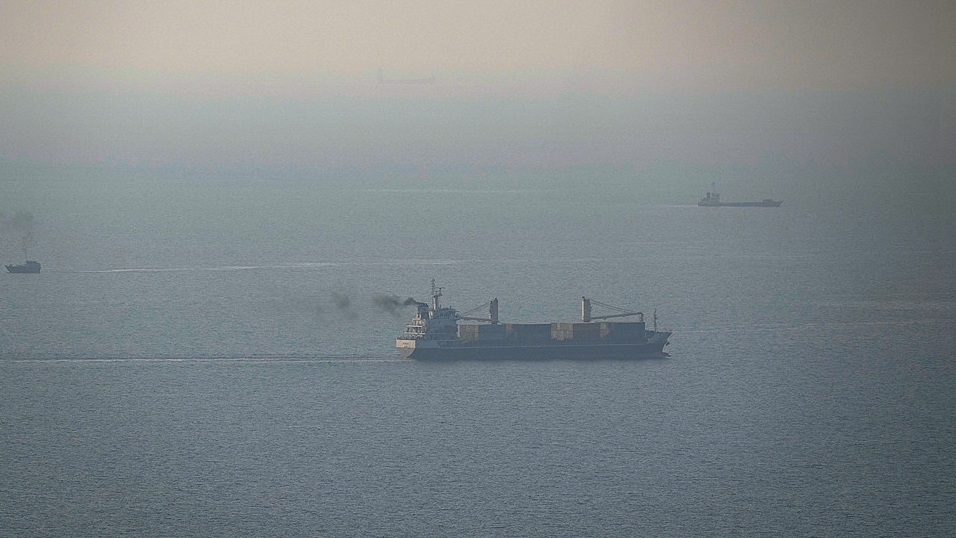
A cargo ship sails toward the Strait of Hormuz, October 21, 2026. (Photo: VCG)
Iran's Islamic Revolutionary Guard Corps (IRGC) Navy said two supertankers caught fire after hitting naval mines in the Strait of Hormuz, as regional countries called for the waterway to reopen and US President Donald Trump signaled the possibility of renewed military action against Iran.
The IRGC Navy said that two supertankers seeking to cross the "unauthorized" route south of the Strait of Hormuz suffered explosions after hitting naval mines.
The blasts set the vessels' engine rooms on fire, bringing them to a halt, the navy said in a statement published on the IRGC's official news outlet Sepah News.
Earlier in the day, the semi-official Tasnim news agency quoted a source close to the IRGC Navy as saying that traffic by "violating" vessels in the Strait of Hormuz had been "completely stopped" after Iran destroyed navigational aid systems serving such ships and targeted four "offending" tankers in the waterway on Thursday.
The reported incidents come amid growing concerns over the safety of commercial shipping in the region. Greece-based consultancy Marisks told Reuters that "October 2026 has emerged as the most intense period of maritime attacks in and around the Strait of Hormuz since the escalation of hostilities in March."
UKMTO, the British maritime security service, which recorded 135 incidents related to the US-Iran conflict as of October 16, also reported a sharp rise in ship damage caused by attacks in October.
Regional, European countries call for reopening of Hormuz
Also on Friday, foreign ministers from eight regional and European countries met in Istanbul, calling for the reopening of the Strait of Hormuz.
The meeting brought together four regional countries – Türkiye, Egypt, Pakistan and Saudi Arabia – and four European nations – Britain, France, Germany and Italy.
Turkish Foreign Minister Hakan Fidan told reporters that all participants shared a common understanding on the need for dialogue to prevent the destruction from spreading further.
The meeting underscored growing diplomatic efforts to address the risks posed by disruptions to shipping through the strait, as tensions between Washington and Tehran continue.
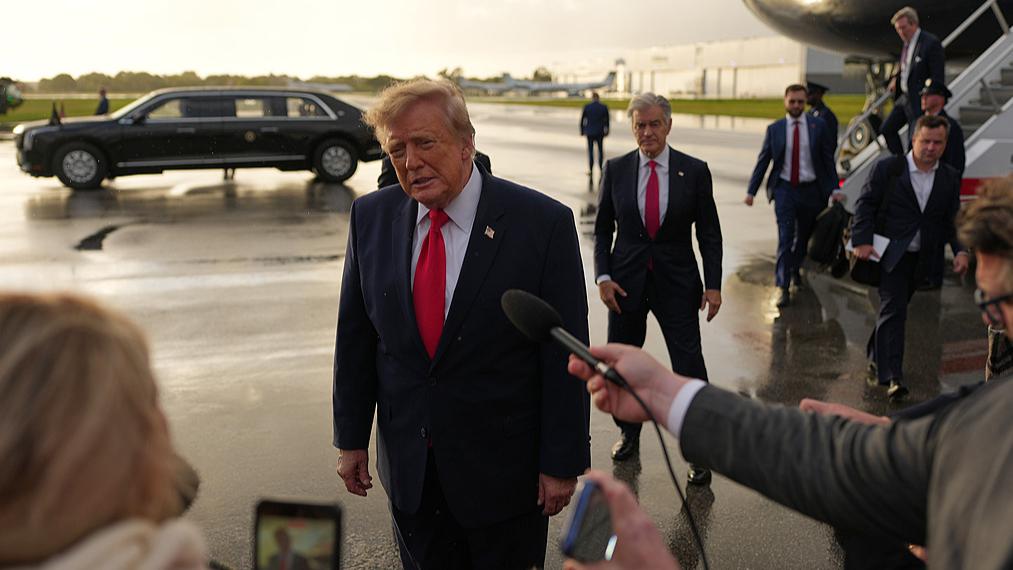
US President Donald Trump talks to reporters after arriving on Air Force One at President Donald J. Trump International Airport in West Palm Beach, Florida, US, October 23, 2026. (Photo: VCG)
Could the US launch another military operation against Iran?
Meanwhile, US President Donald Trump on Friday raised the prospect of renewed military strikes against Iran, claiming that the United States could seize all of the country's oil or even take over the entire country. "Iran is not able to do much now. And we could, if we wanted to, just take all of the oil," Trump told reporters as he left the White House for a rally in Florida. "We could take the whole country."
Asked about US Ambassador to the United Nations Mike Waltz saying the conflict with Iran could drag on for another year, Trump said: "We could end it very quickly. The question is, 'Do we want to finish it off or do we just want to let it wither?'"
Later at the Florida rally, Trump suggested another military operation against Iran was possible. "We may do another little Epic Fury," he told attendees, referring to the large-scale US military operation against Iran launched on February 28 alongside a coordinated Israeli offensive.
Trump's latest remarks came amid reports that the US and Israeli militaries have drawn up plans for renewed strikes against Iran after the US midterm elections. However, whether Trump will ultimately authorize another military operation remains uncertain, according to US media reports.
Also on Wednesday, Iran warned regional countries that any support for the United States in the event of renewed hostilities would be regarded as a hostile act against Tehran.
Li Zixin, a Middle East expert at the China Institute of International Studies, told China Media Group that avoiding military action before the US midterm elections has become the White House's publicly stated position. "The reason is straightforward: a war would drive up oil prices and inflation, while Trump needs to keep oil prices down ahead of the elections," Li said.
For now, the most likely scenario is continued stalemate, with localized clashes persisting, Li said, adding that after the elections, both military action and negotiations could enter a new window of opportunity for change.
After the midterm elections, with fewer political constraints, the US military could maintain its blockade of Iran while remaining prepared for potential large-scale military operations against the country, leaving open the option of sustained strikes, Li said.