


DR Congo's Ebola cases near 10,000 as health workers face deadly attacks
KINSHASA, Oct. 26 (Xinhua) -- The Democratic Republic of the Congo (DRC) has recorded nearly 10,000 confirmed Ebola cases since the outbreak began in May, as deadly attacks on health workers pose further challenges to efforts to contain the epidemic, according to health authorities and the World Health Organization (WHO).
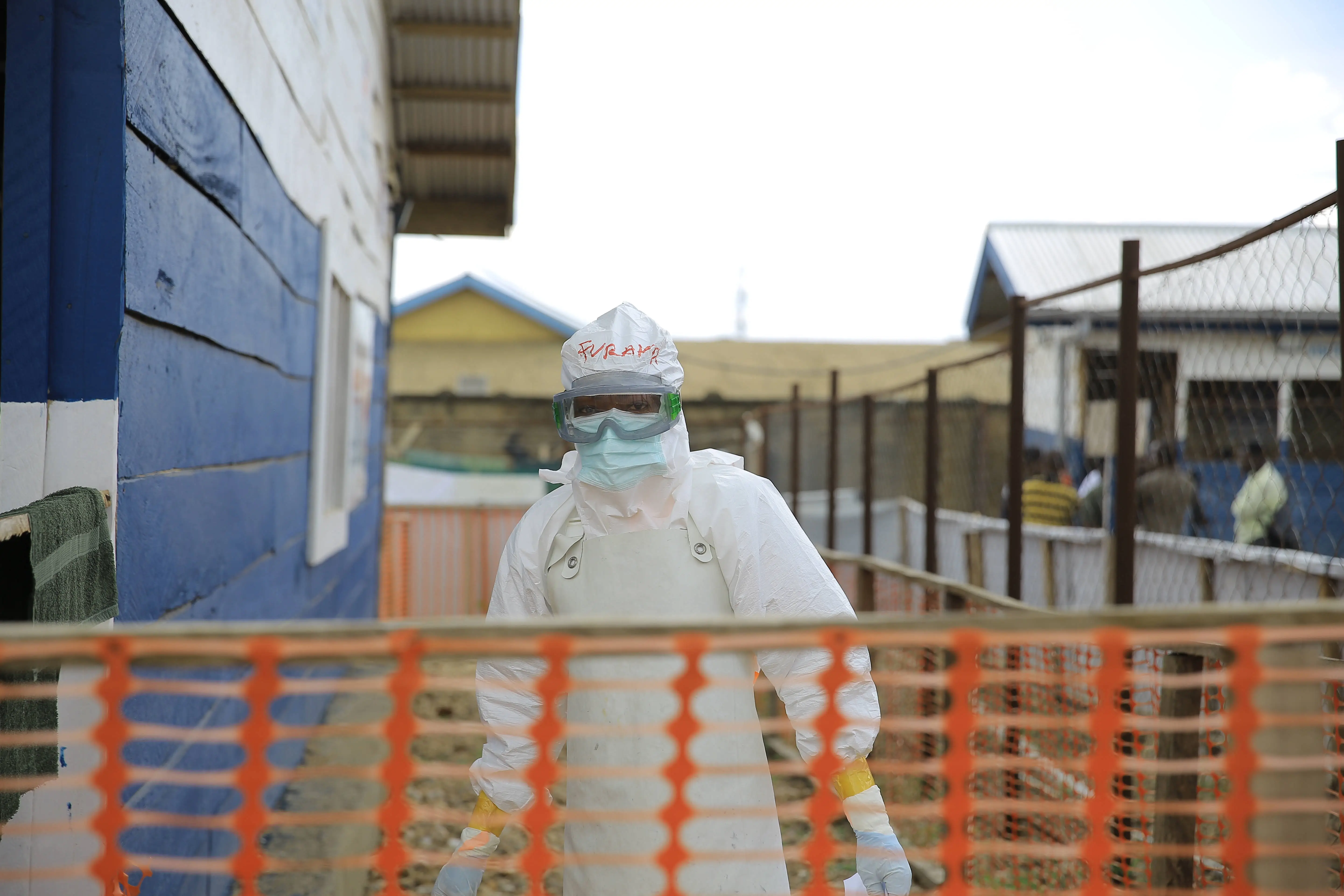
A healthcare worker walks inside a treatment center for Ebola patients in Beni, North Kivu province, eastern Democratic Republic of the Congo, Sept 26, 2026. (Photo: AP)
The latest report released Monday by the country's health authorities that the cumulative number of confirmed cases had reached 9,964, including 4,841 deaths, as of Saturday, with a case fatality rate of 48.6 percent. The outbreak has affected 66 health zones across eight of the country's 26 provinces.
The figures came as WHO Director-General Tedros Adhanom Ghebreyesus also condemned an attack that killed a nurse, in the northeastern Tshopo Province, on Saturday.
"Healthcare workers must always be protected," Tedros said Sunday on social media, calling for the safety and protection of those working to shield communities from the deadly disease.
The victims were attacked by residents who accused them of contaminating a local water source to spread Ebola. Local health and administrative authorities have categorically rejected the allegations, describing them as rumors and misinformation, local media reported.
The current outbreak, caused by the Bundibugyo Ebola virus, was declared in the DRC on May 15. It has since spread to five countries, including four in Africa, the DRC, Uganda, Kenya and Nigeria, as well as France, where an imported case was reported.
Unlike the more common Zaire strain of Ebola, the Bundibugyo virus has no approved vaccine or specific treatment.
The Africa Centers for Disease Control and Prevention has described the epidemic as "the most geographically widespread Ebola outbreak in history," warning that its continued cross-border spread poses growing challenges to regional surveillance and containment efforts.
The current Ebola outbreak has become the largest and deadliest ever recorded in the DRC and the second-largest Ebola outbreak globally, after the 2014-2016 West Africa epidemic.