


Middle East tensions persist amid possible US strikes on Iran, ongoing Saudi-Houthi fighting
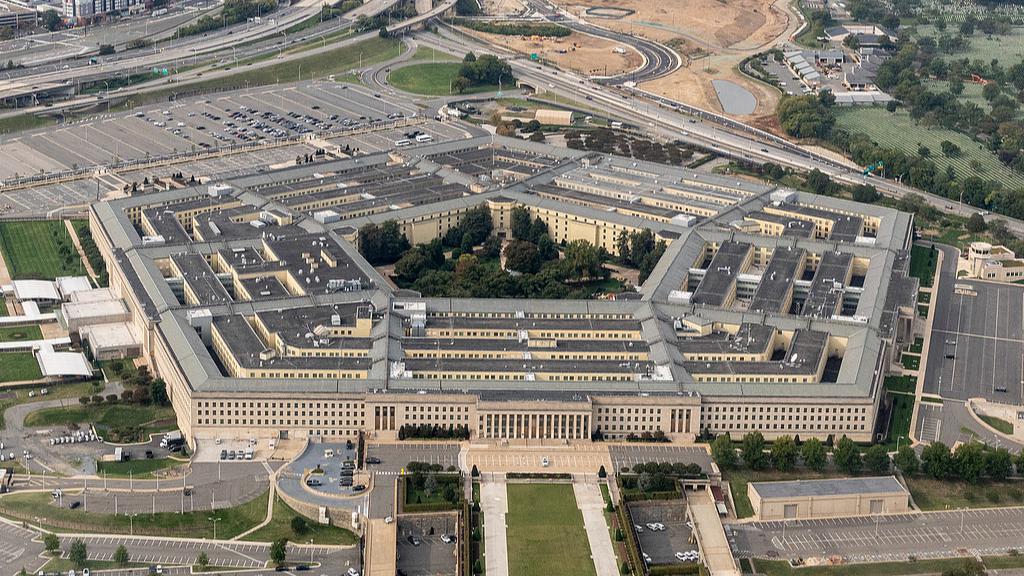
A view of the Pentagon, Arlington County, Virginia, US. (Photo: VCG)
Tensions across the Middle East remain high, with the United States reportedly preparing for potentially major military operations against Iran following the US midterm elections, while fighting between Saudi Arabia and Yemen's Houthi movement continues to intensify.
The Pentagon is prepared to launch new and potentially major military operations against Iran "within 96 hours of receiving" an order from US President Donald Trump, CNN reported on Monday.
According to the report, "sufficient" forces are now deployed in the Middle East to carry out the potential strikes.
Some US officials believe Trump's order could come any time before the end of the year, most likely after the upcoming US midterm elections, and the scope of new US military operations would likely go beyond efforts to simply "mow the lawn" or maintain the status quo by striking radars, launchers and other Iranian assets that can be quickly reconstituted, it added.
The New York Times reported last week that the United States and Israel have developed specific plans for renewed strikes against Iran after the US midterm elections, with targets likely to include Iran's energy infrastructure, nuclear facilities, and missile and drone arsenal.
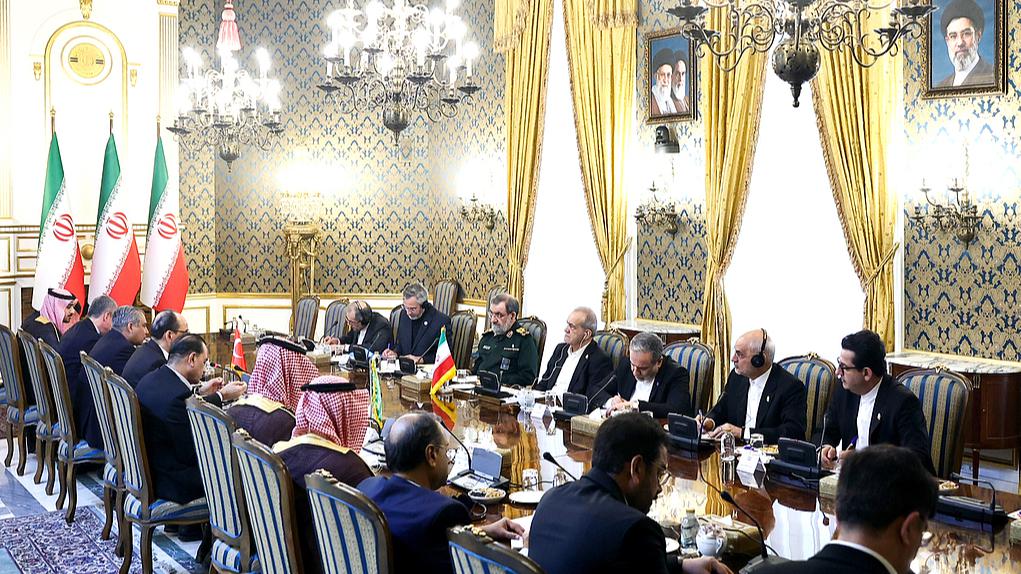
Senior officials from Iran, Saudi Arabia, Pakistan and Türkiye meet in Tehran, Iran, October 26, 2026. (Photo: VCG)
Against this backdrop of heightened military tensions, senior officials from Iran, Saudi Arabia, Pakistan and Türkiye met in Tehran on Monday to discuss regional security and ways to strengthen cooperation.
The meeting, the first of its kind among the four countries, was hosted by Secretary of Iran's Supreme National Security Council Mohsen Rezaei, and attended by Saudi Defense Minister Prince Khalid bin Salman bin Abdulaziz Al Saud, Pakistan's Chief of Army Staff Field Marshal Syed Asim Munir, and Türkiye's National Intelligence Organization Director Ibrahim Kalin, a statement issued after the meeting said.
"The participants agreed to continue discussions aimed at strengthening cooperation among the four regional countries, including in the realm of peace and security in the region," the statement said.
Iranian President Masoud Pezeshkian also said on Monday that Tehran supports any understanding that leads to unity, solidarity, security and development in the region, according to a statement published on the website of his office.
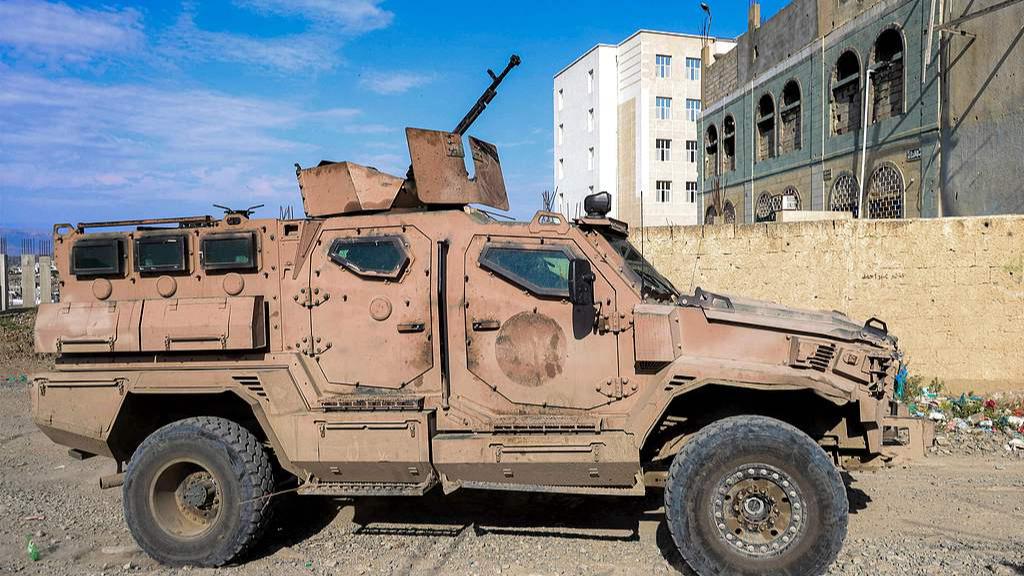
An armored vehicle is positioned in Taiz Province, Yemen, October 26, 2026. (Photo: VCG)
While regional powers pursue diplomatic channels to ease tensions, fighting in Yemen has continued to escalate, adding another layer of uncertainty to the already volatile security situation.
On Monday, the Houthi group and Saudi Arabia-backed Yemeni government forces reporting extensive military operations over the past 24 hours.
Houthi military spokesman Yahya Sarea said in a statement on X that Saudi forces carried out 119 air and missile strikes on the Houthi-held capital, Sanaa, and the provinces of Al-Jawf, Taiz, Saada, Amran, Ibb and Lahj over the past 24 hours.
Separately, Majid al-Nuzaili, spokesman for Yemen's government forces, said on X that government troops carried out 1,276 attacks against Houthi military positions and capabilities over the past 24 hours.
Al-Nuzaili claimed the operations had "neutralized" about 382 Houthi fighters and commanders and destroyed or damaged 140 military vehicles and pieces of heavy weaponry.
The latest escalation has seen intensified ground fighting and airstrikes in Yemen, alongside Houthi missile and drone attacks on Saudi soil.
The intensifying conflict is also worsening an already severe humanitarian crisis. The UN Office for the Coordination of Humanitarian Affairs (OCHA) said on Monday that nearly half of the more than 280,000 people displaced across Yemen since the latest round of hostilities began on August 1 had fled Taiz governorate.
In Taiz, Yemen's third-largest city, severe restrictions on humanitarian access have pushed health needs to critical levels, with shortages of medicine, fuel and water, OCHA said.
Continued fighting has also contributed to a growing accumulation of uncollected waste, raising the risk of disease outbreaks, the agency added.
(With input from agencies)