


Ruto secures Putin's pledge to halt military recruitment, expand ties
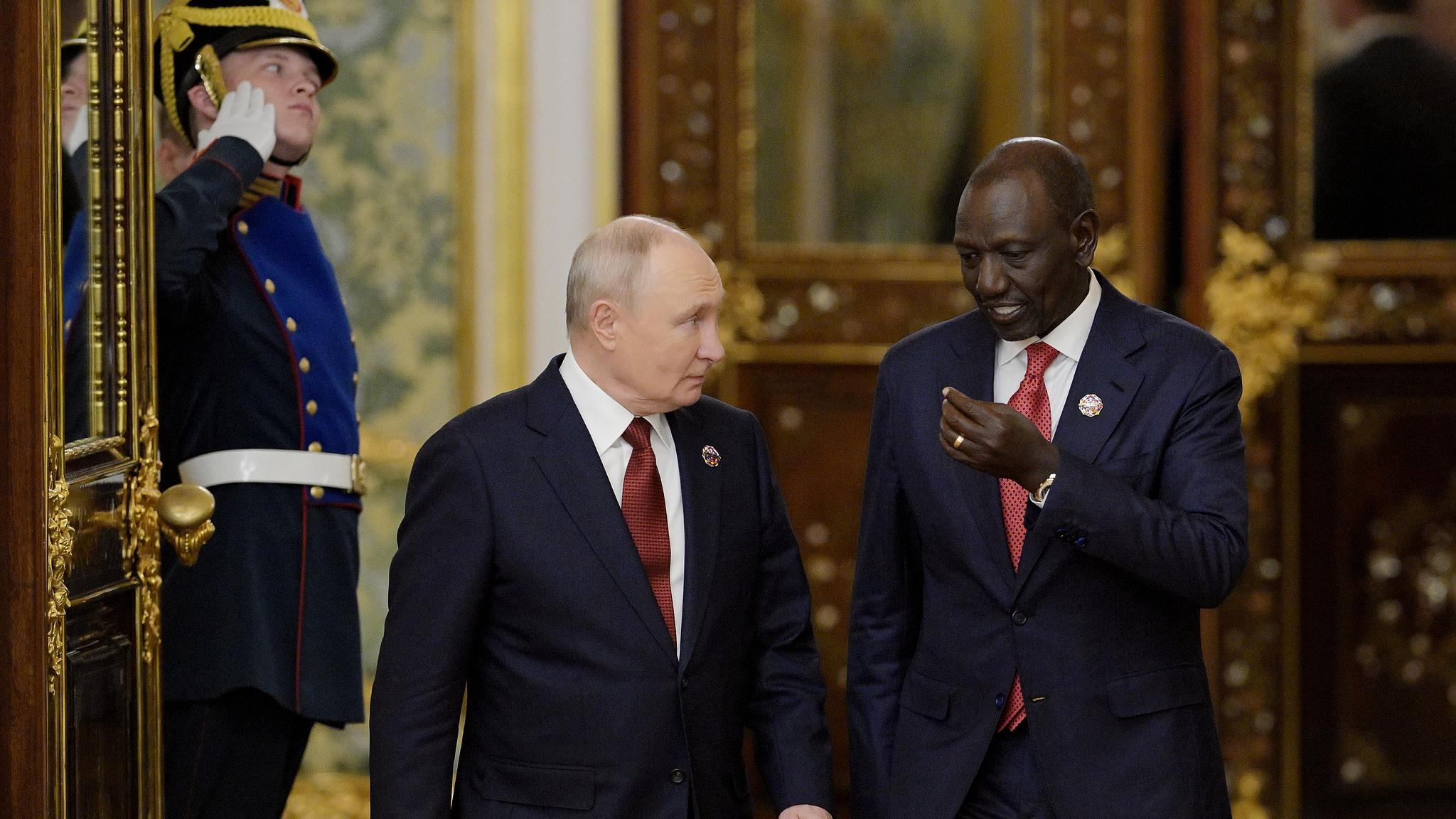
Russian President Vladimir Putin and President of the Republic of Kenya William Ruto met on the sidelines of the 3rd Russia-Africa Summit and Forum in Moscow, Russia, on October 29, 2026. (Photo: VCG)
Kenya has secured a renewed commitment from Russia to halt the recruitment of its nationals into the Russian military, following talks between President William Ruto and Russian President Vladimir Putin in Moscow.
Ruto said Putin had confirmed that Kenya would be designated a "non-source country" for recruitment into the Russian armed forces, in a move aimed at preventing further enlistment of Kenyans to fight in the in the Russia-Ukraine conflict.
In a statement following their meeting at the Kremlin on Thursday, Ruto said he had appointed a defence attaché at Kenya’s embassy in Moscow to liaise with Russia’s Defence Ministry on the return of Kenyans recruited for military purposes.
The official will also coordinate efforts to secure compensation for affected Kenyans and facilitate their safe return home.
The announcement comes amid growing concern over Kenyans who travelled to Russia and were subsequently recruited to fight in the war against Ukraine.
In October, Kenya’s Foreign Affairs Cabinet Secretary Musalia Mudavadi told parliamentary committees that the government had recorded 354 Kenyans linked to the conflict. The figure included those reported killed or missing, hospitalised, on the front lines or already repatriated. He said 62 had been brought home at the time.
Beyond military recruitment, the two leaders discussed expanding economic and diplomatic cooperation.
Ruto said the two countries would negotiate a bilateral labour agreement to establish a framework for Kenyans seeking to live and work in Russia. The proposed agreement is separate from the five cooperation instruments signed by the two countries.
The leaders also discussed increasing the number of scholarships available to Kenyan students in Russia from 70 to 300. The proposed expansion would cover fields including healthcare, artificial intelligence, aviation, technology and cybersecurity.