


Sri Lanka's major blackout triggered by sudden power plant trip: report
COLOMBO, Nov. 1 (Xinhua) -- Sri Lanka's island-wide power outage on Oct. 17 followed the sudden disconnection of 187 megawatts (MW) of generation capacity at the Norochcholai Lakvijaya Power Plant, according to a preliminary investigation report submitted by the National System Operator (NSO), the country's national grid operator.
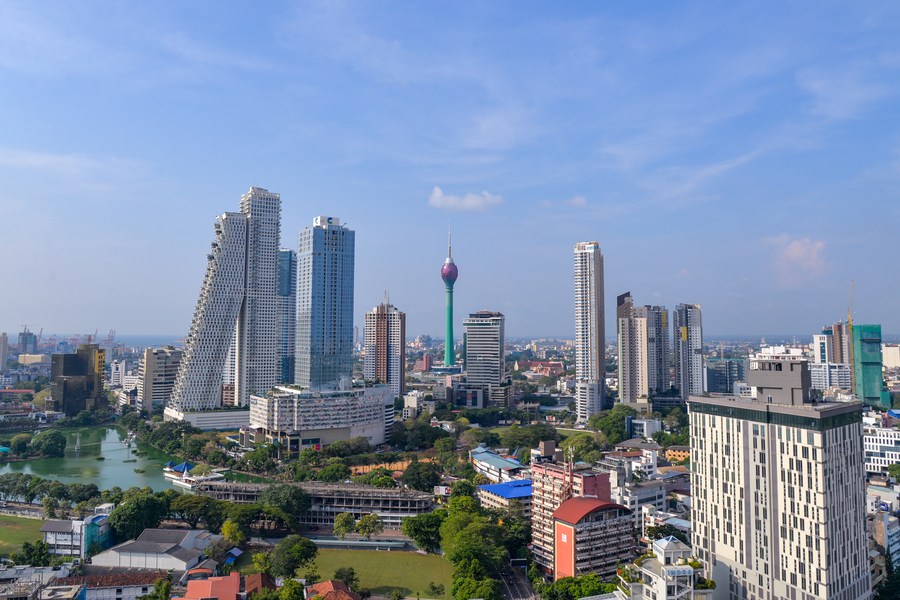
This photo taken on March 29, 2024 shows the city view of Colombo, capital of Sri Lanka. (Photo: Xinhua)
According to the report submitted to the Public Utilities Commission of Sri Lanka, the national power grid collapsed within 4.1 seconds of the initial disturbance, despite the activation of all five stages of the Under Frequency Load Shedding system designed to prevent widespread outages.
The protection mechanism disconnected 449.2 MW of electricity supply, equivalent to 39.6 percent of the 1,135 MW being generated immediately before the incident. However, the measures failed to stabilize the grid.
The disruption began at approximately 11:43 a.m. local time, when 187 MW of electricity generated by the first unit of the Norochcholai plant was disconnected within 450 milliseconds, causing the system frequency to fall to 48.75 hertz.
Protection systems subsequently shut down additional generating units at Norochcholai and several hydropower plants, including Victoria, Kotmale, Randenigala, Samanalawewa and Laxapana.
The NSO said restoration operations began immediately after the collapse, with electricity supplies gradually restored through four main networks covering the Mahaweli, Laxapana, Samanalawewa/Southern and Colombo systems.
The restoration process involved the Kotmale, Victoria, New Laxapana, Wimalasurendra, Samanalawewa, Kukuleganga and Kelanitissa power plants. All major substations were restored by 4:58 p.m., approximately five hours and 15 minutes after the outage began.