


G20 FM meeting ends without joint communique amid deep divisions
ATLANTA, the United States, Oct. 31 (Xinhua) -- A two-day meeting of Group of 20 (G20) foreign ministers ended here Saturday without a joint communique, as participants failed to reach consensus on major global geopolitical and economic security issues amid the Ukraine crisis and the U.S.-Iran conflict.
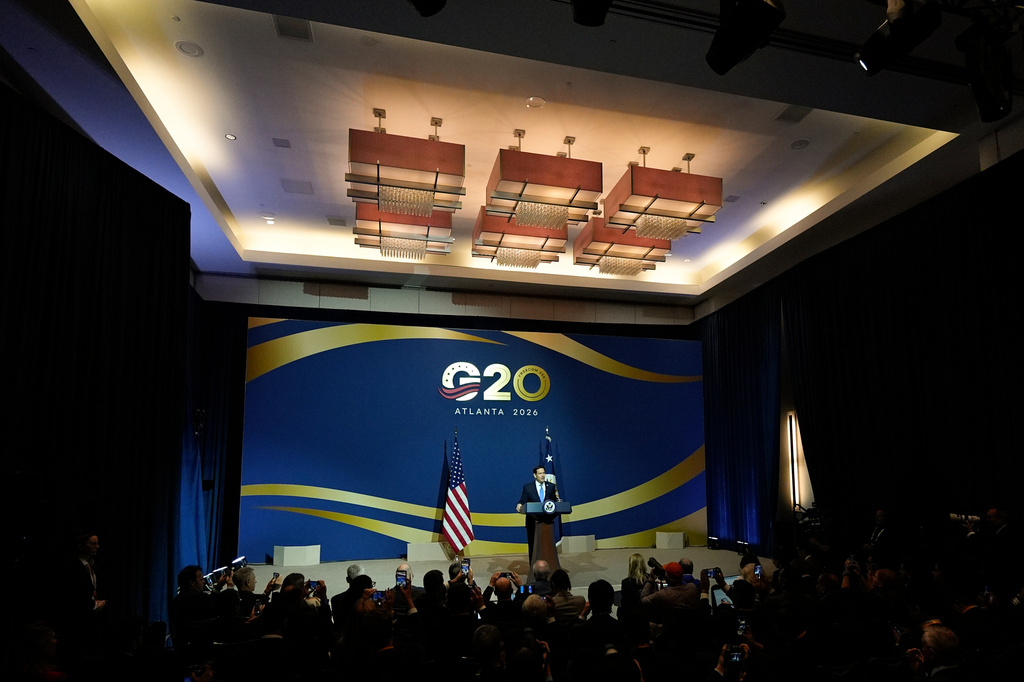
Secretary of State Marco Rubio speaks during a news conference, Saturday, Oct. 31, 2026, in Atlanta. (Photo: AP)
Chaired by U.S. Secretary of State Marco Rubio, the meeting addressed geopolitical tensions, energy security and supply chains.
At a closing news conference, Rubio highlighted freedom of navigation in key waterways, including the Strait of Hormuz and the Black Sea, along with critical mineral supply chains and food security. He said participants recognized the importance of these issues but remained divided over their solutions.
"I wouldn't pretend to you today that we are close to finding universally accepted solutions to these problems," he told reporters.
Chinese Vice Foreign Minister Ma Zhaoxu told the meeting that the international situation is undergoing profound changes, geopolitical situations are tense, and the development agenda is seriously lagging behind.
Ma said the Global Security Initiative proposed by China advocates a vision of common, comprehensive, cooperative and sustainable security, and has played an important role in helping resolve international and regional disputes.
Ma urged the G20 to shoulder its due responsibilities and serve as a force for safeguarding world peace and stability, help ease tensions in regional hotspot issues, address the root causes of conflicts, and strengthen global security governance.
He said China supports the G20 in deepening cooperation on ensuring energy security and achieving sustainable development, continuously improving energy affordability, promoting transformation of the energy structure, and improving global energy governance.
He also called on G20 members to take concrete actions to maintain the stability and smooth operation of global industrial and supply chains.
Participants remained deeply divided over issues including the Ukraine crisis, the U.S.-Iran conflict and U.S. tariff policies. Several representatives said these issues had driven global fuel costs sharply higher and heightened uncertainty in global trade. They also voiced concerns over the possibility of the United States launching another military strike against Iran after the Nov. 3 midterm elections, and the possibility of Iranian retaliation.
On the opening day of the meeting, the United States abruptly canceled the traditional group photo of foreign ministers. Representatives from some European countries, Australia and Canada reportedly opposed posing alongside Russian Foreign Minister Sergei Lavrov.
Washington's decision not to invite South Africa, a G20 member that held the group's rotating presidency last year, also sparked divisions.
U.S. President Donald Trump will host the G20 Leaders' Summit in Miami, Florida in December and has invited Russian President Vladimir Putin. Rubio said Saturday that Russia has not yet confirmed whether Putin will attend the meeting.