


African candidates seek seats on UN's top court in key judicial election
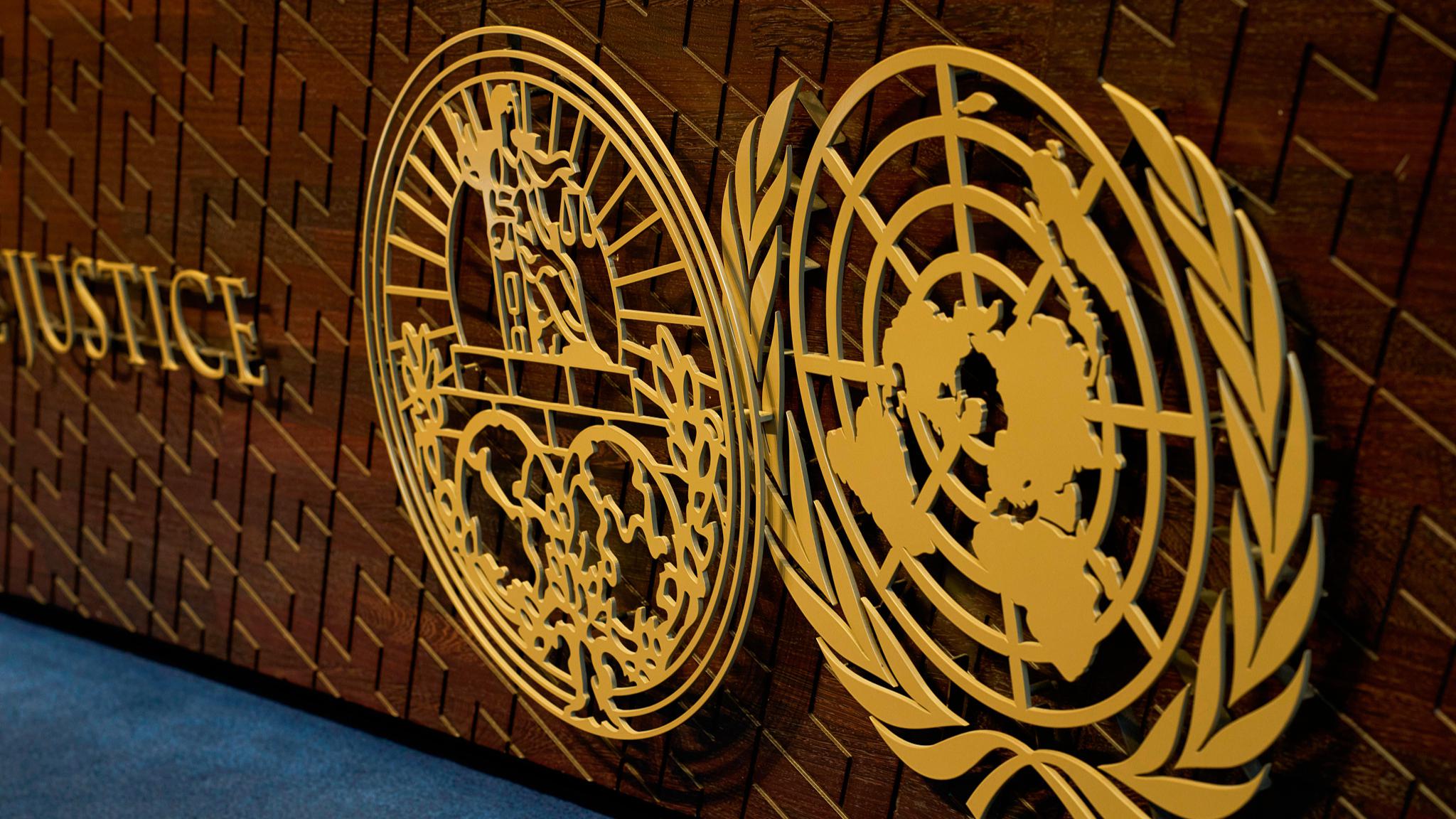
The logo of the International Court of Justice displayed on the judges' bench in The Hague, Netherlands, May 4, 2026. (Photo: VCG)
Two African legal experts are among the candidates seeking positions on the International Court of Justice (ICJ) as the United Nations prepares to elect five judges to its principal judicial body.
Kenya's Phoebe Okowa and Sierra Leone's Charles Chernor Jalloh are representing the continent in the contest which involves nine candidates from various regions.
Okowa is an incumbent judge who joined the court in November 2025 following the resignation of Somali judge Abdulqawi Ahmed Yusuf. Her current appointment runs until February next year. Nigeria's Taoheed Olufemi Elias, who had also been in the running, withdrew his candidacy.
Their candidacies come as African representation remains part of broader discussions about geographical diversity and the balance of legal systems within the court.
The International Court of Justice, established under the United Nations Charter, sets requirements for individuals seeking appointment as judges.
Article 2 of the ICJ Statute provides that judges must be selected from among persons of high moral character who either:
Possess the qualifications required in their respective countries for appointment to the highest judicial offices; or
Are jurists of recognized competence in international law.
Candidates are not required to have previously served as judges, but they must demonstrate exceptional expertise in international law.
The election will fill five of the court's 15 positions, with successful candidates serving nine-year terms starting on February 6, 2027. The other candidates are from France, the United Kingdom, Jordan, Peru, Singapore, South Korea and Ecuador.
Under the election rules, candidates must secure an absolute majority in both the UN Security Council and General Assembly. This requires at least eight votes in the 15-member Security Council and 97 votes in the 193-member General Assembly.
The two bodies vote separately, and the process may involve several rounds if the results do not produce five candidates with the required majorities in both organs.
If the two bodies elect different candidates, further voting takes place to fill the remaining positions. A special conference involving representatives of both bodies may eventually be convened if vacancies remain unresolved.
(Story compiled with input from the United Nations)