


South Africans vote in key local elections
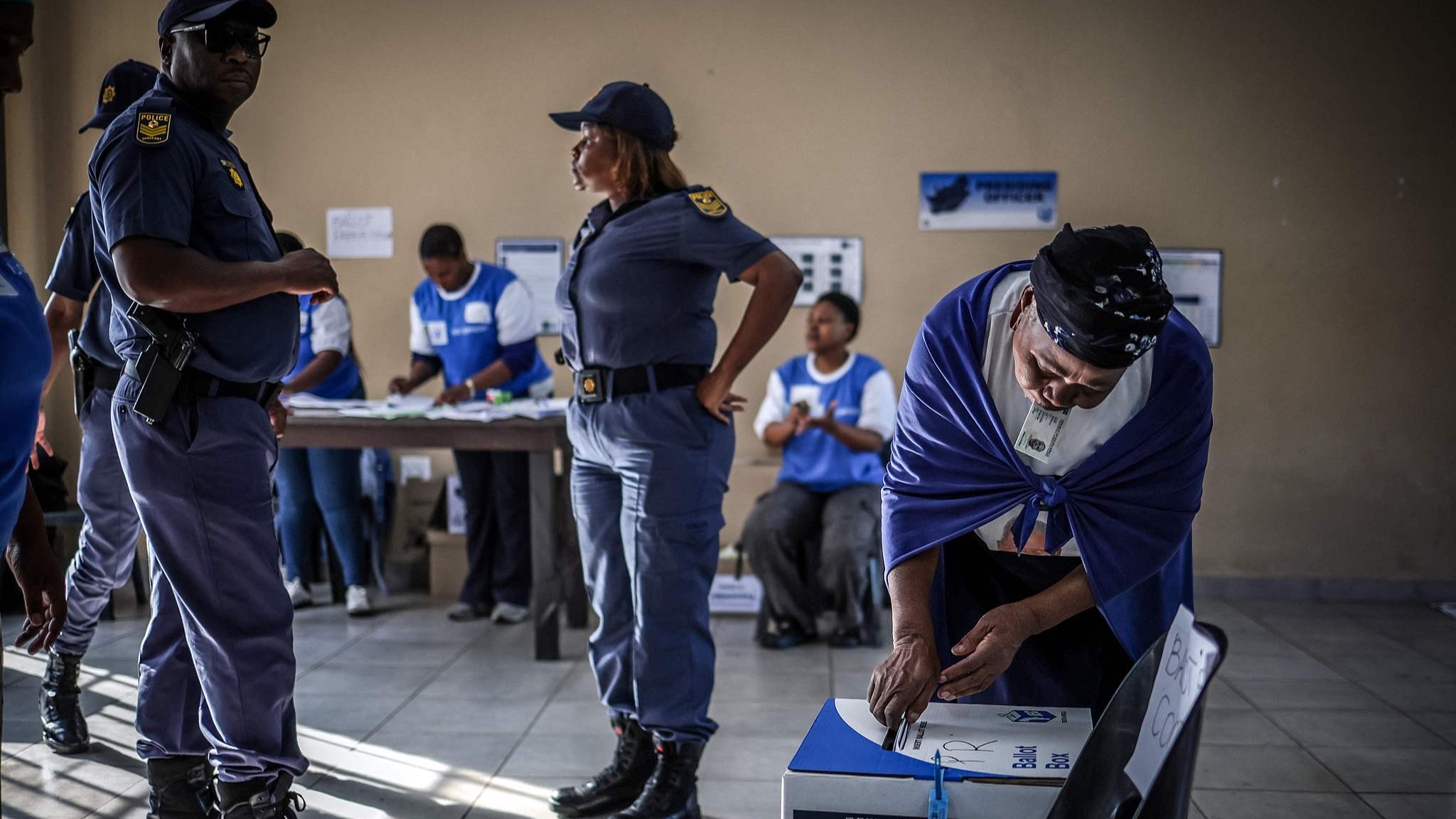
A voter casts her ballot at the Mai Mai Bazaar Hall polling station, as South Africa holds its highly anticipated local government elections in Johannesburg, South Africa, November 4, 2026. (Photo: VCG)
South Africans began voting on Wednesday in local government elections that will determine control of major cities, with failing public services, unemployment and crime among the key issues facing voters.
Polling stations opened at 7 a.m. local time and are scheduled to close at 9 p.m., with final results expected on Sunday.
The elections will determine the composition of municipal councils across the country. Councillors will then elect mayors and form administrations responsible for delivering basic services, including water, electricity, sanitation and waste collection.
Johannesburg, the country's largest city and economic hub, is among the key battlegrounds. Persistent water and electricity disruptions, deteriorating infrastructure and repeated changes in municipal leadership have fuelled frustration over service delivery.
The city is currently governed by an African National Congress (ANC)-led coalition, while the Democratic Alliance (DA) is seeking to take control. Johannesburg has experienced frequent changes in leadership in recent years, reflecting the difficulties of governing through coalitions.
The ANC faces a broader test after losing its parliamentary majority for the first time in the 2024 national elections, when it secured less than half the vote and entered a national government of national unity with the DA and other parties.
The local elections also mark the first municipal contest for the uMkhonto weSizwe (MK) Party, led by former president Jacob Zuma. The party performed strongly in the 2024 national elections and has significant support in KwaZulu-Natal, Zuma's home province.
With no party assured of an outright majority in several major cities, coalition negotiations are expected to play a central role in determining who governs. Unstable coalitions have contributed to repeated leadership changes in some municipalities.
Beyond service delivery, voters are concerned about unemployment, crime and immigration. South Africa's unemployment rate remains above 30%, while unreliable water supplies and electricity disruptions have become prominent campaign issues.
The results are expected to indicate the country's political mood ahead of the next national election in 2029, following the ANC's loss of its parliamentary majority in 2024.