


Filipinos lining up for Chinese visas, yet anti-China politicians in Manila pretend to be asleep
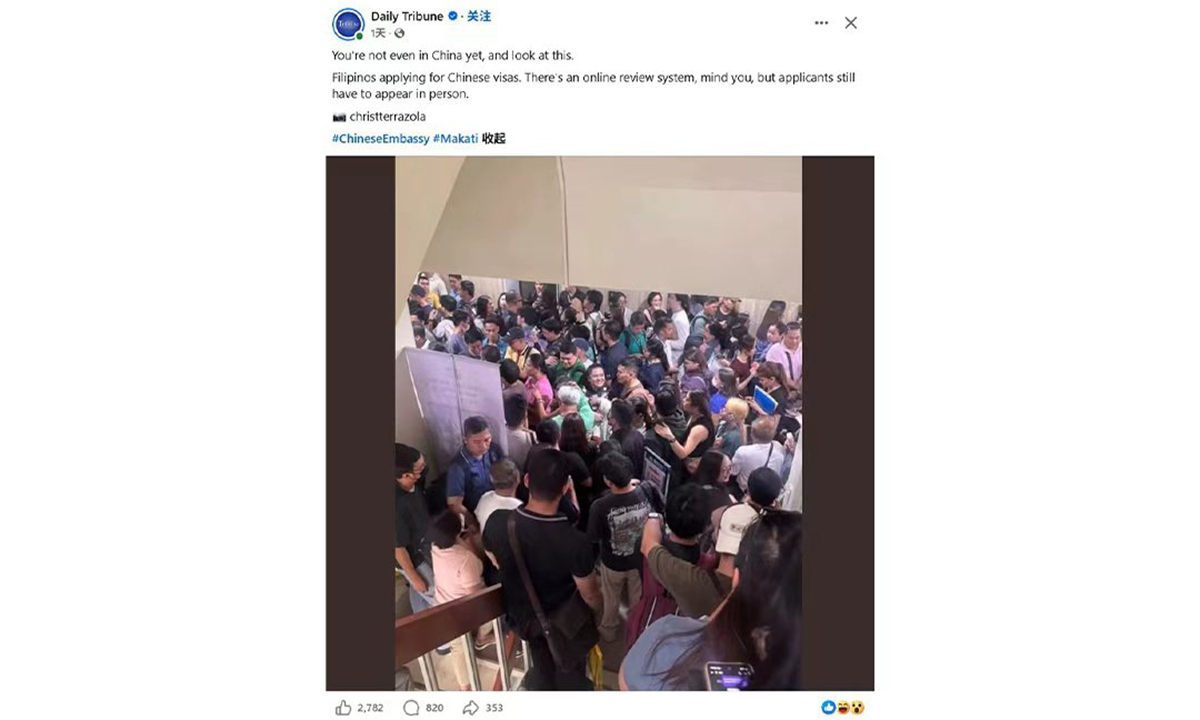
Filipinos line up to apply for Chinese visas. (Photo: Screenshot of a post published by Philippine media outlet Daily Tribune on Facebook)
Several Filipino netizens recently shared photos on social media showing long lines at the visa application service center of the Chinese Embassy in Manila. One netizen, recounting their experience of applying for a Chinese visa, said there were more than 300 people ahead of them when they submitted their application. Despite arriving as soon as the visa office opened, they had to wait a full five hours to complete the process. In the photos, even the stairways leading to the visa office were packed with people. Despite the long wait, the anticipation and excitement on their faces were unmistakable.
According to Philippine media reports, nearly 235,000 Filipino tourists traveled to China between January and September this year, a year-on-year surge of approximately 51 percent, even as the total number of outbound travelers from the Philippines increased by just 7.16 percent. The growth is still accelerating. The Chinese Embassy in the Philippines has had to advise visa applicants to avoid peak hours, consider applying in groups and plan their applications accordingly. After seeing the photos, many netizens expressed surprise at just how many Filipinos wanted to visit China. Some attributed China's growing appeal as a travel destination to factors such as travel vloggers sharing their experiences and highly affordable travel packages.
So far, Philippine officials, especially those clowns who frequently stir up trouble for China-Philippines relations, have continued to bury their heads in the sand, offering no response to this trending topic on Philippine social media. They are precisely the ones who should come forward and explain themselves. For a long time, these politicians have repeatedly stirred up trouble in the South China Sea while clinging to external powers for support. At the same time, they have relentlessly hyped up the so-called "China threat" in domestic public discourse, portraying China as a place fraught with traps and dangers at every turn.
But here is the question: If China really is such a "threat," why are more and more Filipinos willing to stand in line for hours to visit? This demonstrates just how completely disconnected from reality these politicians' carefully crafted narratives have become.
In fact, for these politicians, being "anti-China" is merely a political performance. While publicly shouting anti-China slogans, they have also sought to profit from the Chinese market, trying to have it both ways. Some of them, after being hit with tough Chinese sanctions, have seen their avenues for personal gain completely cut off. As a result, they have become increasingly hysterical, stepping up their efforts to provoke confrontation at every opportunity. Some Filipinos have also complained on social media that these politicians, who criticize China day in and day out, actually want to send their own family members there. This exposes their selfish motives more clearly than any public statement ever could.
The long lines on those stairways offer a glimpse into what ordinary Filipinos really think. Those anti-China political performances are like soap bubbles: They do not even need to be pricked to burst. They will collapse on their own.