


'There's life outside of the lab': Biologist Karolin Luger on science and taking a gap year
Karolin Luger had other things to think about besides science. For two months, she and her husband traveled down the Yukon River by canoe, camping in the wilderness.
On the river, her questions were different. Where would they find food? Where could they fish? Would a bear attack?
"I didn't really think that much about the science at that time," she recalled.
Years later, the woman in the canoe would help reveal how DNA is packaged inside cells. Now a structural biologist at the University of Colorado Boulder and an investigator at the Howard Hughes Medical Institute, Luger received the 2023 World Laureates Association Prize in Life Science or Medicine and the 2026 Vilcek Prize in Biomedical Science for her pioneering work on the nucleosome.
After completing her doctorate, Luger decided to take a gap year before starting her next research position. She loved the outdoors, and she and her husband wanted an adventure. In retrospect, she says, the time away showed her that there was life outside the lab.
But when Luger told her doctoral adviser about her plan to take a year off, he warned her that it would ruin her career.
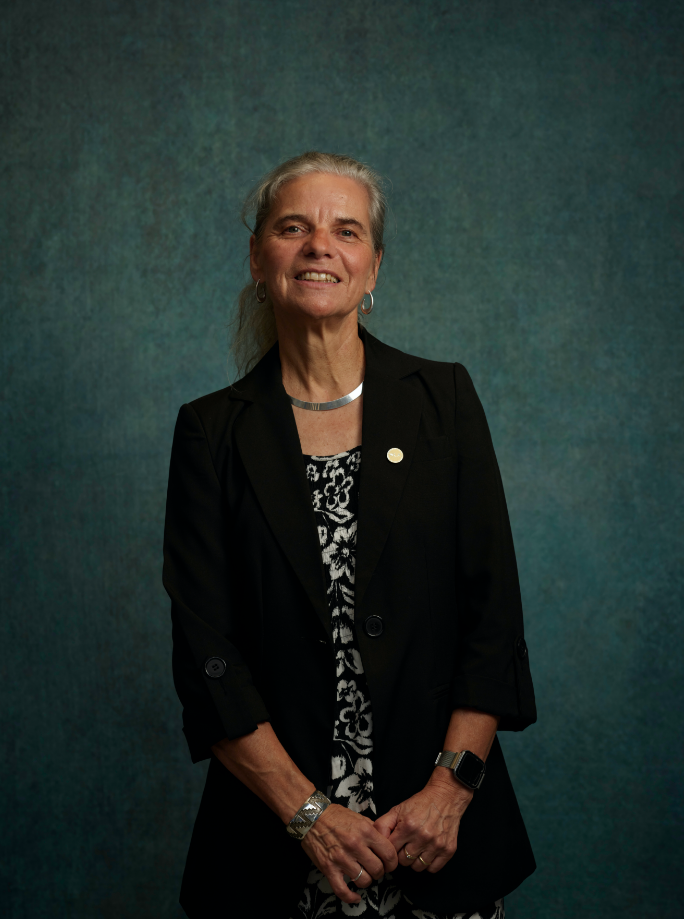
Karolin Luger (Photo: Jin Liwang)
"It was risky"
Luger had not given up on a future in science. Before leaving, she contacted a professor about a postdoctoral position and was offered the job. When she told him she wanted to take a one-year break, he was less than pleased. She knew the decision involved uncertainty, but the prospect of a research career did not deter her from the adventure she and her husband wanted.
"It was risky. I'm not going to lie to you," she said.
Luger now sees another lesson in that decision. For years, she said, the expectation had been to keep moving as quickly and successfully as possible. She could have continued at that pace, but, looking back, she believes she needed a break. Learning to listen to that inner voice matters, she said, even when others are urging you to take a different course. Still, she is clear about the uncertainty, saying, "Of course, it can go wrong … nothing is certain."
The desire to make room for life beyond work has stayed with her. Luger now travels more for pleasure, visiting Antarctica, Greenland and the Lofoten Islands, often kayaking and hiking.
"I like the extreme places," she said. She hopes to travel more in the future while continuing to mentor her graduate students and help younger researchers establish themselves. The balance she describes is still taking shape: there are places she wants to see, and people whose work she wants to support.
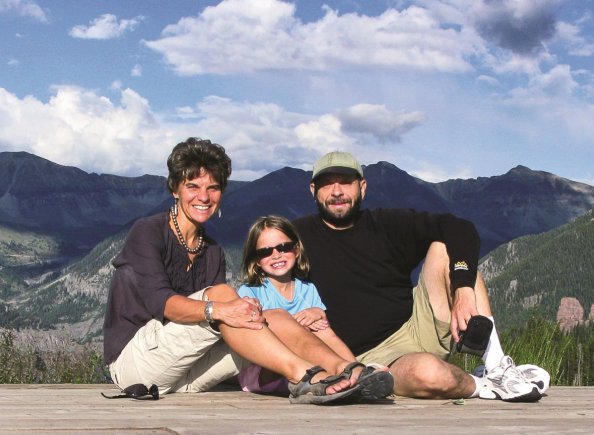
Luger with her husband and daughter hiking in 2013. (Photo: the Biophysical Society website)
Curious ‒ and stubborn
Luger did not set out to reveal the structure that would make her name. At first, she said, she simply wanted to learn a technique in structural biology. She joined a lab to find out how it worked, unaware that the problem awaiting her was exceptionally difficult.
"Nobody told me," she recalled. By the time she understood what she had taken on, she had grown more interested ‒ and more stubborn.
The object of that growing fascination was the nucleosome, a basic unit of chromatin. Inside cells, DNA wraps around proteins called histones to form nucleosomes. These structures help package genetic material and influence how accessible the DNA is when cells need to use it. Seeing the nucleosome's structure in detail offered a new understanding of how our genetic information is organized.
In 1997, Luger and her colleagues gave scientists that view. As the first author of a paper published in Nature, she helped determine the three-dimensional structure of the nucleosome core particle at a resolution of 2.8 angstroms, revealing its atomic architecture. The finding provided a foundation for understanding how DNA is organized and how its activity can be regulated.
To Luger, it was also beautiful.
Luger singled out one moment at an international conference. The audience was eager to see a structure that, until then, only she and her colleagues had seen. She put the slide on the screen, and a collective "ah" filled the room. After years of work, the structure was finally there for everyone to see.
The moment remains vivid in Luger's memory, but she sees it as fleeting. Luger does not believe in holding on too tightly to recognition or prizes. What stays with her is a different question: What will her work leave behind? For her, part of the answer lies in the students she has trained and helped to succeed.

Luger is interviewed by the People's Daily. (Photo: Xu Lingmeng)
Making room for others
When Luger was young, she had few female role models in science. At university, she recalled, women were not encouraged to pursue research; teaching, pharmacy or medicine were presented as more suitable paths.
Today, she is a member of the US National Academy of Sciences and a corresponding member abroad of the Austrian Academy of Sciences. Yet when she speaks about the impact she hopes to leave, she turns to the people she has trained. She cares about what happens when a student's project stalls: how to encourage them, when to help them change direction, and how to prepare them for the future. Her role, as she sees it, is to offer support without pressing her own advice on them, giving young researchers space to find a direction of their own.
In an email, Luger treated everyone in her lab ‒ including Chinese students ‒ as equals, creating a relaxed atmosphere, said Yang Liu, a former postdoctoral researcher in her lab who is now an assistant professor at the University of Hong Kong's School of Biomedical Sciences.
Luger took a similar approach at home. She introduced her daughter to science and music but gave her the freedom to explore her own interests. Now 22, her daughter has developed a passion for horses and is studying equine science.
Luger has seen more women enter science, many confident in their abilities. But progress, in her view, has not erased every barrier. She still sees fewer women at senior levels of academia and believes that stereotypes persist about women's abilities in science, technology, engineering and mathematics.
In her own lab, she told us, the number of women and men has generally been about equal; sometimes, there have been more women. They face similar challenges, and she treats them the same. Yet some women come to her with questions the men do not ask ‒ what to wear, for instance, or how to present themselves in a professional setting.
Her guidance also reaches beyond her lab: early-career scientists, particularly women, seek her advice on funding, hiring and the pressures of securing tenure. Asked what she would say to young female scientists, Luger urged them to keep going and help one another.
"Once you are successful, you have to look down and see who else can you bring up," she emphasized.
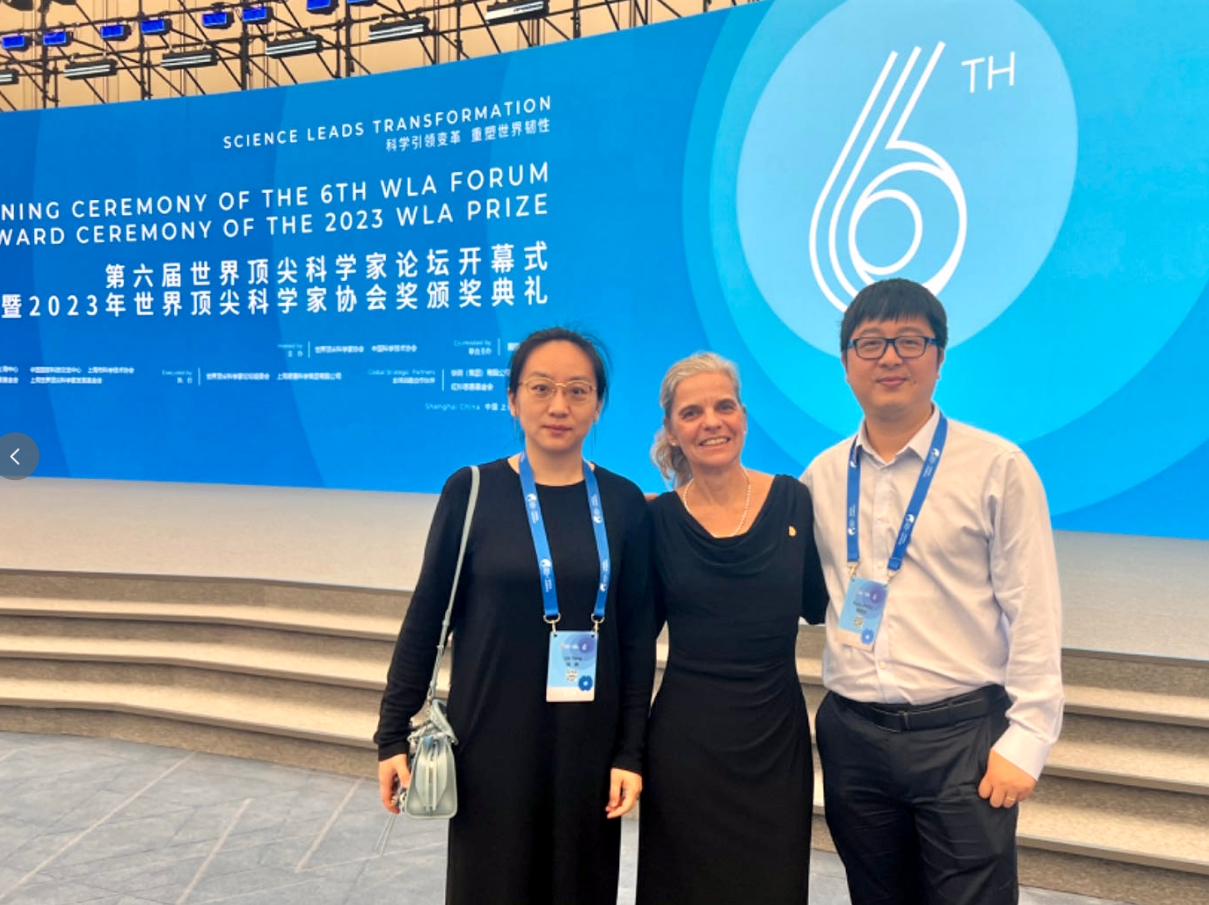
Luger with Chinese students at the 2023 World Laureates Forum. (Photo provided by Yang Liu)
A question without an easy answer
Throughout the interview, Luger was generous with her advice but careful about its limits. Asked what she would tell her younger self, she offered an answer she knew was almost impossible to follow:
"Don't be so anxious."
She had worried, too, she said, because she could not know how things would turn out. Looking back, she wished she had spent less time worrying, while recognizing that it was easier to say so now: she had been lucky, and her path had led her to success.
Near the end of our conversation, Luger turned the question back on us.
"Why do you think we have the answers?"
In her encounters with young people, she said, she often sensed that they expected scientists like her to know the way forward. But everyone's circumstances are different, and so are their stories. Her own experience, however much it meant to her, could not provide a roadmap for someone else.
What she could offer was a place to begin. "Know your own strengths," Luger advised, "and learn to build on them." Choosing a direction for yourself takes self-awareness and courage, particularly when the people around you expect something else. It can be frightening, she acknowledged; following someone else's instructions is often easier.
Luger remembers the past ‒ the choices, the discoveries, the unexpected turns ‒ but she does not dwell on it.
"I really like to look forward," she said.
This was Luger's third visit to China, and, in her view, the best so far. Her first had been a whirlwind of award ceremonies and interviews, leaving little time to explore. On her second, she had been able to see more of Shanghai and reconnect with former students. This time, she traveled by high-speed train, explored on her own and enjoyed the company of a former student who, despite his busy schedule, made time to accompany her.
When the interview ended, another journey lay ahead. The next day, Luger would fly back across the Pacific and be back in front of her students, ready to teach.