


From cryptography to marriage to world peace: Martin Hellman's quest for trust
When a Stanford University staff member asked US cryptographer Martin Hellman how he planned to spend his share of the $1 million ACM Turing Award, he replied: "What money?"
Hellman, who shared the award with Whitfield Diffie in 2015, said he had not initially realized that it came with a cash prize.
He and his wife decided to devote his half of the prize to their joint efforts to build a more peaceful, sustainable world, later adding money of their own.
"It gives me credibility," he said of the award, which has opened doors to gatherings such as the World Laureates Forum in Shanghai.
Fifty years ago, Hellman helped solve a problem that had long stood in the way of secure communication: how two strangers could exchange information without first having to trust each other.
Today he is working on a far more difficult challenge: how people and nations that distrust one another can learn to talk, cooperate and live in peace.
Having helped build the foundations of trust in the digital world, he now hopes to help foster it in the real one.
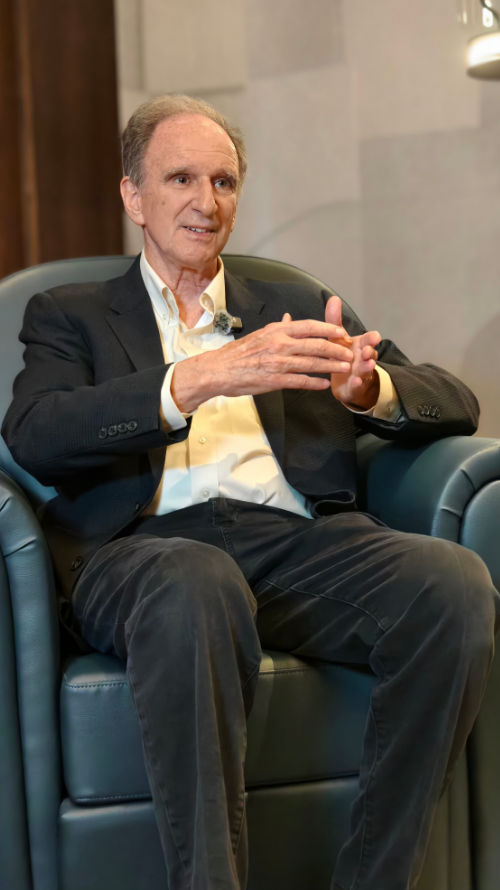
Martin Hellman (Photo: Ma Zuopeng)
A call for global cooperation
Hellman needed help opening a bottle of water.
"Can you open it, please? I'm getting very old, and I used to be strong," he said before an interview in Shanghai.
Two weeks earlier, he had been hit by a car.
His wife had urged him to cancel the trip to Shanghai that followed, but he did come to the city for the 2026 World Laureates Forum.
During the forum Hellman spoke to schoolchildren at a youth activity center in Shanghai. He also urged fellow scientists to use their gatherings to help improve relations between countries.
He fears that humanity's technological power has outgrown its ability to manage conflict. Nuclear weapons and artificial intelligence, he said, have made cooperation a matter of survival.
When first invited to the forum in 2018, he asked others involved whether it could serve as a platform for international cooperation. He wanted it to be more than another scientific conference.
"It has to be working toward improving relations between countries," he said.
He hopes such encounters can help turn confrontation, particularly between China and the United States, into cooperation and friendly competition.
"The opportunity is to build a more cooperative world, but we can't jump there," he said. "We need to figure out how we're gonna get there."
Two locks on a box
Hellman co-invented public-key cryptography with Whitfield Diffie and Ralph Merkle in the 1970s.
The technology underpins the secure online payments and encrypted email that billions of people use every day.
Hellman often used the analogy of a box with two locks to explain public-key exchange.
The sender locks the box and sends it to the receiver, who adds a second lock and sends it back.
The sender then removes the first lock and returns the box, allowing the receiver to open it while keeping its contents inaccessible to anyone else.
Over time Hellman shifted his research focus from data security to international security, applying probabilistic risk assessment to a potential failure of nuclear deterrence.
"A child born today would have worse than even odds of living out his or her natural life without experiencing and possibly being killed in a nuclear war," he said at the forum.
Looking back on his career, Hellman described it with a phrase he later used as a chapter title: "The Wisdom of Foolishness."
He believes many ideas look foolish before they finally prove their worth.
Asked by the People's Daily what advice he would give young people, he said: "If they do something that everyone tells them is crazy, it's probably a good thing to try."
He also said that almost every Nobel laureate he had spoken with had once been regarded as crazy.
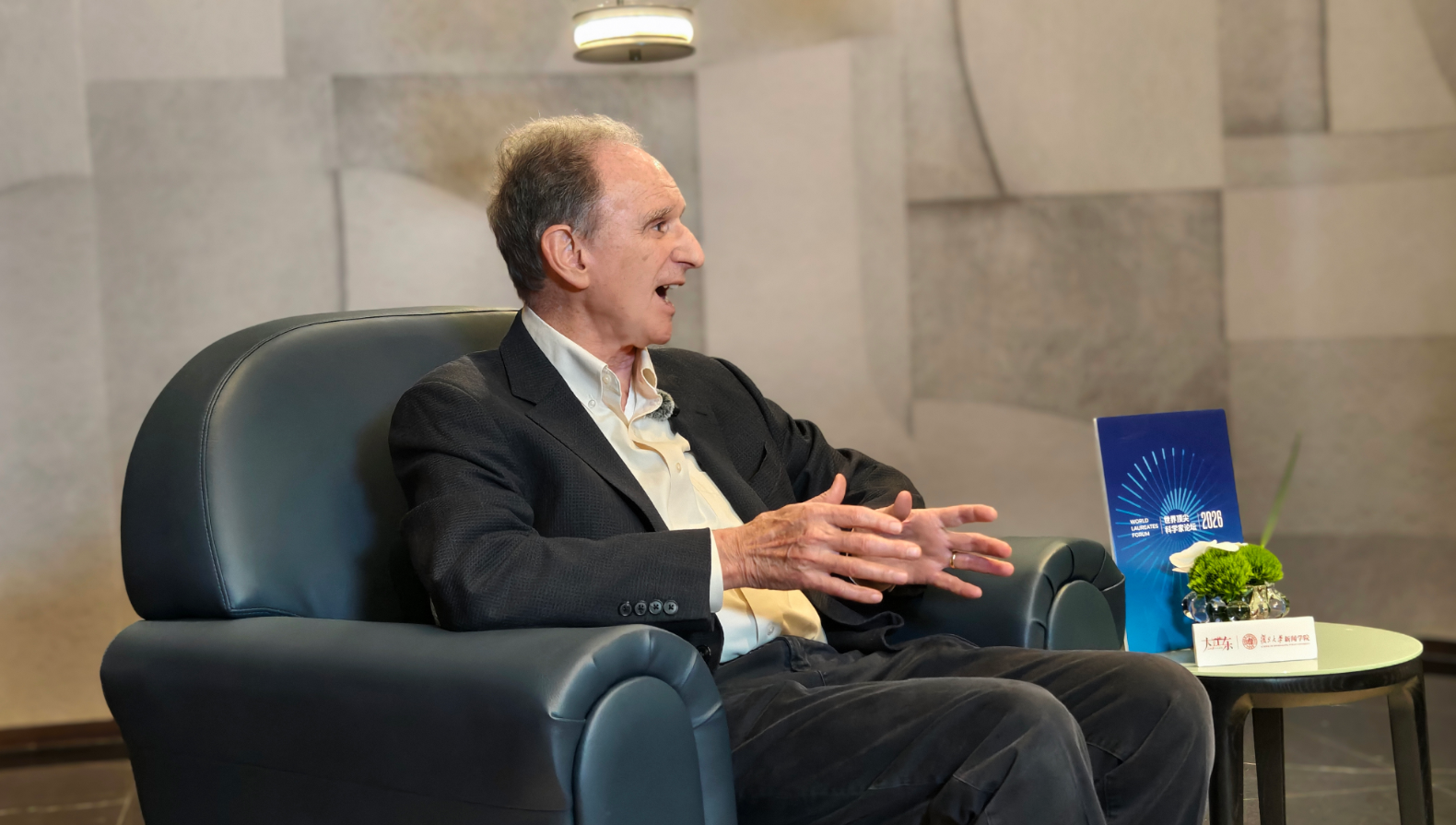
Hellman is interviewed by the People's Daily (Photo: Ma Zuopeng)
'Get curious, not furious'
"How did I transition from data security to international security?" he said. "The waypoint, the midpoint, was marital security."
Hellman and wife Dorothie married in 1967. Their relationship later deteriorated so badly that she was ready to leave. He said he did not realize it at the time.
Hellman recognized a pattern in their arguments. When Dorothie did something he considered crazy, he would treat her as irrational, which provoked even stronger reactions from her and in turn, reinforced his judgment, trapping them in a cycle of escalating conflict.
"We do the same internationally," he said.
Repairing their marriage taught them how to break that cycle.
They later co-authored a book, A New Map for Relationships: Creating True Love at Home & Peace on the Planet.
One principle runs through the book: "Get curious, not furious."
In the book, the couple recounts a seemingly trivial incident that came to symbolize their transformation.
In 1989, while they were visiting San Francisco's Twin Peaks, Hellman took a map from Dorothie's hands without asking, assuming she needed help.
She felt patronized and stormed out of the car.
When she returned, she snatched the map from him and tore it to pieces.
Instead of reacting angrily, Hellman laughed.
Dorothie soon joined him and the two ended up piecing the map back together.
The book has attracted readers well beyond the couple's immediate circle.
William J. Perry, a former US secretary of defense, praised its parallel between struggles for dominance in marriage and geopolitics, warning that the latter could threaten civilization.
Federico Faggin, designer of the world's first microprocessor, endorsed the couple's central argument that the nuclear threat can be disarmed only by changing what lies inside the human heart. Chinese publishers are also seeking the book's Chinese-language rights.
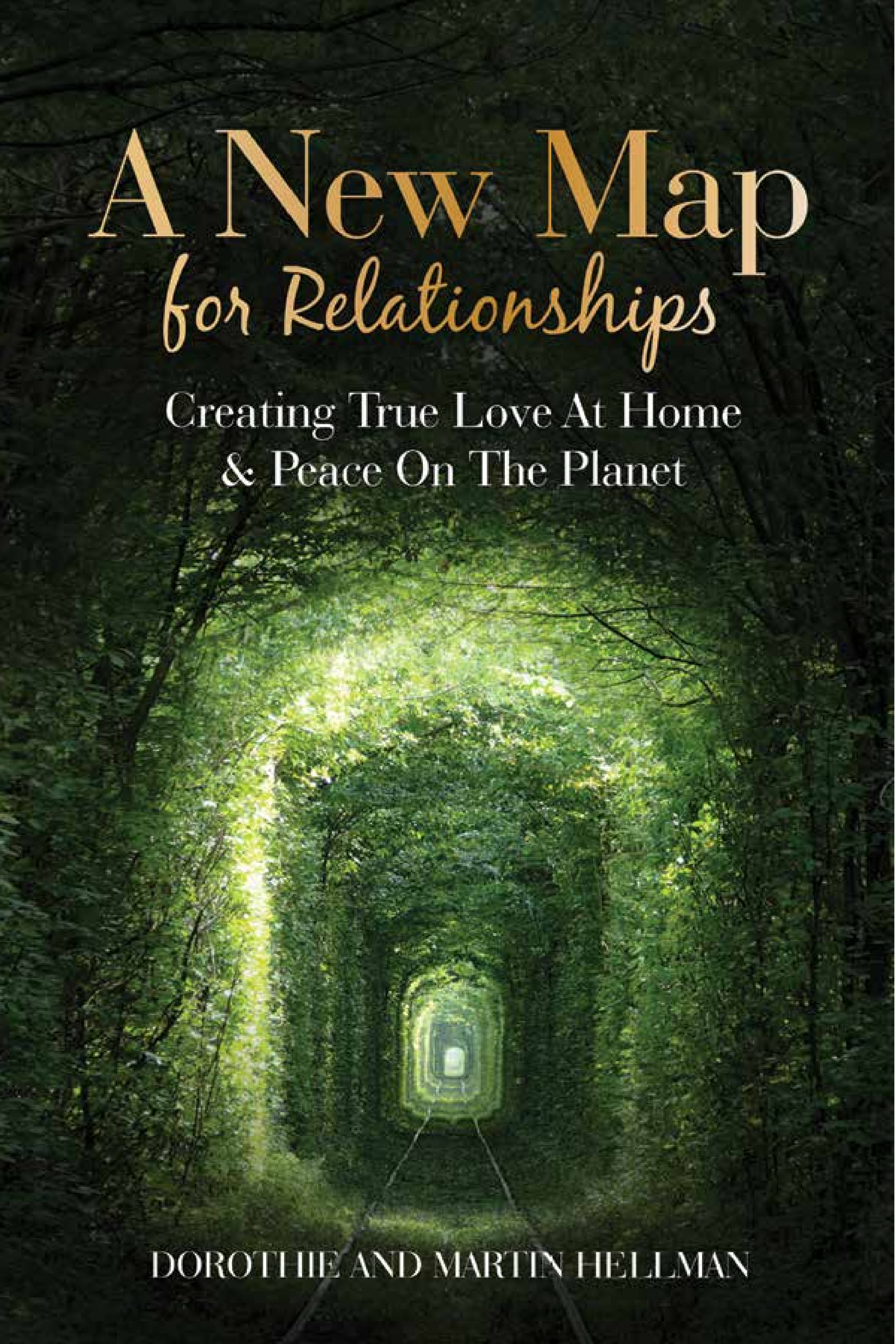
Cover of the English edition of A New Map for Relationships: Creating True Love At Home & Peace On The Planet (Source: Stanford University website)
Now when Dorothie does something he cannot understand, he asks her about it.
What once seemed unreasonable often makes sense when he hears her explanation.
Hellman believes the same shift is needed in international relations.
He argued that the world remains trapped in a zero-sum mode of thinking and must move beyond it to survive. Nations should stop defining one another by nationality, skin color or religious faith.
"We need to see ourselves first and foremost as human beings," he said.
At the forum he also invoked Sun Tzu's The Art of War, citing its principle that the best battle is the battle that is never fought.
For Hellman, the challenge is to find ways for people and nations to keep talking and working together, even when differences persist.
The couple's book also opens with a line from the Tao Te Ching, the ancient Chinese philosophical classic attributed to Lao Tzu: "He thinks of his enemy as the shadow that he himself casts."
This Eastern wisdom, like the principle from Sun Tzu, reinforces a central theme of the book: the relational map Hellman and Dorothie developed for personal relationships is one they hope nations, too, will learn to read.
Strengthening 'ethical muscles'
In 1976, Hellman decided to go public with the inadequate key size of the Data Encryption Standard, which had been published by the US National Bureau of Standards in 1975.
Five years later, after watching the documentary The Day After Trinity, he began to question the ethics of that decision.
"Like the Manhattan Project's scientists, I had fooled myself," he wrote for the 2019 Lindau Meeting of Nobel Laureates. "Instead of doing what was ethical, I had figured out what I wanted to do and then came up with the rationalization for doing it."
From then on, he practiced ethical decision-making on a daily basis, treating even minor lapses as opportunities to build up what he called his "ethical muscles."
His concerns about ethics also extend beyond individual decisions to humanity's future.
At the forum, he pointed to the gap between technological power and moral development. "Humanity is like a 16-year-old with a new driver's license who somehow gets his hands on a high-powered sports car," he said. "We are going to grow up really fast, or we are going to kill ourselves."
Half a century ago, his public-key cryptography enabled strangers to trust one another across digital networks. Now, at 81, he has come to China, hoping to help unlock new possibilities for dialogue and cooperation around the world.
For all his ambitions, he was candid about the limits of what he could claim to have achieved.
"I cannot point to one nuclear weapon I have eliminated or one war I've stopped," he said. "But my life is better every day because I don't fight with Dorothie."