


UN official calls for deepening practical cooperation to advance Asia-Pacific economic integration
Bangkok (People's Daily) – Against the backdrop of slowing global economic growth, rising policy uncertainty and mounting protectionist pressures, China, as the host of the 2026 Asia-Pacific Economic Cooperation (APEC) meetings, has identified openness, innovation and cooperation as its three priorities.
This has sent an important signal that the Asia-Pacific should respond to economic fragmentation with deeper practical cooperation, rather than allowing divisions to deepen further, Rupa Chanda, director of the Trade, Investment and Innovation Division at the United Nations Economic and Social Commission for Asia and the Pacific (ESCAP), said during a recent interview with the People's Daily.
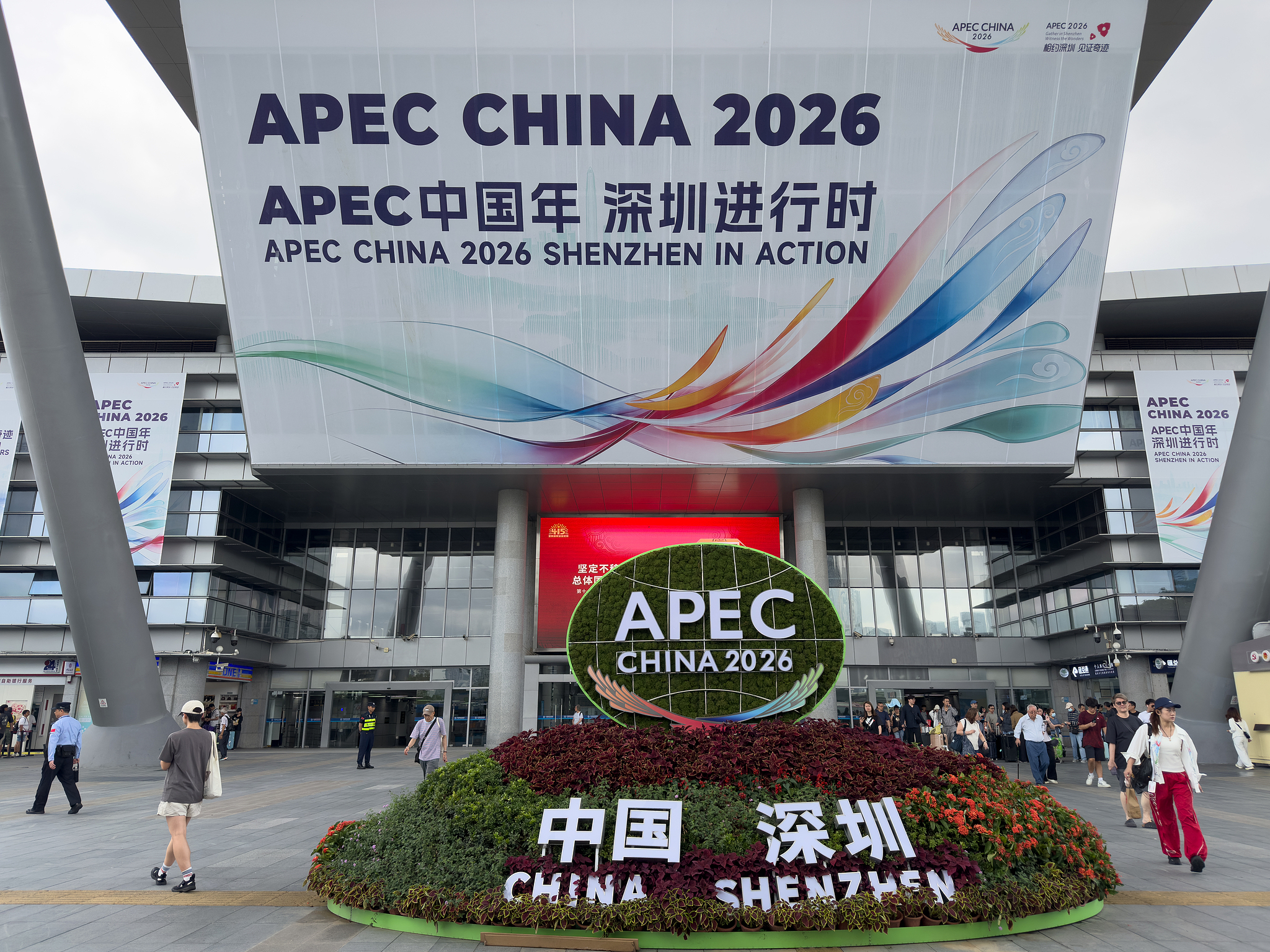
Promotional slogans for the APEC "China Year" are seen in Shenzhen, South China's Guangdong Province, April 13, 2026. (Photo: VCG)
"Regional economic integration remains essential for the Asia-Pacific region because it gives economies scale, resilience and predictability in a more uncertain global environment," Chanda said.
In Chanda's view, connectivity is a key foundation for shared prosperity in the Asia-Pacific. Today, connectivity means more than physical infrastructure such as roads, ports and railways. It increasingly depends on whether trade-related information can move securely and seamlessly across borders. Further efforts are therefore needed to modernize customs procedures, improve the interoperability of digital systems, facilitate trusted data exchange and deepen cooperation on cross-border paperless trade.
"The digital economy and artificial intelligence are becoming central to the next stage of Asia-Pacific growth," Chanda said, adding that they can boost productivity, reduce transaction costs, improve market access and create new opportunities for businesses of different sizes.
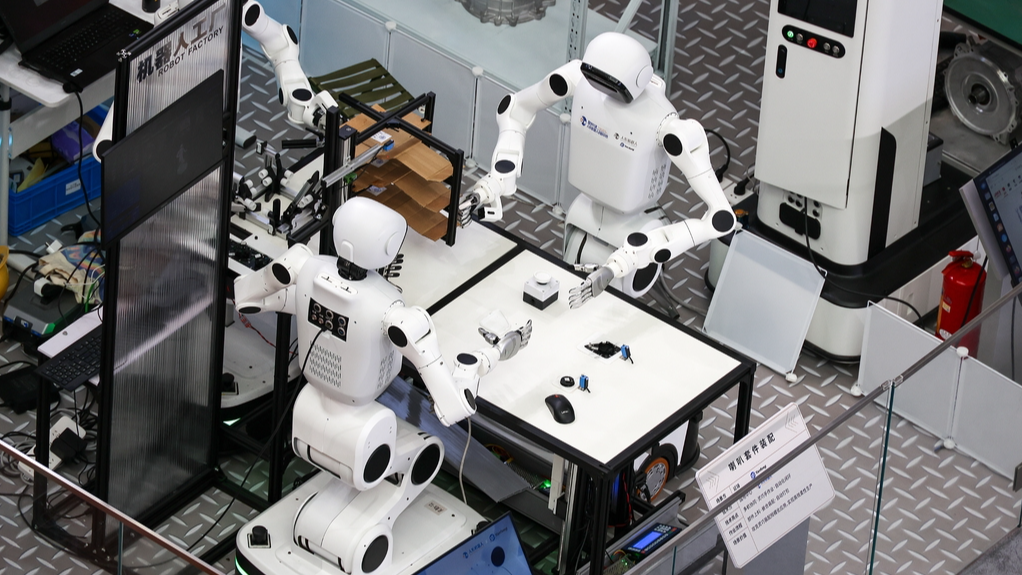
Humanoid robots are seen at the 2026 World Artificial Intelligence Conference (WAIC) in Shanghai, China on July 16, 2026. (Photo: IC)
China has a large digital economy and is among the world's most active markets for AI applications. The country's outline of the 15th Five-Year Plan (2026-2030) for National Economic and Social Development calls for deeper integration between technological and industrial innovation, as well as the development of new quality productive forces.
These efforts will create opportunities for regional economies to become more deeply integrated into advanced cross-border technology cooperation networks and supply chains, while enabling China's manufacturing clusters to serve increasingly as platforms for collaborative innovation across the region, Chanda noted.
"The deepening of reforms and expansion of high-standard opening-up creates several structural opportunities for the region," Chanda said.