


EPC summit brings Europe together, but delivers few concrete results
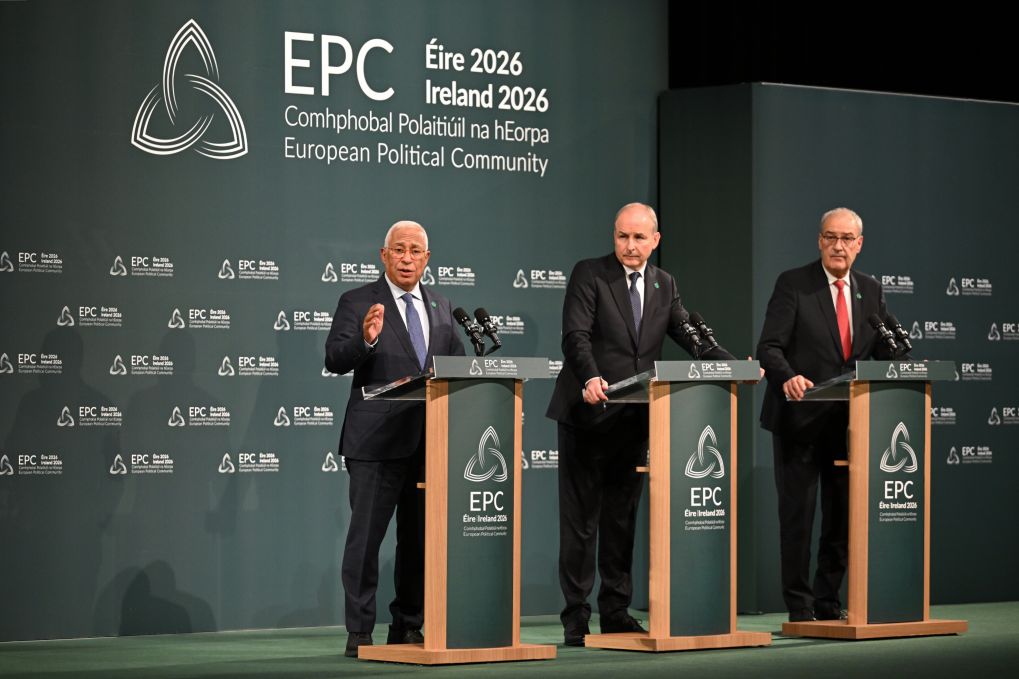
European Council President Antonio Costa, Irish Prime Minister Micheal Martin and Swiss President Guy Parmelin (from L to R) attend a press conference following the ninth European Political Community (EPC) summit in Dublin, Ireland, Nov. 12, 2026. The summit is co-chaired by Irish Prime Minister Micheal Martin and European Council President Antonio Costa, under the theme "Europe -- strong, secure and connected." (Xinhua/Li Mangmang)
DUBLIN, Nov. 12 (Xinhua) -- The ninth European Political Community (EPC) summit concluded in Dublin on Thursday, bringing together around 50 leaders from across Europe and beyond, with Ukraine, European security and economic competitiveness topping the agenda.
The summit offered European leaders a platform to exchange views amid mounting geopolitical uncertainty. Yet behind the show of diplomatic unity, the gathering exposed a familiar weakness: Europe's determination to shape its own future is not yet matched by its ability to deliver concrete results.
A BROAD GATHERING
Held at the Convention Centre Dublin, the summit was the largest gathering of heads of state and government ever hosted by Ireland, prompting the country's biggest-ever policing and security operation.
Among its notable features was the participation of leaders from outside the European Union (EU), including British Prime Minister Andy Burnham and Canadian Prime Minister Mark Carney.
Carney attended as a guest, underscoring Canada's efforts to deepen its partnership with Europe. Burnham, meanwhile, used the gathering to strengthen ties with European partners ahead of another EU-Britain summit scheduled for Nov. 20.
The presence of Ukrainian President Volodymyr Zelensky also attracted considerable attention, particularly as the gathering coincided with renewed U.S.-mediated diplomatic efforts to end the Ukraine conflict.
The EPC's informal format also allowed leaders to hold bilateral and small-group meetings, offering opportunities for exchanges that are often harder to arrange within the more structured framework of EU summits.
UKRAINE AND SECURITY DOMINATE DISCUSSIONS
Ukraine dominated the discussions, with European leaders pressing for a greater role in negotiations over the conflict and the continent's future security arrangements.
Addressing the summit, Zelensky described recent negotiations in Abu Dhabi as "serious, not empty," pointing to an agreement on a prisoner-of-war exchange.
However, he questioned why Washington and Moscow were discussing a new security framework for Europe without direct European participation. "We need to make sure that Europe becomes a regular part of these negotiations," he said.
European Council President Antonio Costa also stressed that Europe's security could not be decided without European involvement, calling for a ceasefire and progress towards a lasting peace agreement.
French President Emmanuel Macron said that around 40 European countries had agreed on "common principles for Europe's future security," stressing the need for closer coordination across the continent.
European Commission President Ursula von der Leyen also announced that the EU was preparing its 22nd sanctions package against Russia, alongside a proposal to address Ukraine's financial needs in 2027.
At the closing press conference, Irish Prime Minister Micheal Martin identified four main outcomes of the discussions: continued support for Ukraine, closer cooperation against hybrid threats, greater use of technological innovation and efforts to provide cleaner and more affordable energy.
However, the meeting produced few concrete measures on these broader challenges, with leaders largely reiterating existing priorities and commitments.
A FORUM STRUGGLING TO PROVE ITS VALUE
The Dublin gathering also brought renewed scrutiny of the EPC itself, with questions growing over whether the forum has become more symbolic than substantive.
Launched in 2022 at Macron's initiative, the EPC was designed as a platform for political dialogue among European countries, regardless of whether they belong to the EU.
Unlike formal EU institutions, however, it has no permanent decision-making structure and cannot adopt binding decisions. Its summits typically end without a collective final communique.
That flexibility allows leaders to meet and exchange views without the constraints of formal negotiations. But it also leaves the forum with a fundamental challenge: demonstrating what it can achieve beyond bringing political leaders into the same room.
On Thursday, Politico reported that some European diplomats and officials had grown frustrated with the EPC, viewing it as another gathering that produces limited practical results.
According to the report, one diplomat expressed hope that the forum would not survive Macron's departure from office in 2027, while others questioned the need for yet another high-level meeting on Europe's increasingly crowded diplomatic calendar.
The French presidency rejected such criticism, arguing that the EPC had become an important diplomatic platform. Future summits have already been scheduled through 2028, including meetings in Switzerland and Greece.
Beyond questions about the EPC's future, the Dublin summit highlighted a broader dilemma facing European diplomacy: while leaders insist that Europe must have a stronger voice in shaping the outcome of the Ukraine conflict, they have yet to agree on who should speak for the continent at the negotiating table.
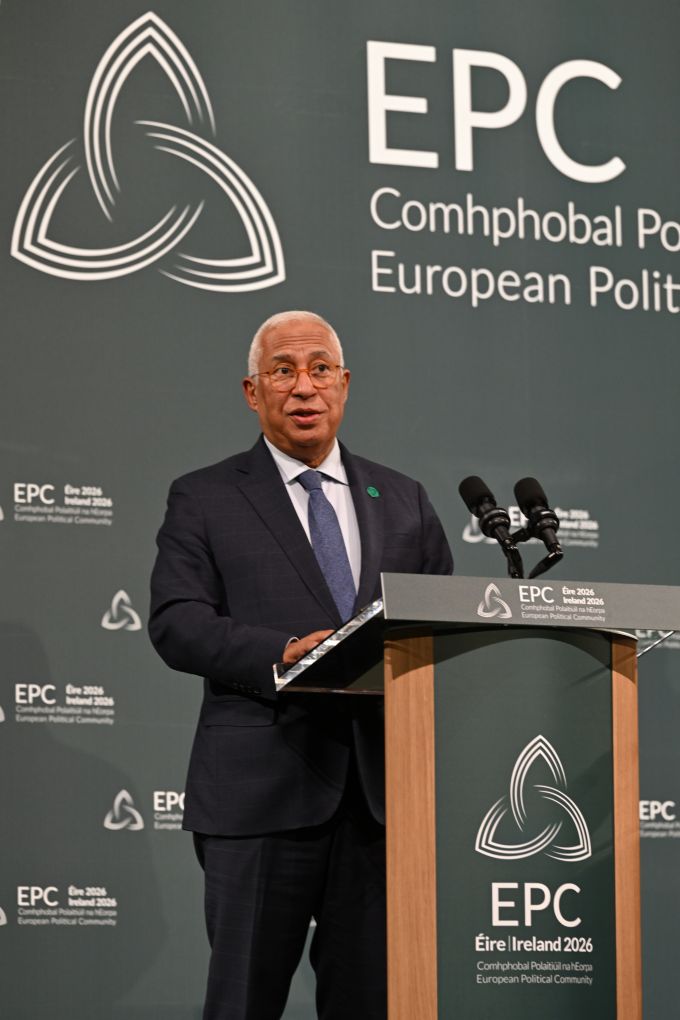
European Council President Antonio Costa attends a press conference following the ninth European Political Community (EPC) summit in Dublin, Ireland, Nov. 12, 2026. The summit is co-chaired by Irish Prime Minister Micheal Martin and European Council President Antonio Costa, under the theme "Europe -- strong, secure and connected." (Xinhua/Li Mangmang)
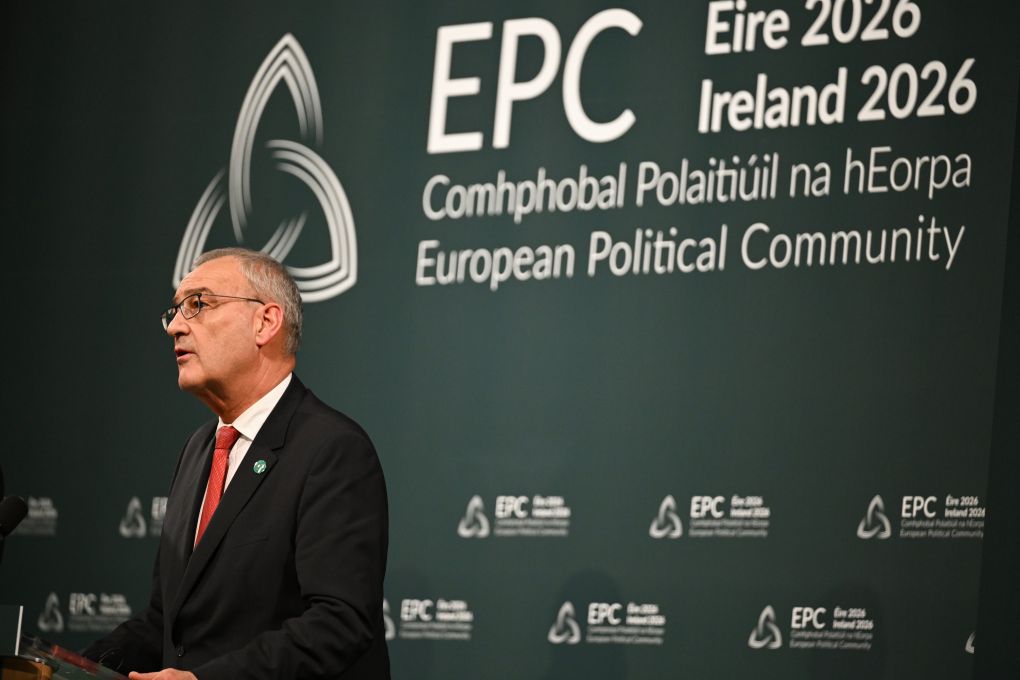
Swiss President Guy Parmelin attends a press conference following the ninth European Political Community (EPC) summit in Dublin, Ireland, Nov. 12, 2026. The summit is co-chaired by Irish Prime Minister Micheal Martin and European Council President Antonio Costa, under the theme "Europe -- strong, secure and connected." (Xinhua/Li Mangmang)
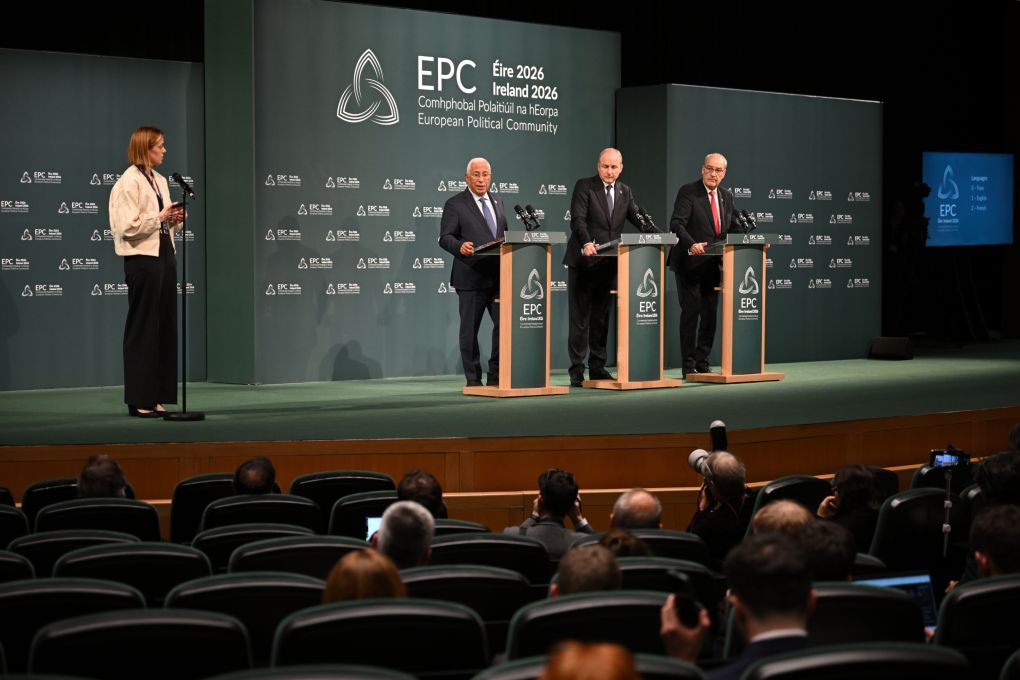
European Council President Antonio Costa (3rd R), Irish Prime Minister Micheal Martin (2nd R) and Swiss President Guy Parmelin (1st R) attend a press conference following the ninth European Political Community (EPC) summit in Dublin, Ireland, Nov. 12, 2026. The summit is co-chaired by Irish Prime Minister Micheal Martin and European Council President Antonio Costa, under the theme "Europe -- strong, secure and connected." (Xinhua/Li Mangmang)
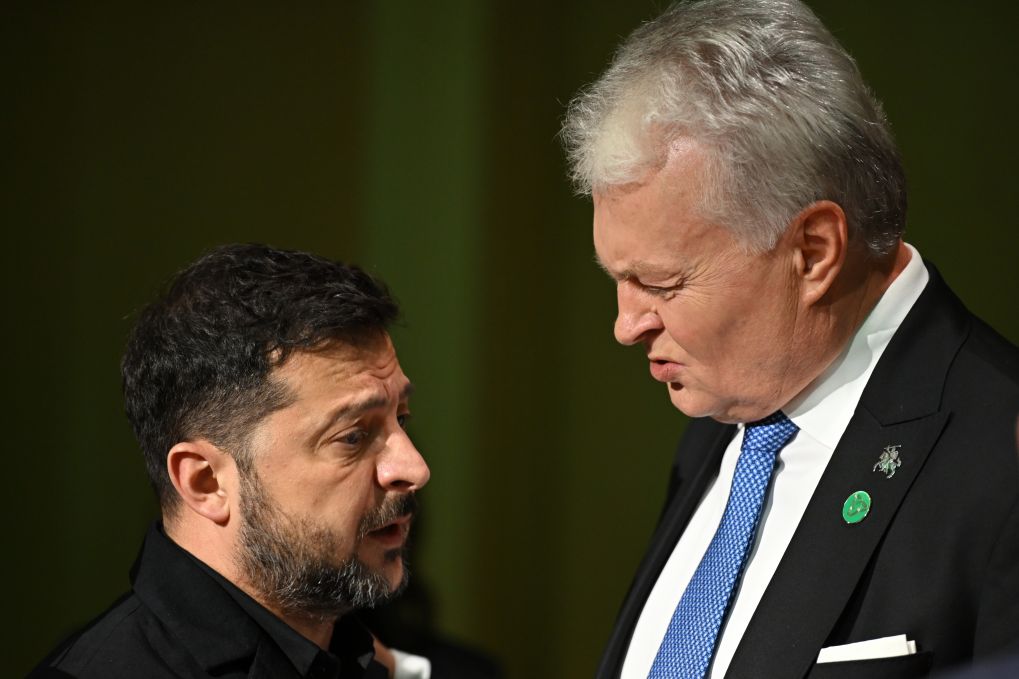
Ukrainian President Volodymyr Zelensky (L) talks with Lithuanian President Gitanas Nauseda during the ninth summit of the European Political Community (EPC) in Dublin, Ireland, Nov. 12, 2026. (Xinhua/Li Mangmang)
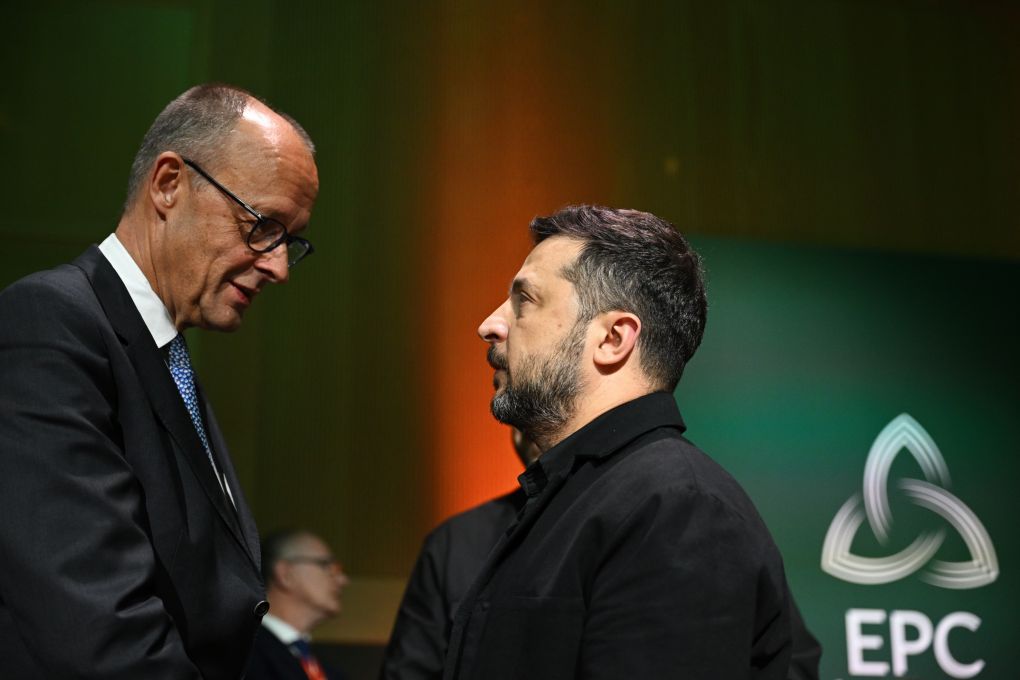
Ukrainian President Volodymyr Zelensky (R) talks with German Chancellor Friedrich Merz during the ninth summit of the European Political Community (EPC) in Dublin, Ireland, Nov. 12, 2026. (Xinhua/Li Mangmang)
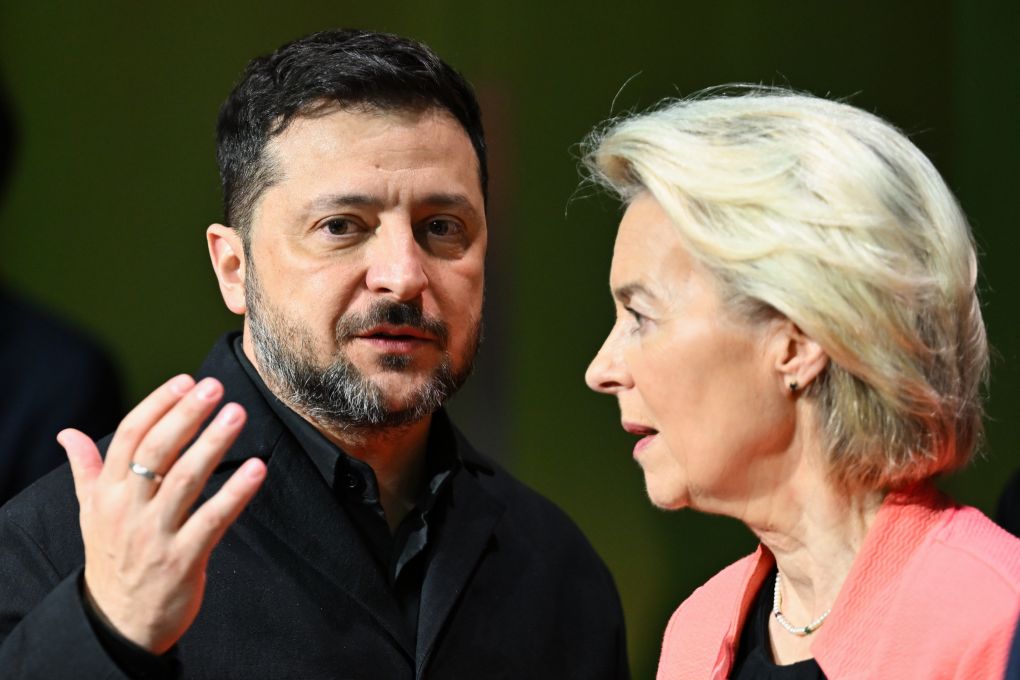
Ukrainian President Volodymyr Zelensky (L) talks with European Commission President Ursula von der Leyen during the ninth summit of the European Political Community (EPC) in Dublin, Ireland, Nov. 12, 2026. (Xinhua/Li Mangmang)