


Two feichtingers: Partners in life and in space
For Christian and Elena Feichtinger, work and family are one and the same journey.
"Work is our life, that is our balance," said Christian Feichtinger, executive director of the International Astronautical Federation (IAF).
"Together, we are 10 times stronger than either of us alone," said Elena Feichtinger, the federation's senior advisor. "I could never have raised our five children without Christian. He shows up for our family just as fully as he does for his career."
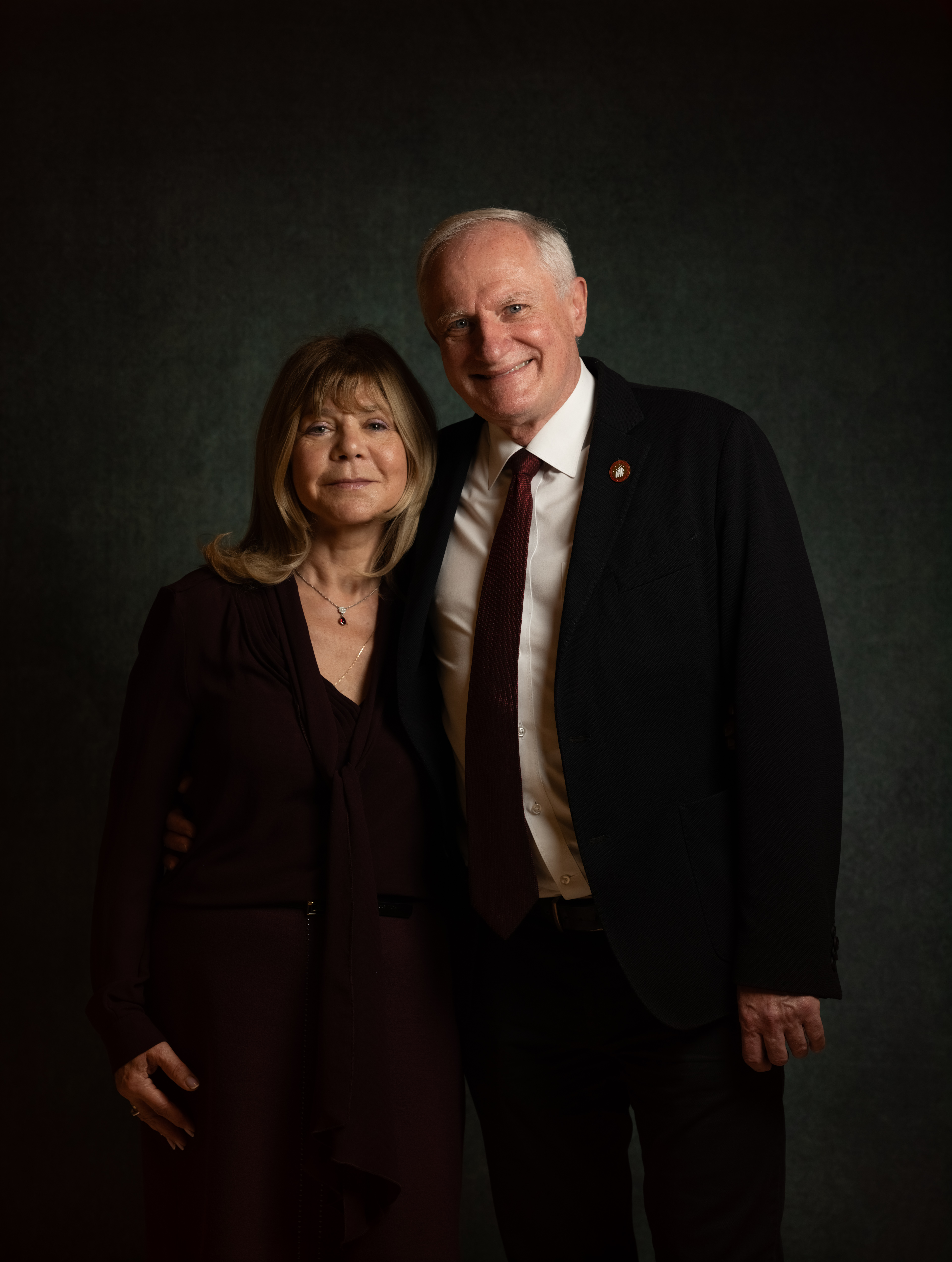
Christian (right) and Elena Feichtinger (Photo: Jin Liwang)
By the time the couple arrived in Shanghai for the 2026 World Laureates Forum, they had spent weeks traveling through several countries. Christian was invited to co-chair a parallel forum on aerospace information, while Elena joined him in her capacity as the senior advisor of the federation.
Their work connects space agencies, researchers and businesses across national borders. But behind the international organization they help lead is a partnership shaped just as much by family life.
For Christian, the journey began with an opportunity he had scarcely imagined while studying engineering in Austria. For Elena, it meant joining a small, struggling office as a volunteer and helping build the organization alongside her husband.
Learning from scratch
In 1988, Austria was preparing to send its first astronaut to the Soviet Mir space station. Christian, then a young engineer, was invited to join the mission's technical team.
He had long been interested in space, but had never imagined making it his career. Austria had little experience in human spaceflight, and the mission required expertise and organizational arrangements that the country had yet to develop.
"I actually had to learn everything from scratch in my day-to-day work," Christian said.
Much of that learning came from Soviet and later Russian specialists, who explained how missions operated and helped him develop the necessary expertise.
He later joined the European Space Agency (ESA), where he worked on missions sending European astronauts to space stations. His career also brought him to Moscow, where he eventually headed ESA’s permanent mission to Russia.
What stayed with him most vividly was his work with astronauts: following their training, then coordinating their launches and missions. Months of preparation brought him close to the people who would eventually board the spacecraft.
Watching a rocket launch a satellite was exciting, he said. But knowing that someone he had worked with was aboard made the launch far more personal. Supporting those astronauts through their launches and missions became one of the most rewarding parts of his job.
"It is so inspiring, it is so fascinating," Christian said of the field to which he has devoted nearly four decades.
In 2012, he became executive director of the IAF. Its annual International Astronautical Congress brings together space agencies, scientists, engineers and industry representatives to share findings and talk about working together.
Two Feichtingers
When the couple moved to Paris to work at the federation's headquarters in 2012, the office had a staff of just two, Elena recalled. Money was tight, and securing host countries for the congress was hard.
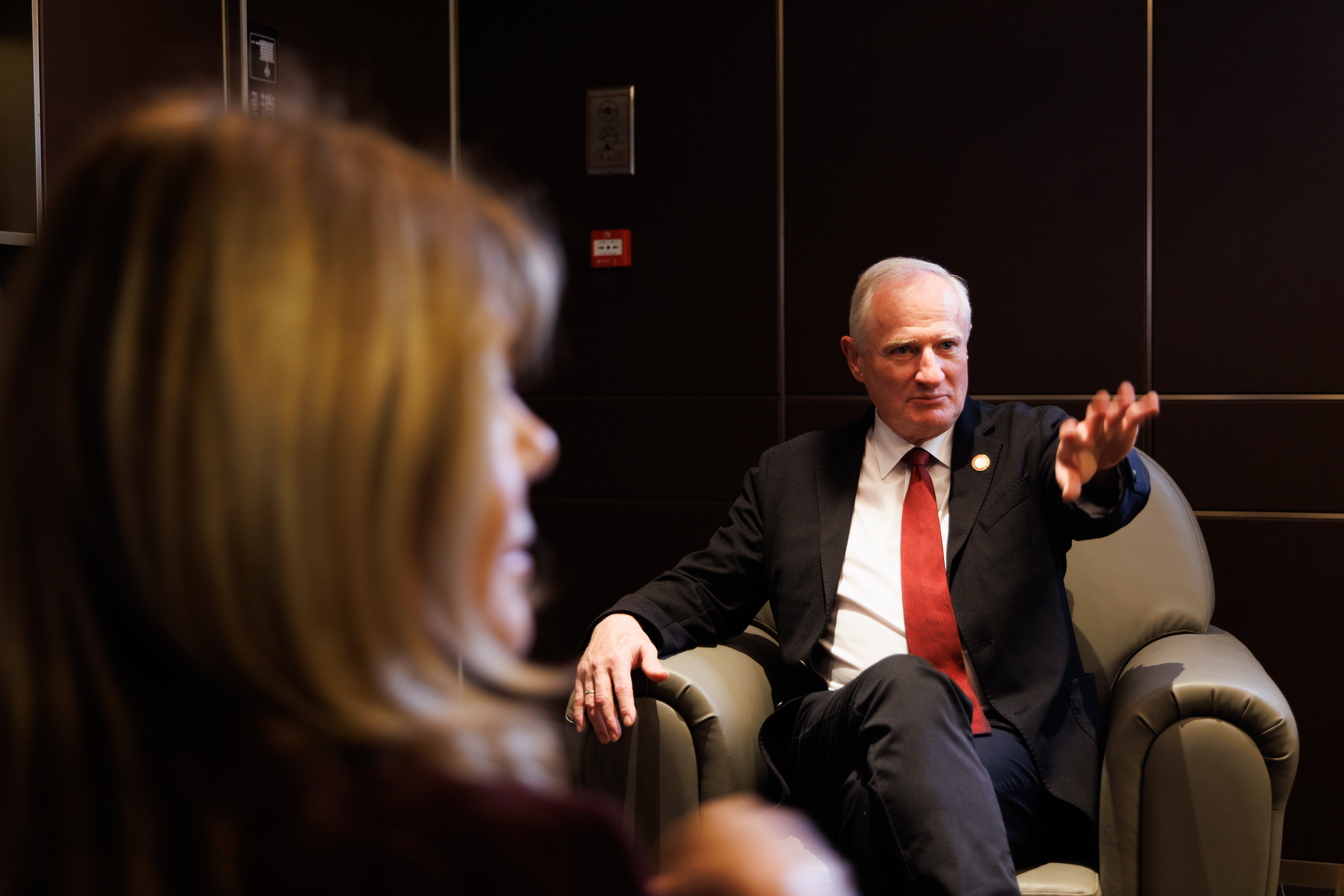
The Feichtingers sit down for an interview with the People's Daily. (Photo: Jin Liwang)
"It was very difficult, and then I saw that I could help Christian, and I joined him as a volunteer," Elena said.
Over the following years, the couple worked with colleagues to expand the organization. The federation now has more than 600 member organizations across 84 countries, she said.
The congress, once difficult to find hosts for, now draws competing bids from countries eager to host it. On visits to prospective host countries, the couple often encounters officials eager to explain how they would like to support the event.
Elena's own experience also highlights an issue Christian wants the wider space sector to address: women’s participation in leadership and decision-making.
The federation promotes diversity through its "3G+" framework, which emphasizes geographical, generational and gender diversity. In a field long dominated by men, Christian said, a wider range of perspectives can enrich discussions and lead to new approaches to shared problems.
The IAF marked its 75th anniversary in 2026. The federation elected its first female president in recent years and now has its second, he noted. The federation is also encouraging more women to join committees and stand for vice-presidential positions.
For Christian, that effort must begin earlier, by encouraging young girls to study engineering and consider careers in space.
Five children, one suitcase
The couple's professional partnership has always been closely intertwined with their family life. Their different temperaments, Elena said, are part of what makes the arrangement work.
"I am the person who always has crazy ideas," she said. "Christian is the person who implements them."
When important decisions arise, he asks for her opinion. At the office, she is often the first to notice tensions among colleagues and alert him to problems that need attention. Christian, meanwhile, has the patience to see ideas through.
"We complement each other," Elena said.
That complementarity became especially important when Elena decided to change careers. Initially trained in electronic engineering, she realized it was not the work she wanted to pursue. When she returned to university to study psychology, Christian took on more responsibility at home.
"There were three at the time," she recalled. "He took care of the children and encouraged me to go to university again. He was always behind me, and I was always behind him."
Their support for each other's ambitions has remained mutual.
She knows every item of Christian's clothing, while he has little idea what he owns. When they travel, she packs his suitcase.
"If we are packing to leave Paris for a month, I am the boss," she said.
Their relationship is not without disagreements.
"I am always honest and say when I do not like something," Elena said. "He is a strong person. He allows me to be open with him and to say not only good things, but also bad things."
Colleagues sometimes wonder how the two manage to spend so much time together, often working and traveling side by side. Elena has never asked herself that question.
"We are always together and we are happy to be together, and we see that we have some results," she said.
Working with China
In Shanghai, Christian’s red tie echoed Elena's red suit. Asked about their visits to China, they counted off cities on their fingers: Beijing, Xi'an, Shanghai, Guangzhou, Chongqing and Tianjin.
Their visits reflect the IAF's longstanding ties with the country. The Chinese Society of Astronautics joined the IAF in 1980. Chinese representatives attend the IAF's spring meetings and annual congress, while the federation also takes part in space events in China.
China ranks second among all countries in terms of IAF membership, Christian said.
These ties have given him many opportunities to visit China and get to know Chinese colleagues.
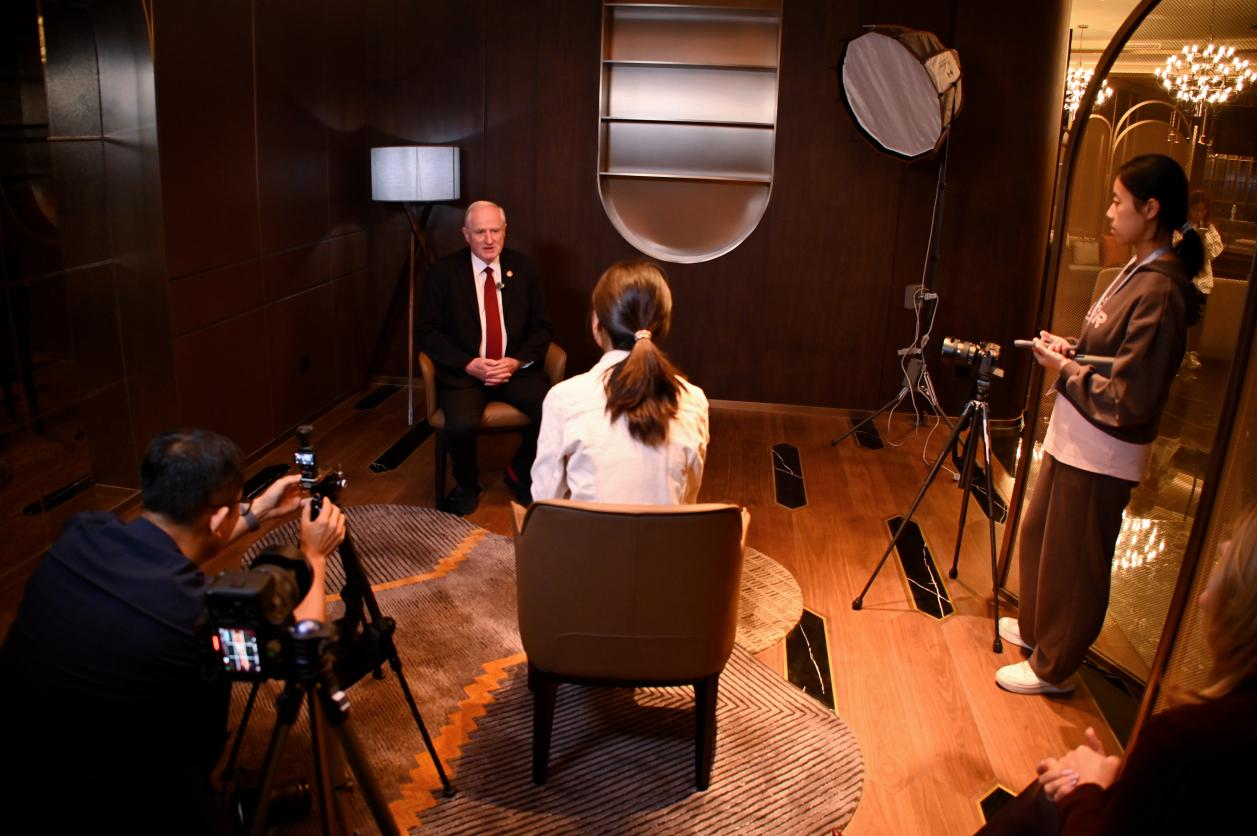
Christian Feichtinger sits down for an interview with the People's Daily. (Photo: Qu Wangye)
One such visit gave him the chance to witness another memorable launch.
On May 3, 2024, he watched China's Chang'e-6 lunar probe lift off from the Wenchang launch center on Hainan, an island in southern China. The spacecraft was launched aboard a Long March-5 rocket.
Heavy rain began about 10 minutes before liftoff, he recalled. But they stayed to watch the launch, and the skies cleared afterward. The mission’s success made the experience all the more memorable.
Elena, meanwhile, had a different observation about working with Chinese colleagues. She appreciated their emphasis on mutual respect and learning from one another, which made collaboration particularly rewarding.
"They never say we are ahead. We are always together, or we are learning from each other," Elena said.
More voices at the table
Bringing people together across national boundaries remains central to Christian's work. The IAF was founded during the Cold War to provide a forum where space professionals could exchange ideas despite political divisions. Today, he wants the forum to serve both established space powers and countries only beginning to develop their space programs. Membership gives organizations a chance to showcase their work, meet potential partners and work on joint projects.
Earth observation satellites, for example, generate vast amounts of data. The challenge is to identify the most useful information and deliver it to those who need it. Christian sees artificial intelligence as a tool for analyzing these vast amounts of satellite data and extracting information that can be put to practical use on Earth.
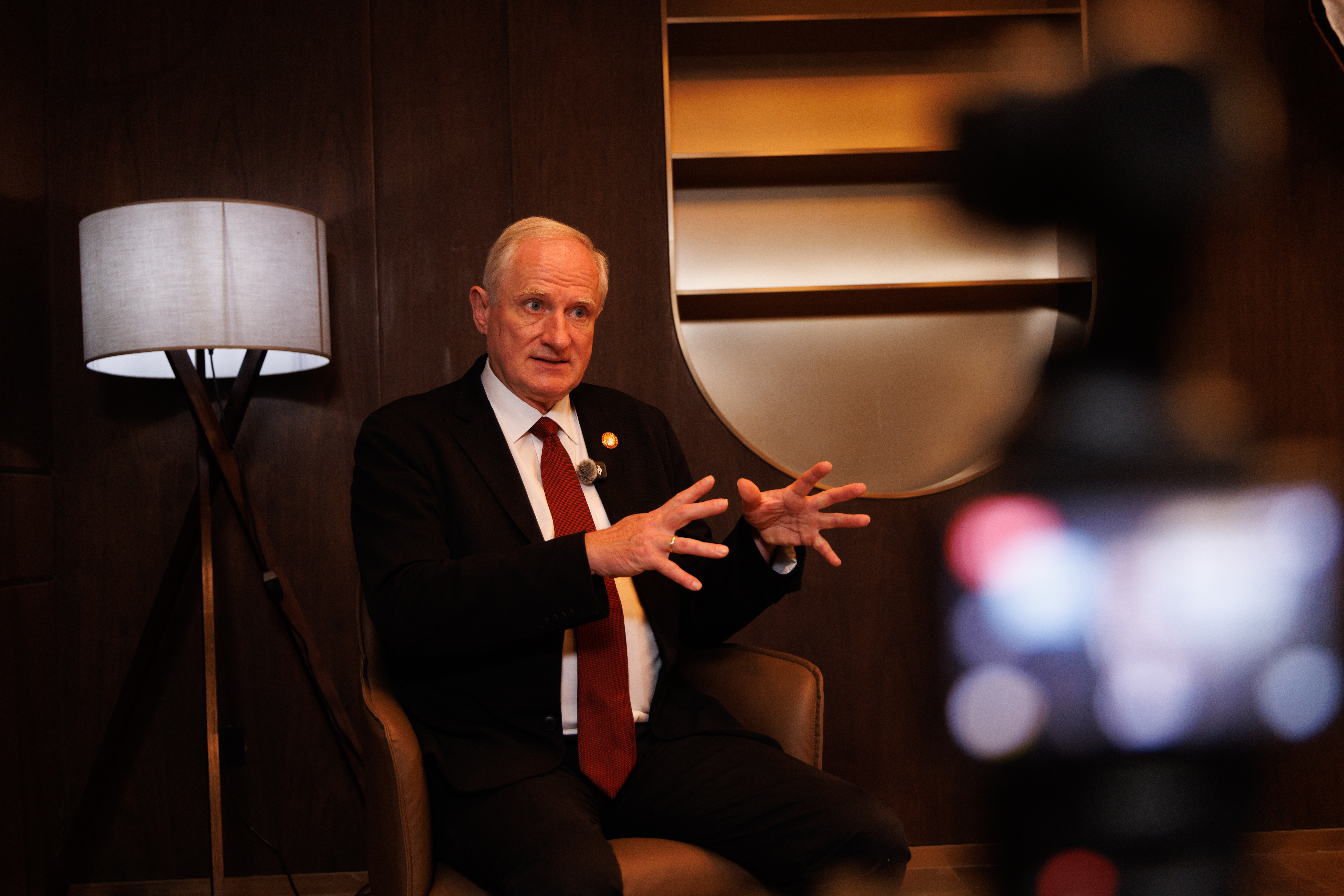
Christian Feichtinger sits for an interview with the People's Daily. (Photo: Jin Liwang)
Christian said, as the federation grows, it can become both more inclusive and more effective. A broader membership brings diverse perspectives and opens up new opportunities for collaboration.
"The more voices you have around the table, the broader the views are and the bigger the chances and prospects are for good cooperation," Christian said.