


American, Chinese filmmakers gather in Los Angeles to explore cooperation in AI era
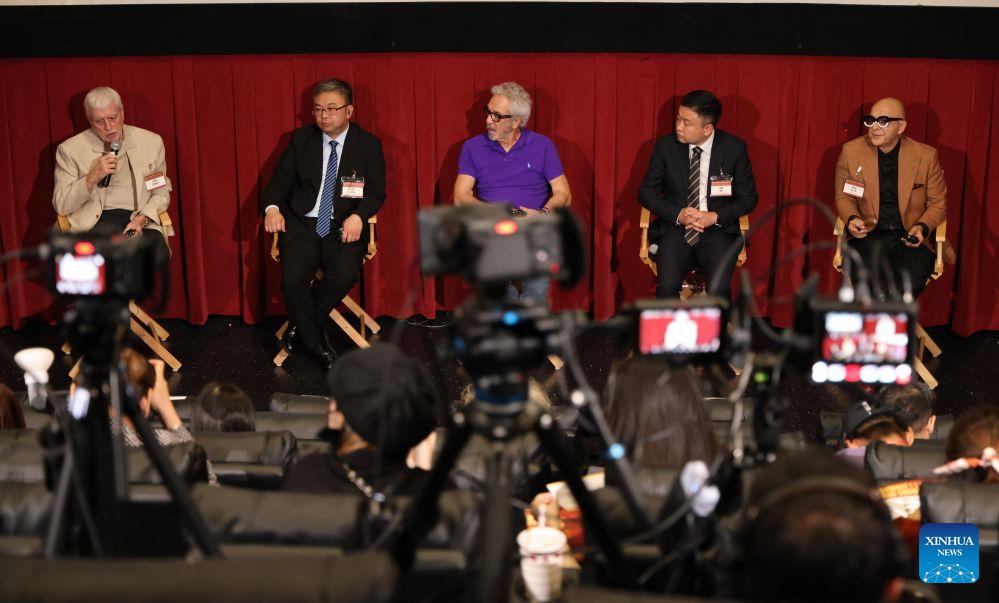
Representatives from the Chinese and American film and television industries, along with experts and scholars, attend a forum at TCL Chinese Theatre in Los Angeles, the United States, on Nov. 11, 2026. (Photo: Xinhua)
LOS ANGELES, Nov. 13 (Xinhua) -- American and Chinese filmmakers gathered this week in Los Angeles during the 22nd Annual Chinese American Film Festival and the Chinese American Television Festival to explore ways to work together on co-productions, AI, animation, film distribution and short-form mobile dramas.
Dozens of representatives from the Chinese and American film and television industries, along with experts and scholars, gathered at Hollywood's historic TCL Chinese Theatre on Wednesday, sharing insights and experiences.
According to the panelists, the opportunity for mutual benefit is increasingly a two-way exchange: American companies can help Chinese stories reach overseas audiences, while Chinese platforms and filmmakers can bring new formats, production capabilities and customers to the Hollywood industry.
All the panelists expressed hope of greater cooperation between film industries of the United States and China, the world's two largest movie markets.
"I've done several films with Chinese producers and they've all worked out pretty well," Academy Award winner Richard L. Anderson told the panel. "Chinese crews are great. They work hard and they're really talented, so there's no technical problems and no difference in talent from American crews."
The United States anchors the world's largest theatrical market, conventionally measured together with Canada. The initial year-end tally of Comscore, an American-based media measurement and analytics company, for that combined domestic market, put 2025 ticket sales at 8.87 billion U.S. dollars, up 1.5 percent from 2024, reported by Screen Daily in January.
China, the world's second-largest film market, recorded annual box office sales of 51.83 billion yuan (about 7.37 billion dollars) in 2025, representing a nearly 22 percent increase, according to figures from the China Film Administration.
For American studios, the appeal of Chinese audiences was evident in Disney's "Zootopia 2." The film has grossed over 630 million dollars in China, about 35 percent of its worldwide total. "Zootopia 2" is one of the five Hollywood titles to receive the Most Popular U.S. Film in China Award at the Chinese American Film Festival this year.
"If you have a co-production with a Chinese company," Hollywood producer Arthur Sarkissian said, "you have to come up with a story that you think China is going to want to watch and America is going to want to watch. That's always been the hard part -- to get that right."
Sarkissian paved the way for successful U.S.-China content with his hit "Rush Hour" film franchise, starring Jackie Chan and Chris Tucker.
The panelists from both China and the United States also discussed how AI is providing interesting challenges and opportunities on both sides of the Pacific.
They exchanged views on differences in how the two countries' film industries are adopting AI, how AI can help overcome language barriers to reach broader audiences, and how it can facilitate more efficient industry collaboration.
"People say AI is going to be Terminator Salvation that is going to take over the world, or that AI can solve every problem in the world," panelist Michael Fisk, former Hollywood studio executive and tech entrepreneur, told the audience. "I lean toward it being a useful tool that will lead to a Cambrian explosion of content from everyone."
"Things are moving very fast in our industry. I think if we work together with China and other potential partners, we can take advantage of the technology to enhance the ability of real people to tell their stories," Bob Underwood, head of the International Committee of the Writers Guild of America West, told Xinhua, emphasizing the importance of collaboration between Chinese and American filmmakers in the age of AI. ■
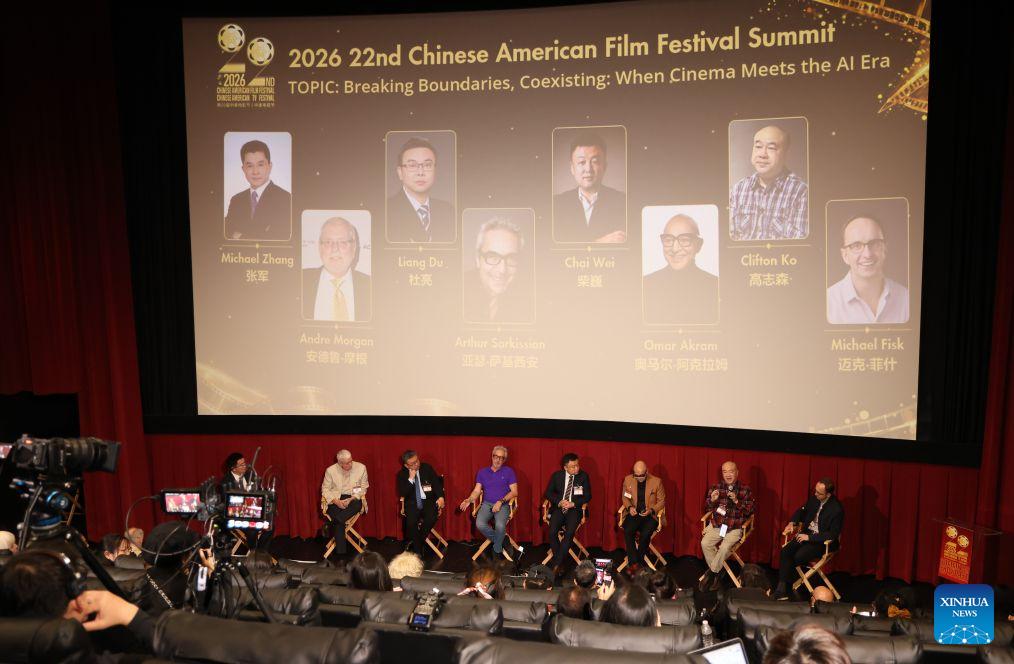
Representatives from the Chinese and American film and television industries, along with experts and scholars, attend a forum at TCL Chinese Theatre in Los Angeles, the United States, on Nov. 11, 2026. American and Chinese filmmakers gathered this week in Los Angeles during the 22nd Annual Chinese American Film Festival and the Chinese American Television Festival to explore ways to work together on co-productions, AI, animation, film distribution and short-form mobile dramas.(Photo by Zeng Hui/Xinhua)