


World association for bay areas economic cooperation: Expanding opportunities for further opening up through complementary partnerships
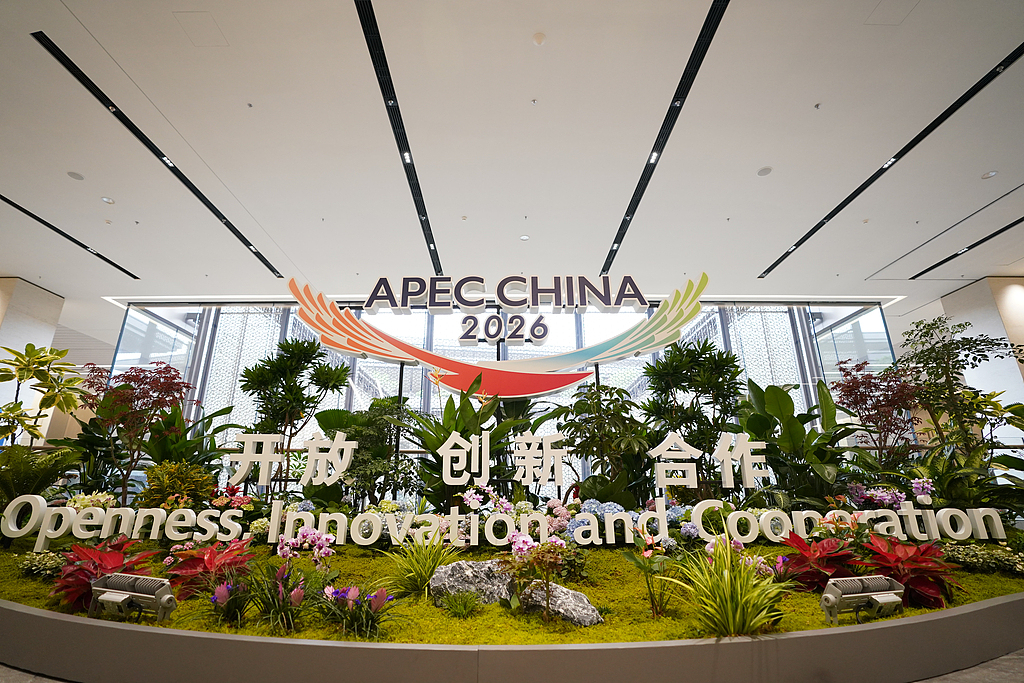
The 33rd APEC Economic Leaders' Meeting is held at the Shenzhen International Exchange Center, Shenzhen, China, November 19, 2026. (Photo: VCG)
The Asia-Pacific region is home to some of the world's most important bay areas. Bay area economies are characterized by distinctive openness, strong synergy, and significant spillover effects. Promoting shared prosperity across the Asia-Pacific entails safeguarding overall peace and stability, building bridges for open cooperation, unleashing the momentum of innovation-driven growth, and expanding avenues for mutual benefit and win-win partnerships.
At the APEC CEO Summit 2026, China voiced support for establishing a world association for bay areas economic cooperation to deepen exchanges and interaction among bay areas worldwide and explore new approaches to economic cooperation across the Asia-Pacific region.
As two key cities in the Guangdong-Hong Kong-Macao Greater Bay Area, Shenzhen and Hong Kong Special Administrative Region (SAR) have development needs in areas such as trade and investment facilitation, supply chain connectivity, and the digital economy, which align closely with the core priorities of APEC cooperation.
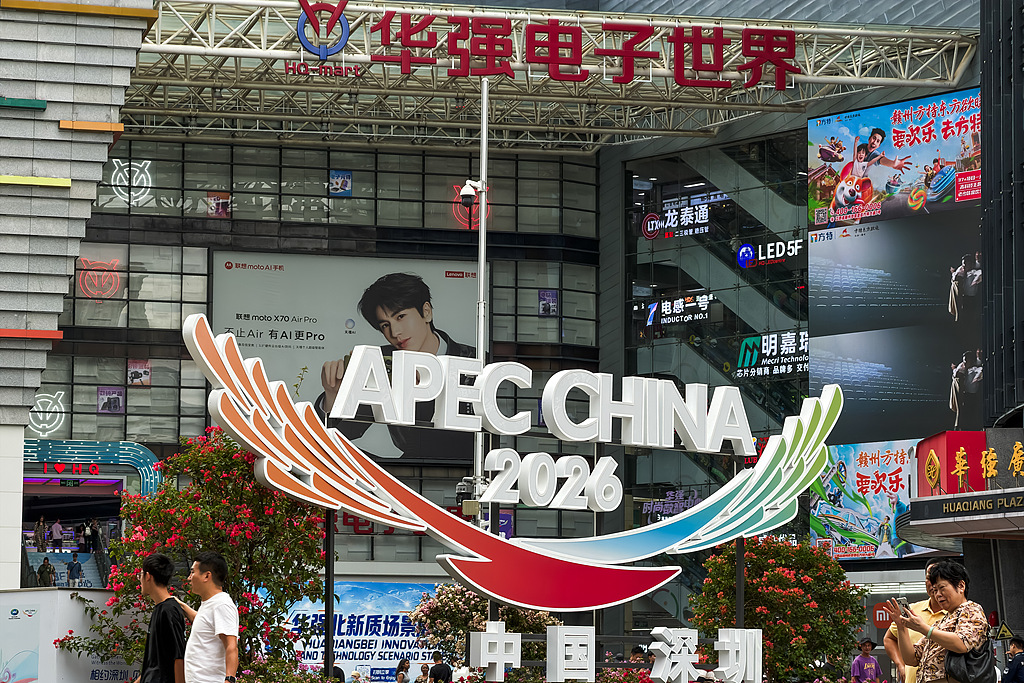
Buyers head to Huaqiangbei, an electronic market, to hunt for tech teasures as domestic smart hardware gains popularity in Shenzhen, China, November 13, 2026. (Photo: VCG)
Amid profound adjustments in global industrial and supply chains, Shenzhen and Hong Kong SAR should translate the opportunities brought about by international exchanges into tangible outcomes of practical collaboration. By facilitating smoother flows of production factors, forging closer industrial linkages, and delivering more comprehensive professional services, the two cities can inject fresh impetus into regional economic cooperation.
Cooperation between Shenzhen and Hong Kong SAR rests on a solid foundation. In the early years of China's reform and opening up, Hong Kong SAR's capital, orders, and trade networks were combined with Shenzhen's manufacturing capabilities, creating a "front shop, back factory" model that became a vivid reflection of the two cities' shared development.
Today, Shenzhen is stepping up its efforts to become a globally influential hub for industrial and technological innovation, while Hong Kong SAR continues to build on its strengths as an international financial, shipping, and trade center. Cooperation between the two cities should now extend beyond production and trade to encompass research and development, standards, branding, and regulatory compliance, so that they can play the right roles in the new international division of labor.
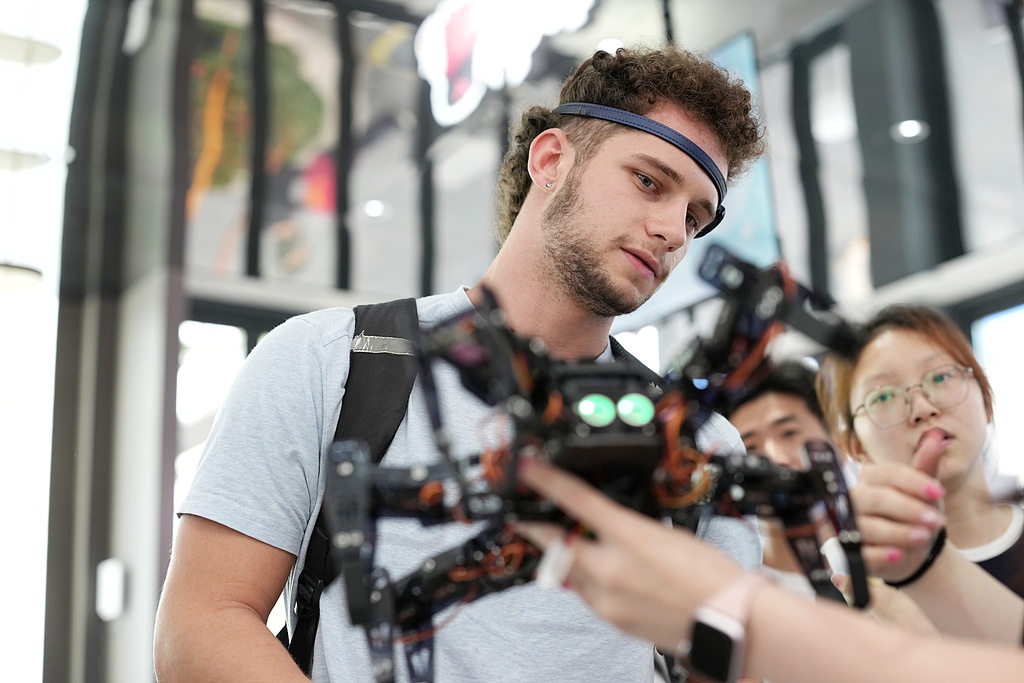
A consumer from the United States experiences using brainwave control to operate a six-legged bionic robot at Huaqiangbei in Shenzhen, China, November 15, 2026. (Photo: VCG)
In scientific and technological innovation cooperation, Hong Kong's universities and research institutions possess strengths in basic research, while Shenzhen excels in engineering and industrial commercialization.
The two cities should make full use of the Hetao Shenzhen-Hong Kong Science and Technology Innovation Cooperation Zone and the Qianhai Shenzhen-Hong Kong Modern Service Industry Cooperation Zone as platforms for collaboration. This would facilitate the cross-border flow of innovation factors such as talent, capital, technology, and data, allowing research teams to focus on their research and businesses to participate more seamlessly in translating research findings into practical applications. Thus, they can help drive scientific and technological innovation through institutional innovation.
Working together to support businesses in their global expansion can serve as another key focal point for closer Shenzhen-Hong Kong cooperation in the new era. Backed by a well-developed industrial system and strong innovation capabilities, Shenzhen can support businesses in technological R&D, product innovation, and large-scale manufacturing. Meanwhile, as an international center for finance, trade, and professional services, Hong Kong SAR holds distinctive advantages in cross-border financing, legal services, risk management, international marketing, and overseas network development.
At present, many enterprises are accelerating their expansion into markets across regions including ASEAN, the Middle East, and Latin America. Regulatory requirements, business practices, and operating conditions vary across regions, so existing experience cannot simply be replicated wholesale. In recent years, Hong Kong SAR has been actively building a comprehensive service platform to help mainland enterprises expand globally, providing end-to-end support for their entry into overseas markets. At the same time, Shenzhen has been improving its environment for cross-border investment and international business services while strengthening alignment and cooperation with Hong Kong in professional services. Through functional complementarity and coordinated linkage, the two cities have provided solid support for enterprises' global expansion.
As global industrial and supply chains are reconfigured at an accelerated pace and regional economic integration deepens, Shenzhen-Hong Kong cooperation should move beyond its traditional focus on coordination within the Greater Bay Area and expand its role in supporting China's high-standard opening up and helping enterprises build their global presence. This will not only help strengthen the international competitiveness of the Greater Bay Area, but also inject fresh impetus into fostering a new development paradigm, advancing high-standard opening up, and deepening regional economic cooperation across the Asia-Pacific region.