


TAZARA at 50: old railway, new start
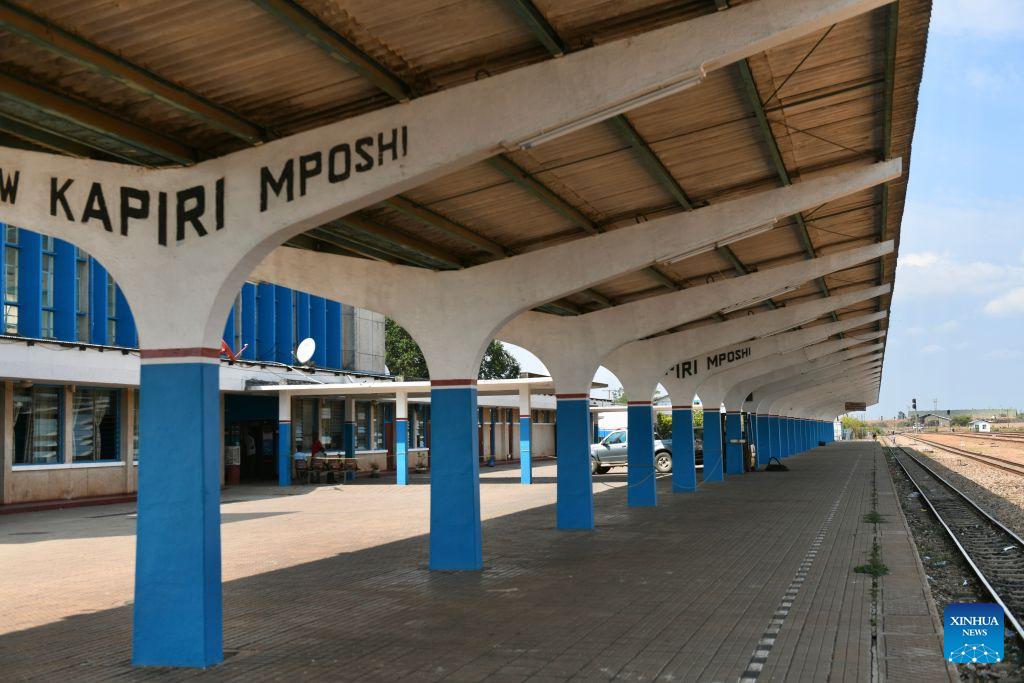
This photo taken on Nov. 13, 2026 shows the platform of the New Kapiri Mposhi Station of the Tanzania-Zambia Railway in Kapiri Mposhi of Central Province, Zambia. The Tanzania-Zambia Railway, known as TAZARA, runs some 1,860 km from the port of Dar es Salaam in Tanzania to New Kapiri Mposhi in landlocked Zambia. Built by China, Tanzania and Zambia between 1970 and 1976, it turns 50 this year.(Xinhua/Liu Qiong)
LUSAKA, Nov. 23 (Xinhua) - Johnny Kaela was among the first Zambians hired to build the railway in 1971. At 76, he is watching crews go to work on it again.
"If it can be restored to the standards we had then," he said, "that will be a great achievement."
The Tanzania-Zambia Railway, known as TAZARA, runs some 1,860 km from the port of Dar es Salaam in Tanzania to New Kapiri Mposhi in landlocked Zambia. Built by China, Tanzania and Zambia between 1970 and 1976, it turns 50 this year. A year ago, on Nov. 20, 2025, the three countries launched a project to revitalize it, aiming to lift its freight capacity twelvefold.
BUILDERS
"The work was hard. We had old machinery," Kaela said of the 1970s. The Zambians spoke no Chinese, and not all the Chinese experts spoke English. "But we managed to understand each other. We could communicate with gestures."
"Had we followed an eight-hour workday, this project would have taken more than 10 years," he said. "But we worked more than 12 hours a day."
The railway was finished ahead of schedule. "It made it possible to move goods between here and Dar es Salaam. It improved people's livelihoods and created employment," said Kaela, who was promoted to foreman and stayed until he retired.
Mathew Phili, 65, joined TAZARA in 1989 to work on track maintenance, after studying civil engineering in China. He saw villagers move closer to the line so they could send their farm produce by train.
Over the decades, services became less frequent and much of the freight moved to the highways. Most of the copper from Zambia's Copperbelt Province now leaves by truck, about 30 tons at a time.
"One train can carry about as much as 40 trucks," Phili said. "If we restore the railway to normal standards, a lot of freight can move from road to rail."
RESTORERS
Outside the station at New Kapiri Mposhi, the flame trees planted when the station was built are in full bloom. Chinese workers on the project know the tree by another name, the phoenix tree, after the mythical bird that rises from its own ashes. They hope the railway will do the same.
"It means repairing the existing line and restoring its freight capacity, not building a new one," said Lin Wenzong, deputy project manager for the Zambian section with China Civil Engineering Construction Corporation (CCECC), which is carrying out the work.
Over three years, crews are to repair the track along Zambia's 884 km of the line, along with bridges, stations and roadbed. Afterward, Lin said, the railway should carry 2.4 million tonnes of freight a year, up from 200,000 tonnes now, with trips taking a third of the time and costing 30 to 40 percent less than road transport.
The project employs 500 locals, a figure expected to pass 2,000 at its peak. "We hope that when the project is completed, it will leave behind railway professionals who will stay," Lin said.
"Those who came before us gave their youth, and some gave their lives," he said. "Our conditions today are much better, so we should carry that spirit forward all the more."
NEXT ENGINEER
Some of those who gave their lives rest at the TAZARA Memorial Park on the outskirts of Lusaka, the Zambian capital. Its memorial square is a triangle, modeled on a cluster of three bougainvillea flowers.
"The three flowers come together as one, just like the three countries," said Mundia Siyamana, a local CCECC employee who serves as the park's guide. As many as 200 people visit in a day.
One recent visitor was Boyd Zimba, a pediatric surgeon who lives nearby. He came with his children and a piece of family history.
Zimba's father worked on the railways, keeping the trains running. Zimba himself chose medicine. Now his son, Patrick, is drawn back to the tracks.
"I feel a special connection to this place, and I made time to bring my family here," Zimba said. "My son wants to be a railway engineer and wants to see how this was built."
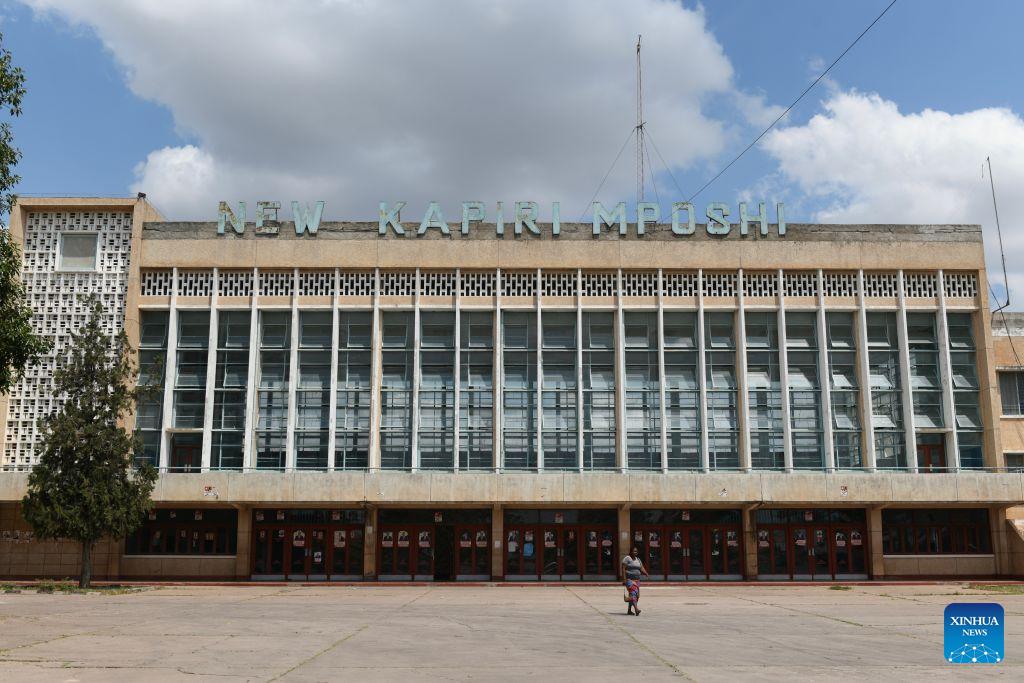
A pedestrian walks past the New Kapiri Mposhi Station of the Tanzania-Zambia Railway in Kapiri Mposhi of Central Province, Zambia, Nov. 13, 2026. The Tanzania-Zambia Railway, known as TAZARA, runs some 1,860 km from the port of Dar es Salaam in Tanzania to New Kapiri Mposhi in landlocked Zambia. Built by China, Tanzania and Zambia between 1970 and 1976, it turns 50 this year. (Xinhua/Liu Qiong)
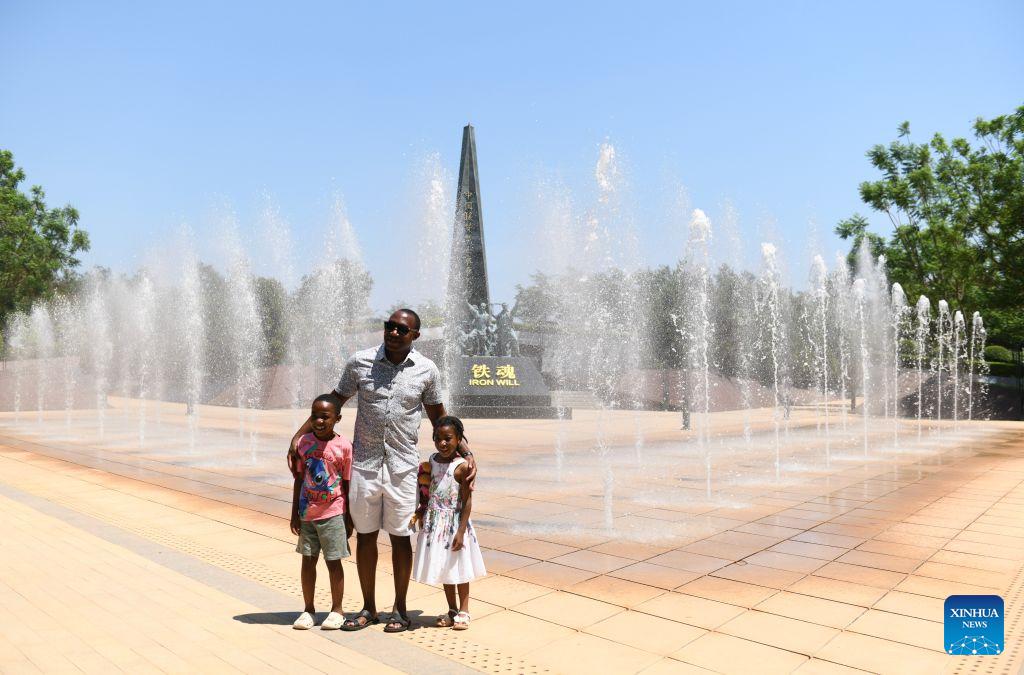
Tourists pose for photos at the TAZARA Memorial Park in Lusaka, Zambia, Nov. 14, 2026. The Tanzania-Zambia Railway, known as TAZARA, runs some 1,860 km from the port of Dar es Salaam in Tanzania to New Kapiri Mposhi in landlocked Zambia. Built by China, Tanzania and Zambia between 1970 and 1976, it turns 50 this year. (Xinhua/Liu Qiong)
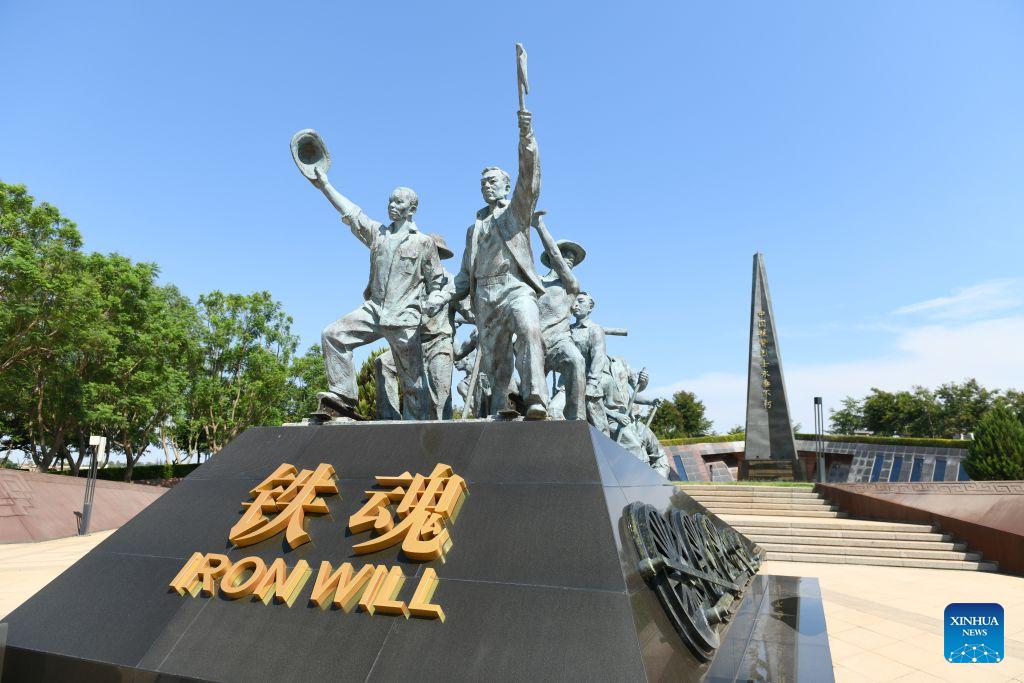
This photo taken on Nov. 14, 2026 shows a view at the TAZARA Memorial Park in Lusaka, Zambia. The Tanzania-Zambia Railway, known as TAZARA, runs some 1,860 km from the port of Dar es Salaam in Tanzania to New Kapiri Mposhi in landlocked Zambia. Built by China, Tanzania and Zambia between 1970 and 1976, it turns 50 this year. (Xinhua/Liu Qiong)