


Potential pancreatic cancer breakthrough lauded by experts
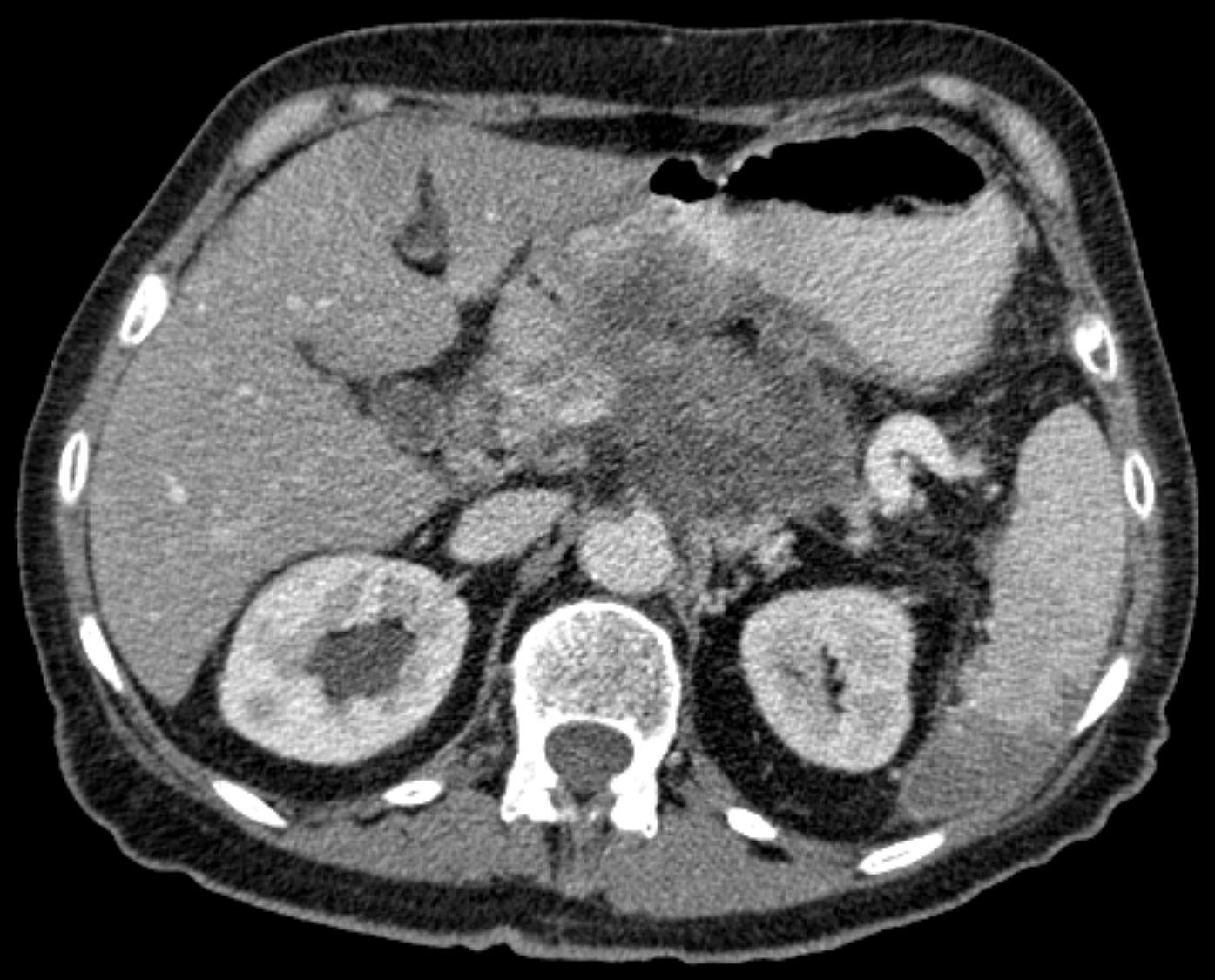
A pancreatic cancer scan. (Photo: Wikimedia Commons)
Trials of a new therapy for one of the most dangerous cancers could herald a breakthrough in its treatment.
Pancreatic cancer is hard to treat and difficult to diagnose, with most advanced cases seeing patients die within months.
But the development of a daily pill that can shrink and possibly eliminate tumors in patients, combined with chemotherapy, may be a medical gamechanger, according to experts.
Sixty-one patients in early medical trials led by the Memorial Sloan Kettering Cancer Center in the US were treated with a drug – daraxonrasib – alongside chemotherapy.
Tumors stopped growing in most participants recently diagnosed with advanced pancreatic cancer that had metastasized.
For one in 12 of the patients, cancer became undetectable on scans.
Stabilizing
Trial participants were monitored for an average of 18 months during the Phase One and Two trials, with tumours stabilizing in 90% of patients.
More than six-in-ten patients saw their tumours shrink or disappear while around 8% saw their tumours become undetectable on CT scans.
According to Dr Wungki Park, one of the scientists involved in the study: "We are beginning to see not only a higher percentage of tumor response rates, but also deeper responses and a near doubling in the duration of disease control, which may eventually translate into longer survival."
Study leaders say more research is needed to understand if such cancers can be put into remission and for how long. They insist that the new treatment should not be seen as a cure.

Patients like Rachel Gardner (right) could benefit from the new treatment. (Photo: VCG via Newscom)
Pancreatic cancer is notoriously hard to treat and has the lowest survival rate of all common cancers in the UK.
Among the most common symptoms are jaundice, itchy skin, darker urine, paler poo, unexplained weight loss, tiredness and high temperature.
Chemotherapy can shrink tumors a little, but the cancer often re-grows.
Daraxonrasib has been approved in the US and works as a targeted inhibitor treatment by locking onto and shutting down various mutations found in most pancreatic cancers.
Other cancers, including lung and ovarian, sometimes have similar mutations, meaning daraxonrasib could potentially help patients of those diseases as well.
Professor Elena Garralda, chair of the EORTC–NCI–AACR Symposium 2026 cancer conference where the work is being presented to other doctors, told BBC News: "These results are exciting because they show the combined treatment could potentially significantly improve patients' overall survival, as well as the time before tumours start to grow again."