


Project helps African farmers fight invasive pests
The exchange of agricultural expertise and technologies through FAO-China South-South cooperation has helped farmers in Kenya and Ghana combat fall armyworm, improve crop yields and strengthen food security.
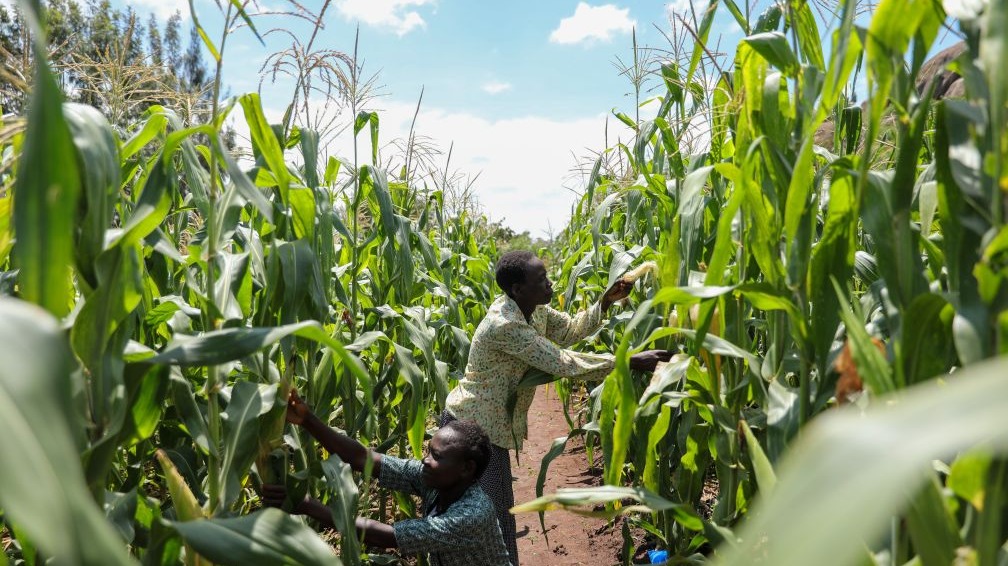
File photo: China Daily
Combating fall armyworm is critical for Kenya and Ghana, as the invasive pest poses a significant threat to food security, smallholder farmers' livelihoods and environmental health. Since its arrival in Africa in 2016, the pest has caused extensive damage to staple crops, particularly maize, which is the primary dietary staple in both countries.
The three-year initiative, rolled out in Kenya and Ghana in 2024, has facilitated knowledge and technology sharing among the two African countries, the Food and Agriculture Organization of the United Nations, or FAO, and China, promoting locally adapted solutions to pest management and sustainable agricultural production.
Josephine Owese, a farmer facilitator from Bungoma County in Western Kenya, said the training had equipped farmers with biological methods to control fall armyworm using locally available materials such as ash, red pepper and aloe vera.
"These methods are cheaper and healthier," said Owese, who leads a 30-member farmer field school.
She said applying the techniques had helped increase maize yields from 30 bags per hectare to around 70 bags.
James Mwangi, a farmer facilitator from Embu County, said the project had also equipped farmers with practical knowledge of biological pest control, helping improve agricultural production.
Across Kenya and Ghana, the project had supported 120 farmer field schools and directly reached more than 5,000 farmers, while strengthening surveillance, early warning systems, and biological control.
Speaking at a workshop earlier last week to mark the project's completion, Farayi Zimudzi, FAO representative in Kenya, said 107 facilitators had also been trained and certified in both countries, creating a pool of skilled personnel to continue sharing knowledge beyond the project's implementation period.
More than 60 percent of participating farmers had adopted at least one integrated pest management technology promoted through the initiative, Zimudzi said.
The project also strengthened the biological control laboratory at the Kenya Agricultural and Livestock Research Organization in Muguga, helping build national capacity for environmentally sustainable pest management.
"As this project closes, our attention turns to sustaining and scaling these achievements," she said, emphasizing the need for continued investment in surveillance and early warning systems, biological control, farmer field schools and agricultural extension services.
Paul Kipronoh Ronoh, principal secretary in Kenya's State Department for Agriculture, said the project had demonstrated that sustainable pest management required more than emergency interventions.
Ronoh said research institutions, universities, agricultural extension systems and development partners needed to maintain collaboration to ensure innovations responded to farmers' needs and reached agricultural communities.
National pool
John Dumelo, Ghana's deputy minister of food and agriculture, said the project had built a national pool of farmer field school facilitators, strengthened institutional technical capacity and improved farmers' management practices.
"The project's benefits extend beyond crop protection," Dumelo said, adding that Ghana's Ministry of Food and Agriculture remained committed to building on its achievements through programs such as the Feed Ghana Programme.
Guo Haiyan, Chinese ambassador to Kenya, said the initiative had invested in people and institutions alongside equipment and technologies.
Training had strengthened the capabilities of national specialists and agricultural extension personnel, while improved surveillance and technical capacity would continue supporting informed decision-making after the project's closure, she said.
Hua Yang, director of FAO's South-South and Triangular Cooperation Division in Rome, said the project was among the organization's successful initiatives in strengthening agricultural capacity.
"Numbers alone do not define success. The real measure of success is whether the knowledge, capacities and partnerships created through the project will remain after it closes," Hua said.
She urged both countries to embed the acquired expertise in national institutions and plant health systems, while expanding technical exchanges with other countries affected by fall armyworm and other transboundary plant pests.