


Belgium hit by strike, protests over austerity measures
Striking workers and protesters expressing frustration over Europe's cost-of-living crisis and the response of Belgium's Prime Minister Bart De Wever brought Brussels to a standstill this week.
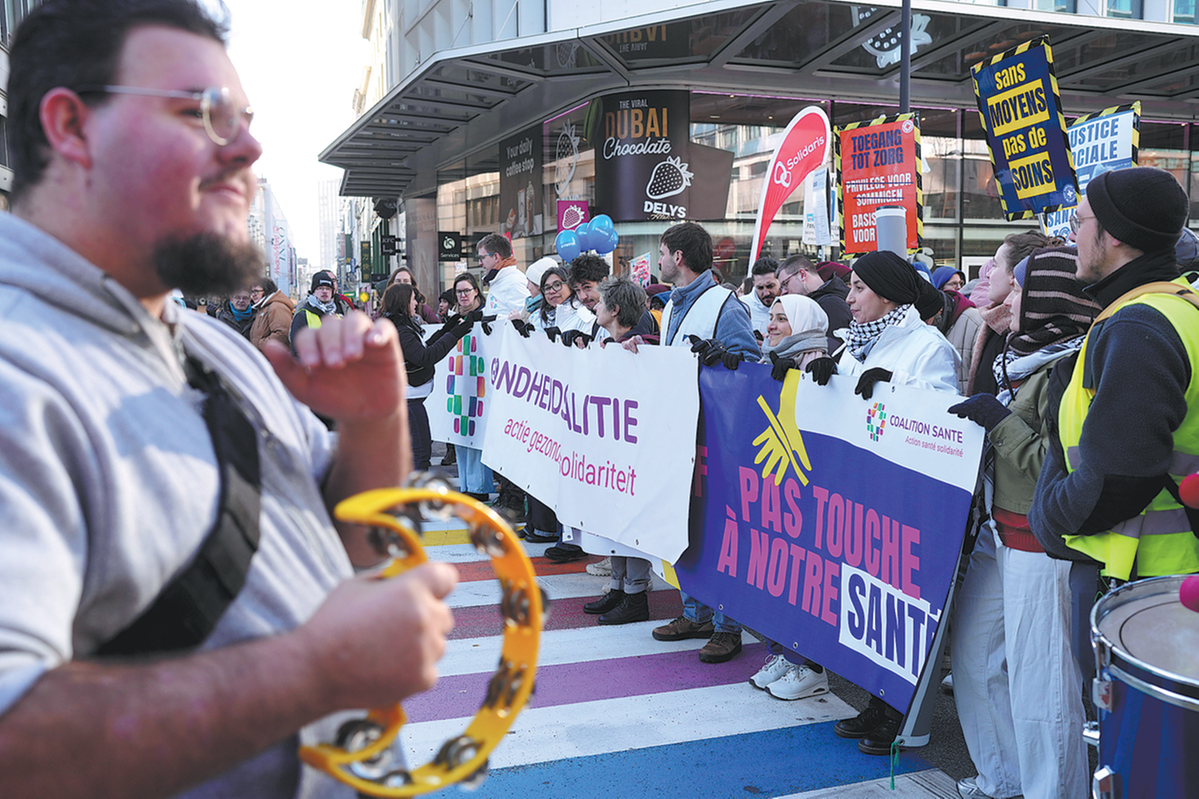
Demonstrators take part in a march in central Brussels on Monday during a nationwide strike called by Belgium's three main trade unions to protest planned austerity measures and rising living costs. (Photo: Xinhua)
All flights in and out of Brussels Airport and Brussels South Charleroi Airport were canceled between 7 am and 9 pm on Monday because of the strike, with Brussels Airport reporting it had been slated to handle 429 flights carrying 59,500 passengers. Public transport was also massively disrupted.
Unionized workers staged major demonstrations on Brussels' streets to protest against the government's handling of the crisis. The Belga national news agency said the rallies attracted between 50,000 and 70,000 people.
Belgium's national rail operator SNCB/NMBS was not part of the strike, so its trains were running. But the operator said they were exceptionally busy because other forms of transport had been rendered unusable.
Additionally, access to major train stations was hampered by closed roads attributed to the protests.
Most metro lines were shut for the day, and bus services across Brussels were extremely limited. Striking workers also ensured garbage was not collected, mail went undelivered, and schools and other public services were disrupted.
The strikes were called by Belgium's major trade unions, including the ACV-CSC, FGTB-ABVV, and SYNOVA.
The unions said they asked workers to take part in protests against federal austerity measures, including reforms to the pension system, salaries, working conditions and social budgets.
The government introduced the measures in a bid to save 10 billion euros ($11 billion) by 2029 and reduce the country's budget deficit from the current 5 percent of GDP.
Striking workers say the proposed changes against the backdrop of the cost-of-living crisis are unacceptable. One of them, a teacher named Philippe Naime, told Reuters that people expect the government to help in difficult times, not scale back spending.
"Quite simply, no more money is being invested in education, and people are left to fend for themselves," he said. "But people do not have the means to do that."
Bert Engelaar, head of the FGTB union, said the government should not be dismantling Belgium's social safety net at a time of hardship and called for "a genuine wealth tax, fair taxation and the elimination of tax loopholes".
"Political responsibility is not about keeping a government afloat at all costs," the BBC quoted him as saying. "It's about knowing when to stop."
De Wever, meanwhile, set a Dec 31 deadline for his five-party coalition to resolve deadlocked budget talks.