


Biotech cooperation with China breeds brighter future for Pakistan's buffalo-dairy sector
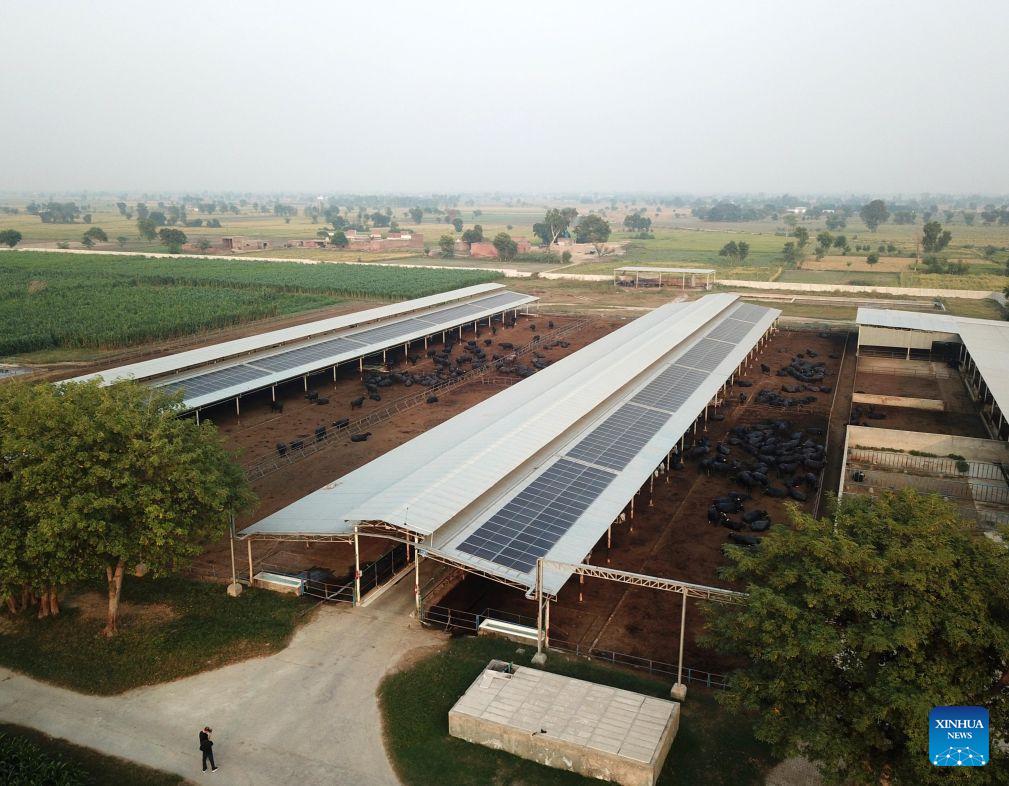
An aerial drone photo taken on Oct. 22, 2026 shows a view of a buffalo farm on the outskirts of Lahore, Pakistan. (Photo: Xinhua)
ISLAMABAD, Nov. 25 (Xinhua) - Usman Haider, 39, a buffalo farmer from Sheikhupura district in Pakistan's eastern Punjab province, has long struggled with rising herd-maintenance costs, as milk sales often fail to cover his expenses.
"Buffaloes are expensive animals to raise, but people in Punjab's villages keep them as part of their culture. We have a deep emotional attachment to these animals. Our forefathers raised buffaloes, and we are continuing the tradition," he said.
However, they are gradually becoming a financial burden because high- and low-milk-producing breeds have been crossbred over time, resulting in a significant decline in overall milk production, Haider noted.
For farmers like Haider, improving the genetic quality of local buffalo herds is essential to increasing milk yields and making livestock farming more economically viable, and a turning point came in 2021, when a cooperation project under the China-Pakistan Economic Corridor (CPEC) brought new hope to farmers like him.
That year, Royal Cell Biotechnology (Pakistan) Co. (Pvt.) Ltd. was established in Pakistan and launched the China-Pakistan buffalo breeding and dairy processing project.
The project aims to work with local governments, institutions and enterprises to promote the application of in-vitro embryo breeding technology, increase milk production among local buffaloes and introduce Pakistani buffalo embryos into China to improve dairy buffalo breeds in South China's Guangxi Zhuang Autonomous Region. It also seeks to develop deep processing of buffalo milk in Pakistan to increase the added value of the country's buffalo dairy industry.
While Pakistan provides access to its high-quality Nili-Ravi buffalo genetic resources and large buffalo population, Royal Cell Biotechnology (Pakistan) contributes advanced breeding technologies, including embryo transfer, frozen semen and genomic selection, as well as access to China's premium buffalo milk market.
Talking to Xinhua, Wang Li, executive manager at Royal Cell Biotechnology (Pakistan), said traditional breeding relies on importing live animals, which involves high costs, lengthy transportation, quarantine risks and slow genetic improvement.
To address these challenges, the company has adopted an integrated approach combining embryo transfer, frozen semen and genomic selection. Carefully selected high-quality donor buffaloes undergo superovulation, ovum pick-up and in-vitro fertilization (IVF), followed by blastocyst culture and embryo verification, allowing superior genetic material to be imported in batches through embryos, Wang explained.
Local recipient buffaloes then carry the pregnancies, enabling faster expansion of high-quality herds. The approach can achieve breeding efficiency several times, or even dozens of times, higher than natural breeding, while reducing disease risks associated with live-animal transportation, she said.
Beyond introducing advanced technology, the project is also investing in developing local expertise through partnerships with Pakistani universities. The cooperation mechanism combines university-based training with corporate recruitment to build a young local team specializing in buffalo embryo production.
At the company's laboratory in Lahore, the provincial capital of Punjab, containers of frozen embryos were stored in a room, while laboratory technician Anita Mustafa examined a buffalo embryo under a microscope.
"I am currently working on buffalo embryos, but this hands-on experience will help me pursue IVF work with other species, including cattle and goats, because the protocols are similar," Mustafa said.
Wang said the project had significantly promoted the development of embryo breeding in Pakistan's livestock sector. So far, it has trained more than 20 Pakistani specialists in embryo production and transfer, created 21 biotechnology jobs and generated 72 jobs in large-scale livestock farming.
The group has also supported the establishment of five high-quality laboratories across Punjab province, where embryos are produced and prepared for transfer into recipient animals to develop genetically superior livestock, she added.
"Previously, dairy farmers in Pakistan relied on importing high-quality cattle from countries such as Australia and the United States, spending millions of dollars on these imports. However, with the establishment of local laboratories supported by the Chinese company under CPEC, farmers can now produce embryos using elite genetics and transfer them to recipient cattle, enabling them to breed high-quality animals locally," Muhammad Waqas, technical manager at the Royal Cell Biotechnology (Pakistan), told Xinhua.
The company plans to take its breeding technology beyond laboratories and extend its benefits directly to livestock farmers across Punjab province.
As part of its corporate social responsibility (CSR) initiatives, the company intends to provide buffalo embryos free of charge to farmers in different villages, enabling them to breed genetically superior animals and gradually improve the quality of local herds, Waqas said.
"Pakistan's Nili-Ravi buffaloes are among the best dairy water buffaloes in the world. Italian companies also imported these animals in the past and used their genetic potential to develop and improve their own buffalo breeds. We are planning to follow a similar approach, focusing on reviving and improving the genetic quality of Pakistan's indigenous buffalo population," Nasr MinAllah, chief operating officer of Royal JW Foods (Private) Limited, a joint venture between Royal Cell Biotechnology (Pakistan) and Pakistan's JW SEZ (Private) Limited, told Xinhua.
"Our goal over the next few years is to help farmers produce genetically superior animals with higher milk-producing potential," he said. "By improving the quality of local buffalo herds, we hope to increase national milk production, strengthen Pakistan's dairy industry and eventually create opportunities for Pakistani buffalo milk and its products to enter international markets."
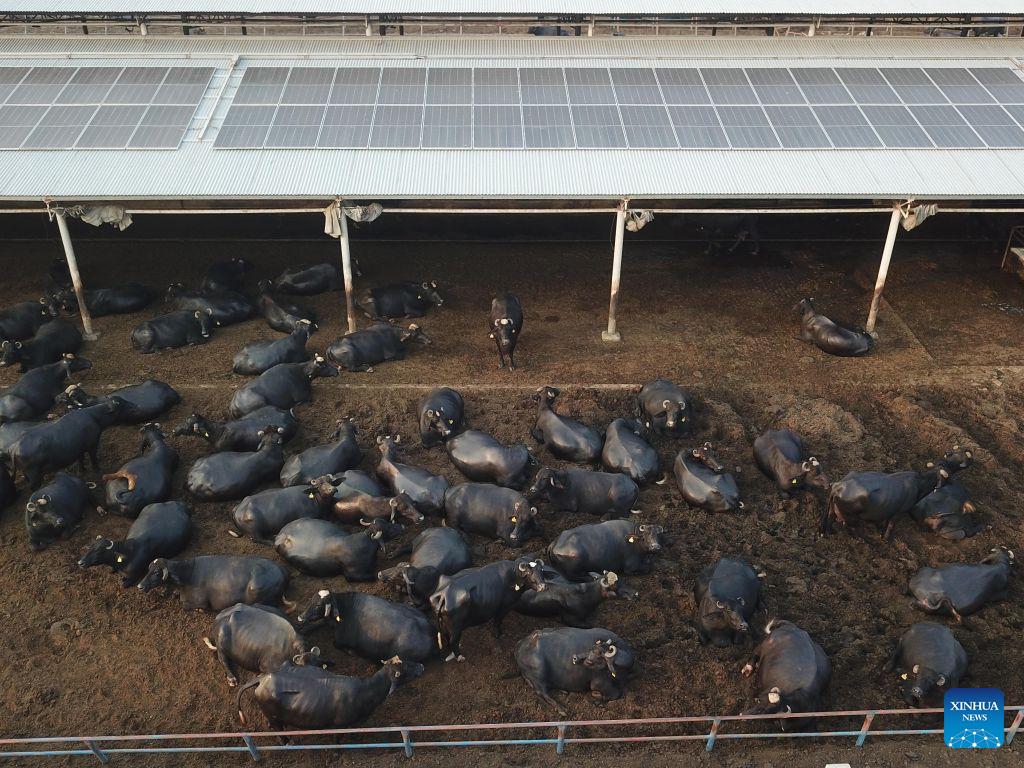
An aerial drone photo taken on Oct. 22, 2026 shows Nili-Ravi buffaloes at a buffalo farm on the outskirts of Lahore, Pakistan. (Photo: Xinhua)