


EU leaders divided over Ukraine funding at Brussels summit
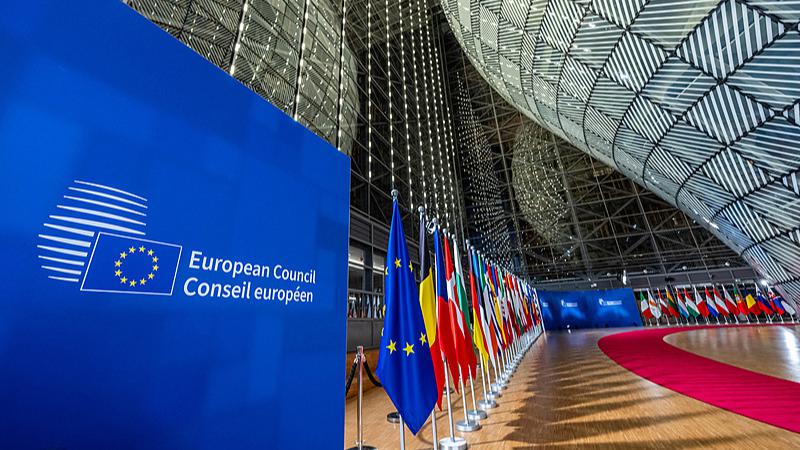
File photo of the European Council logo displayed on the wall at the European Commission headquarters in Brussels, Belgium. (File photo: VCG)
European Union (EU) leaders are divided over Ukraine financing at their Brussels summit, with several member states pushing back against proposals to tie aid for Ukraine to the bloc's long-term budget.
The two-day summit opened in Brussels on Thursday, with leaders set to discuss a smaller seven-year budget proposal and ways to help close Ukraine's funding gap next year.
The European Commission has proposed lending Ukraine up to 45 billion euros (approximately $49 billion), backed by the EU budget. The loan would come on top of the EU's 90-billion-euro loan program for 2026 and 2027 and cover nearly two-thirds of Ukraine's remaining funding gap next year.
How to foot the bill, however, has become a major point of contention within the bloc.
German Chancellor Friedrich Merz on Thursday urged all 27 member states to share the responsibility of aiding Ukraine, warning that Germany would veto the bloc's long-term budget deal if leaders failed to reach an agreement on support for Kyiv.
His stance met resistance from several leaders, according to China Media Group (CMG).
Czech Prime Minister Andrej Babis on Thursday opposed linking financing for Ukraine to the EU's next long-term budget, saying that such financing "should be negotiated separately," CMG reported.
At a meeting of Visegrad Group leaders and Austrian Chancellor Christian Stocker in Bratislava on Monday, Babis called the latest EU budget proposal "absolutely unacceptable" for the Czech Republic, according to a Czech government statement. Before leaving for the summit, he said the proposal allocated too small a share of the budget to member states.
In a letter to European Council President Antonio Costa, published by the Czech government on November 10, Babis said an agreement on future financing for Ukraine should not be a condition for adopting the EU's next long-term budget.
He said Ukraine needed predictable and sustainable support and that the EU should retain the ability to set and finance its own long-term priorities.
Hungarian Prime Minister Peter Magyar also opposed requiring member states to contribute to aid for Kyiv, while Bulgaria indicated that it was willing to participate only in the 20-billion-euro civilian assistance portion and declined to help fund the 25 billion euros earmarked for military aid.
Slovak Prime Minister Robert Fico took an even sharper tone, calling Merz's approach "a textbook case of blackmail" and arguing that Germany should not use a budget veto to pressure other countries, according to CMG.
According to the Associated Press, Kremlin spokesman Dmitry Peskov said the EU's plans to allocate money for Ukraine in its budget would make Kyiv "less inclined toward a peace process and more determined to continue the war."
At this week's summit, EU leaders will discuss a proposal put forward by Costa, which would cap EU spending commitments for 2028-2034 at 1.58 trillion euros.
The European Commission proposed a budget of nearly 2 trillion euros for 2028-2034 in July last year. However, leaders failed to agree in October on a compromise proposal put forward by Ireland, which holds the EU's rotating presidency. Several countries have called for a smaller budget with greater emphasis on competitiveness and defense.
(With input from Xinhua)