


Global runoff and surface water hit record lows during 2023-24 heat
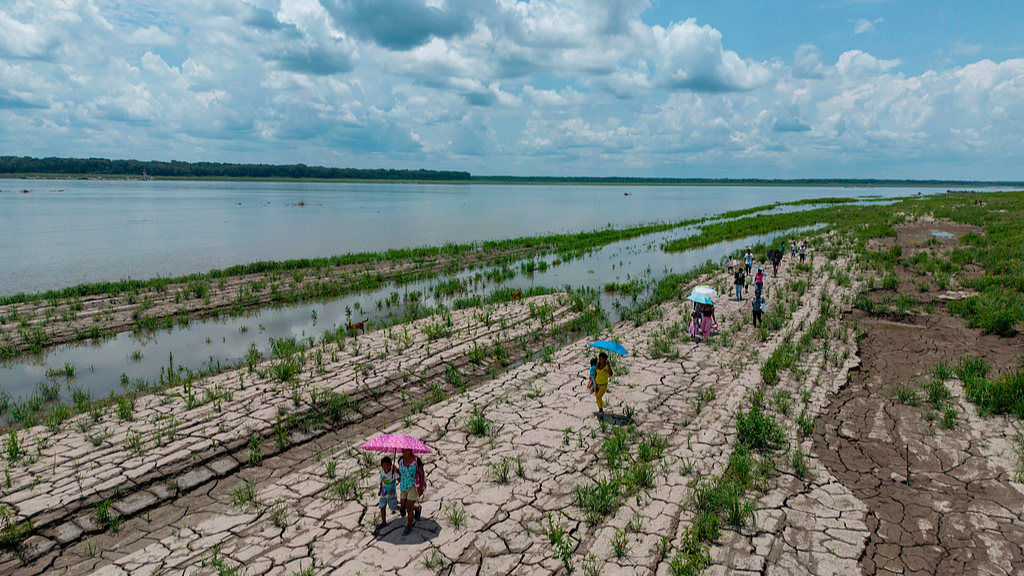
People walk through a part of the Amazon River that shows signs of drought in Santa Sofia, on the outskirts of Leticia, Colombia, October 20, 2024. (Photo: VCG)
A study conducted by researchers from Sweden, China, the United States and other countries has found that global runoff and surface water storage both plunged during the record-breaking heat of 2023 and 2024, marking their largest decline since 1991.
Runoff refers to the volume of water passing through a river cross-section over a given period.
Data show that 2024 and 2023 were the warmest and second-warmest years on record, respectively. The decline in global runoff and surface water storage during the two years exceeded the range of changes seen in any other two-year combination since 1991.
The findings were published in the journal Science.
Compared with the 1991-2020 average, annual global runoff fell by 5.72%, while surface water storage in active water bodies declined by 9.50%. South America accounted for about 70% of the global reduction in runoff, with the Amazon River basin recording its lowest flow in nearly 40 years.
Researchers said the sharp decline in surface water in some land areas was driven by combined ocean-atmosphere effects. In 2023 and 2024, an El Nino event coincided with unusually high sea surface temperatures in the tropical North Atlantic. This triggered widespread descending air currents and moisture flux divergence over some land areas, intensifying regional drought.
The study highlights the vulnerability of the global hydrological system and water security. It suggests that changes in precipitation patterns caused by global warming could disrupt the balance of water across land areas, with significant consequences for human society and ecosystems.