


BEIJING, Feb. 17 (Xinhua) -- On the first day of the Chinese New Year, the festive atmosphere in central Beijing rises to a new pitch.
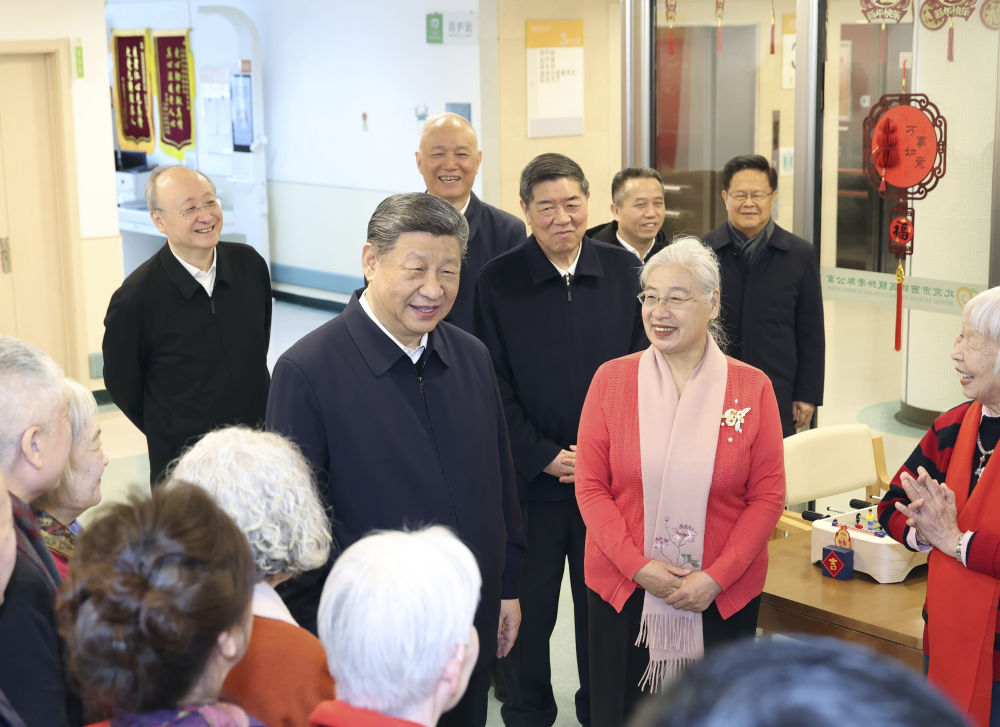
Photo: Xinhua
This is when a familiar scene unfolds in the Longfusi Commercial Area, where red lanterns sway above a bustling New Year fair and vendors call out to passersby as the scent of festive treats lingers in the air.
Dating back nearly 600 years, Longfusi is a Beijing cultural landmark once known for hosting one of the city's most important temple fairs. After urban renewal, it has re-emerged as a Spring Festival draw, with families stocking up on New Year goods and revisiting traditions linked to old Beijing.
It was this spot that President Xi Jinping visited on Feb. 10, as residents began the final week of traditional preparations for the Spring Festival.
Craft stalls showcased traditional paper cuttings, clay figurines and other handmade items, adding to the festival vibes. Strolling through the holiday market, Xi paused to look over local specialties, chatted with stall owners about business, and exchanged greetings with them.
As someone who grew up in Beijing, Xi recalled visiting Longfusi when he was young. On his latest visit, the president bought festive food popular among local residents and also purchased traditional cultural products.
With children gathered around him, Xi asked about their school life and urged them to spend more time exercising outdoors and stay physically fit. "Test scores are only part of the picture and becoming a well-rounded person matters most for adapting to society later in life," Xi told them.
After watching a spirited drum performance in the square alongside local residents, Xi took the occasion as an opportunity to extend his Spring Festival greetings to all Chinese at home and abroad.
This visit was not only about holiday cheer. Noting that the Spring Festival is a cherished moment of family reunion, Xi called on local officials to ensure stable supplies and public safety so that people could enjoy a joyful Spring Festival holiday.
Spending time with the people during the Spring Festival has become a staple of Xi's schedule as China's top leader for more than a decade. He has, since 2013, visited urban neighborhoods and remote villages alike, speaking with residents about everyday concerns such as heating in winter, access to healthcare, income growth and children's education -- issues that bear directly on people's daily lives.
"No issue of the people is too small," Xi said in his 2026 New Year message. "When the happy hum of daily life fills every home, the big family of our nation will go from strength to strength."
This year, Xi placed particular emphasis on the well-being of seniors. China is now in a stage of deep population aging, with roughly one in five people aged 60 or above.
Before visiting Longfusi, Xi stopped by a nursing home housing more than 110 seniors, whose average age is about 88.
Xi toured the facility and learned about their daily lives -- from medical services and rehabilitation programs to recreational activities.
"Caring for the elderly is a responsibility shared by the whole society," Xi said, calling for continued efforts to improve services, so that older people can live comfortably and with dignity.
The neighborhood where the nursing home is located reflects China's broader push to upgrade urban areas, with recent barrier-free and age-friendly renovations supporting a more diverse range of elderly care services.
At the neighborhood seniors' canteen, which offers discounted meals to both seniors and people in flexible employment, Xi met three delivery workers eating noodles. These workers had opted to have their meals before the peak period to avoid the lunchtime delivery rush. Xi asked where they were from, how long they had worked in Beijing, how they felt about their jobs, and whether they planned to return home for the holiday.
"The job is physically demanding, but it pays better than back home," Wu Jing, a female delivery rider, told the president, adding that living nearby and receiving discounted meals helped reduce daily costs and that she and her husband, both couriers, had managed to put their son through college.
Her experience reflects the growing ranks of workers in new forms of employment fueled by the platform economy. Across China, roughly 84 million people are engaged in such work, most of them under the age of 35, with delivery riders and couriers among the most representative groups.
Last year, China's courier sector reached a new milestone, as the annual parcel volume hit nearly 200 billion items, underscoring the vital role of online shopping in China's consumer spending.
"Delivery services have become essential to urban life. The smooth functioning of cities depends on people like you," Xi said to Wu and her colleagues, while urging authorities to better address the needs of delivery workers via improved services and support.
Xi's habit of engaging directly with the public and listening to their everyday concerns reflects the people-first philosophy of the Communist Party of China (CPC) in governance.
After assuming the Party's top post as the general secretary of the CPC Central Committee in late 2012, Xi oversaw an eight-year campaign that lifted nearly 100 million rural residents out of poverty, enabling the country to eliminate absolute poverty by 2021.
He has since set his sights on advancing common prosperity for all, seen as an essential requirement of socialism.
Over the past five years, the living standards of the Chinese people have continued to improve. During the 14th Five-Year Plan period (2021-2025), urban employment increased by more than 12 million a year on average, per capita household disposable income grew to 43,377 yuan (around 6,250 U.S. dollars), and life expectancy reached 79 years.
In less than a month, China's national legislature is set to convene its annual session to review and adopt the blueprint for the 15th Five-Year Plan period (2026-2030). This plan covers a pivotal stage in China's development as it works toward basically achieving socialist modernization by 2035.
The Party set "putting the people first" as one of the core guiding principles in mapping out the 15th Five-Year Plan and stressed the need to ensure that the gains of modernization benefit all people more fully and more fairly.
Speaking at a grand reception to ring in the Year of the Horse, Xi rallied efforts to strive for a good start to the 15th Five-Year Plan, while he also reminded officials and Party members that "our Party was born for the people and has prospered because of the people. Everything we do is for the happiness of the people."