



Samsung Electronics gears up for debut of its first humanoid robot
7 hours ago
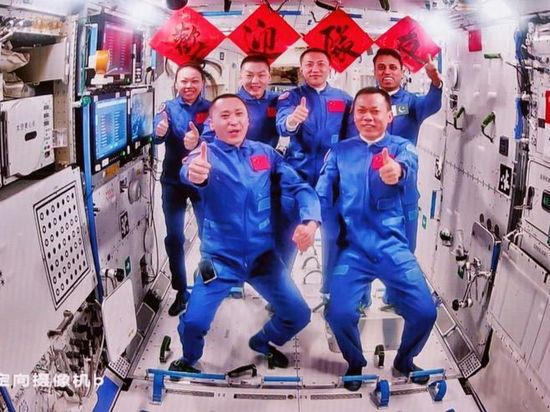
Shenzhou-23, Shenzhou-24 astronauts complete in-orbit handover
1 day ago
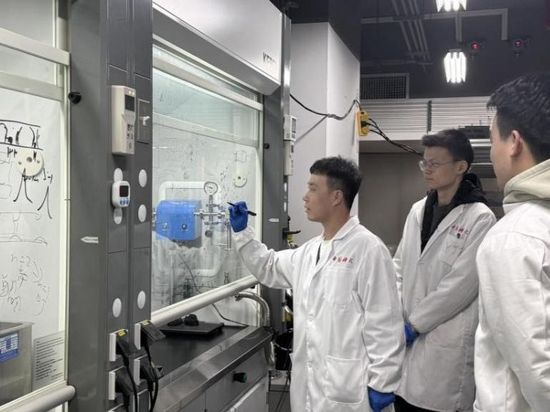
China unveils plan to strengthen science popularization for basic research
22:01, Nov 27, 2026
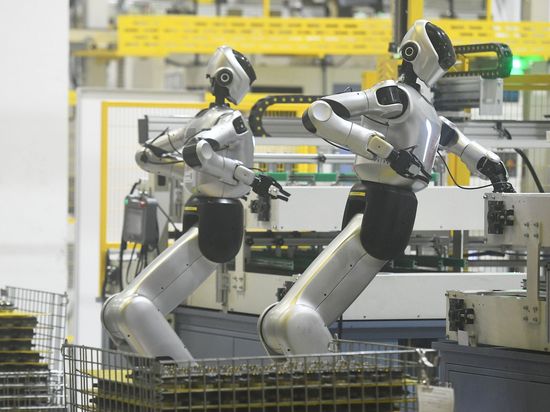
China establishes national sci-tech ethics society to promote responsible innovation
19:27, Nov 27, 2026

Acclaimed mathematician stresses human understanding of math in AI era
JINAN, Nov. 28 (Xinhua) -- An artificial intelligence (AI)-assisted verification of the Riemann hypothesis may have jolted the mathematical world. However, this breakthrough is neither a machine takeover nor the end of human inquiry, renowned mathematician Peter Sarnak told Xinhua recently.Sarnak, Eugene Higgins Professor of Mathematics at Princeton University, made the remarks in a recent interview with Xinhua after receiving the inaugural Pan Prize in Jinan, capital of east China's Shandong Province.Established in 2026, the Pan Prize honors Pan Chengdong, a renowned Chinese mathematician and educator, and recognizes individuals who have made outstanding achievements in mathematics and significant contributions to its development in China.In the interview, while speaking on AI's progress in pure mathematics, Sarnak drew a firm line between machine verification and human proof and understanding.VERIFIED NOT YET PROVENFirst posed in 1859, the Riemann hypothesis has long stood as one of mathematics' deepest unsolved problems. I'm just saying it's been verified, but I'm being very picky, Sarnak said when asked by Xinhua whether the Riemann hypothesis had been proven.Sarnak emphasized a clear distinction between verification and proof. For me, something is a mathematical truth or theorem only if we can understand it and explain it and put it in a lecture, he said. Mathematics is about finding what's true and understanding why it's true.It's a victory for humans making machines and working with machines, and the machines using the tools that we've developed in mathematics, Sarnak said of the AI-assisted breakthrough, stressing that AI cannot operate without the mathematical structures humans created.The machine is able to go further than us when it sits on our shoulder, he added.MATH INDUSTRIALIZEDMathematics is becoming industrialized. Many of us went into math because we didn't like to be industrialized. We liked to think quietly and not worry that som...
16:22

LineShine's repeat TOP500 win highlights China's homegrown tech strength
China's homegrown supercomputer LineShine has retained its title as the world's most powerful supercomputer in the latest TOP500 ranking, following its debut at No. 1 in June 2026.The repeat win further underscores the leading edge of Chinese supercomputing, with LineShine outperforming the US.
16:49
00:32
Firefighting reconnaissance robot dog completes live drill in Suzhou
A firefighting reconnaissance robot dog built to operate inside raging blazes has debuted in Suzhou after completing a live drill. Able to withstand temperatures of up to 1,000 C, it can detect hazards, pinpoint trapped individuals and fire sources, and transmit real-time data back to firefighters — filling a gap in intelligent equipment for early-stage fire reconnaissance.
15:08
'Not enforce it': Netherlands vows to counter US chip bill targeting ASML China sales
The Netherlands will push back against proposed United States legislation that would tighten export curbs on Dutch lithography giant ASML's sales to China, its trade minister said on Thursday, criticizing the bill's extraterritorial reach as a threat to Europe's most valuable company and Dutch
14:59
First foreign astronaut in China's manned space program flies to Tiangong space station
China launched the Shenzhou-24 crewed spaceship on Nov. 25, sending three astronauts, including a Pakistani payload specialist, to its orbiting Tiangong space station.The joint flight has drawn global attention. As the first foreign astronaut in China's manned space program, Pakistani astronaut
11:57
Pakistani minister praises Chinese public's warm send-off for Shenzhou-24 crew, China's willingness to share its success
Following China's successful launch of the Shenzhou-24 crewed spacecraft on Wednesday, sending three astronauts, including a Pakistani astronaut, into the orbiting Tiangong space station, Pakistan's Federal Minister for Planning, Development & Special Initiatives Ahsan Iqbal spoke at a media event
11:21
China's homegrown large models power the global open-source ecosystem
Recently, Chinese artificial intelligence (AI) startup Moonshot AI released the full model weights of Kimi K3.1 Pro. This open-source model, the largest in the world by parameter scale, has sparked widespread discussion across the tech community. Since the beginning of this year, a growing number of
11:20
How the US uses chip curbs, investment screening, entity listings and security rhetoric to target China’s tech advances; moves doomed to fail: experts
Democrats have vowed to launch sweeping investigations into Nvidia CEO Jensen Huang, the company and the Trump administration following Huang's reinstatement, opening a new front in Washington's increasingly contentious debate over how access to advanced AI chips is regulated.
11:04
China's openness in space hailed as Shenzhou-24 flies first foreigner
The Shenzhou-24 mission, carrying two taikonauts (Chinese astronauts) and Pakistan's first astronaut, has drawn praise from officials, scientists and international organizations who said it demonstrates China's openness to international cooperation in space.
23:26
AI memory crunch has a surprisingly simple fix: Upgrade existing plants in China
The artificial intelligence (AI) boom is devouring memory chips faster than the industry can produce them. Data-center operators are spending record sums on servers.
22:32
China to put Y-20B military transport aircraft on first static display at Zhuhai airshow
BEIJING, Nov. 26 (Xinhua) -- China's Air Force will put its domestically developed Y-20B large military transport aircraft in a static display for the first time at the 16th China International Aviation and Aerospace Exhibition, also known as Airshow China, showcasing the latest advances in the country's military aviation capabilities.The Air Force will present more than 60 pieces of equipment across 33 types at the exhibition, scheduled to take place in Zhuhai, Guangdong Province, from Dec. 7 to 13, the Air Force said on Thursday.The exhibition will feature aerial demonstrations and static displays, showcasing the Air Force's latest equipment and modernization achievements.In the flying displays, the J-35A and J-20A stealth fighters, J-16 multirole fighter, Y-20B, and YY-20A tanker plane will demonstrate their capabilities.The Air Force's Bayi (August 1) Aerobatic Team will also perform alongside two foreign aerobatic teams, the Russian Aerospace Forces' Russian Knights and the United Arab Emirates Air Force's Al Fursan.In addition to the Y-20B, the Air Force will display a new-generation early-warning radar system and other equipment on the ground for the first time.Visitors will get the chance to tour the Y-20B's cargo hold and take part in simulated flight experiences. The Air Force military band will also stage performances and tours at the exhibition.Interactive activities will be organized across recruitment, talent development, military education, air traffic control and equipment maintenance exhibition areas, including presentations, consultations, simulated operations and immersive experiences.The exhibition coincides with the 30th anniversary of Airshow China. Air force leaders and representatives from multiple countries will attend international exchanges on military flight training and a forum on unmanned intelligent systems hosted by the Chinese Air Force.Distinguished representatives of Air Force units and test pilots will also meet with visitors, the...
20:18
Chinese researchers develop liquid-phase growth of ceramic films at low temperature
BEIJING, Nov. 26 (Xinhua) -- A Chinese research team has developed a new strategy for growing ceramic crystals directly into films in a liquid environment at temperatures as low as 600 degrees Celsius, offering a new route for ceramic film manufacturing and for the development of solid-state energy and electronic devices.Ceramics, with their high-temperature resistance, corrosion resistance and chemical stability, play an important role in high-end manufacturing fields such as energy, chemicals and electronic information. Functional ceramic films, in particular, are key components of fuel cells and solid-state energy devices.Ceramic films made by traditional methods, however, must be sintered at temperatures above 1,000 degrees Celsius. Achieving both dense, pore-free films and the retention of the material's desirable properties has long been a challenge for conventional approaches.A research team from the Dalian Institute of Chemical Physics under the Chinese Academy of Sciences drew inspiration from bio-mineralization phenomena in nature, such as seashell nacre and bone tissue. The nacre on the inner wall of seashells and human bone tissue are not formed by firing in a furnace but in a liquid environment, where mineral components migrate, deposit and grow into crystals, gradually building well-ordered, robust structures.Following this idea, the team proposed a liquid-phase growth technique for ceramic films. In this method, ceramic crystals grow directly into films in a liquid environment at temperatures as low as 600 degrees Celsius -- more than 1,000 degrees Celsius lower than conventional solid-phase sintering.Using this new approach, the electrolyte membrane prepared by the team in a carbonate system operated stably under a constant current for more than 230 hours.According to the team, ceramic films made with the new method may help alleviate the material damage and process limitations caused by high temperatures in the manufacturing of fuel cells and electr...
19:09
China unveils roadmap for next-generation communication networks
BEIJING, Nov. 26 (Xinhua) -- Chinese authorities have released an implementation plan for the development of next-generation communication networks, aiming to build such networks featuring comprehensive coverage and leading performance by 2030.The plan targets advancing 6G network development at an appropriate time and basically completing the construction of a low-Earth-orbit satellite internet system by 2030.China also expects to promote the large-scale development of integrated networks like the Industrial Internet and the Internet of Vehicles, significantly improve smart development, and further strengthen the industrial ecosystem, according to the plan.It sets out measures to improve basic networks, space-based networks and international networks, as well as integrated networks, while making communication networks smarter, greener, and more secure and resilient.Regarding the industrial ecosystem, the plan calls for accelerating the development of standards for technologies such as 6G, satellite internet and ultra-high-speed optical communications, and the integration of computing resources and communication networks.It also seeks to advance deep-space, deep-Earth, deep-sea and far-sea technological exploration, while promoting the integration of brain-computer interfaces, embodied artificial intelligence and intelligent connected vehicles with next-generation communication networks.The plan encourages private enterprises to participate in network development in accordance with laws and regulations and explore more diverse ways to engage. Stronger support should be given to securing land, forest, grassland, sea and spectrum resources for network development, according to the plan.Next-generation communication networks will form an intelligent, integrated digital infrastructure supported by advanced mobile, fiber-optic and satellite technologies, providing fast, secure and green connectivity.The development of next-generation communication networks is one of six ...
16:48
Tiangong: Nine Milestones of In-orbit Crew Rotation
China's Tiangong space station celebrated its first in-orbit crew rotation take place on November 30, 2022, when the Shenzhou-14 crew handed over the station to their Shenzhou-15 counterparts.
14:35